
Armenia’s constitutional shift and geopolitical price of peace in South Caucasus

Elnur Enveroglu
Read moreThe most interesting development in the South Caucasus is not simply that Armenia has finally published a draft of its new Constitution but that a political issue which Yerevan had repeatedly sought to postpone has now moved closer to the centre of its domestic agenda. For years, Prime Minister Nikol Pashinyan argued that Armenia's constitutional framework did not contain territorial claims against Azerbaijan, while repeatedly distancing the question from the peace negotiations. However, the publication of a new constitutional draft on 23 November, which removes the reference to the 1990 Declaration of Independence from the preamble, marks a significant change in the political calculation in Yerevan. The question is no longer whether the issue can be avoided, but whether the Armenian government can persuade its own society to accept the changes needed to turn a political understanding with Azerbaijan into a lasting peace.
The timing is particularly important, as it comes against a background of growing Western interest in the South Caucasus, renewed competition over regional transport routes and American and, of course, EU efforts to establish a more durable economic presence in the region. Armenia is increasingly confronted with a strategic choice: whether to preserve the political ambiguities inherited from the conflict or adapt its constitutional and economic policies to a regional order in which peace, connectivity and commercial cooperation are becoming increasingly valuable.
The constitutional question has acquired a new significance because of the changing attitude in Europe. On 17 November, German Foreign Minister Johann Wadephul travelled to Baku and then Yerevan, describing the South Caucasus as a region at a historic turning point. His message was notable for the emphasis he placed on the economic consequences of open borders, transport links and regional stability. He also warned that another war could disrupt supplies and push energy prices higher. In a subsequent interview with German broadcaster Tagesschau on 21 November, Wadephul went further, stating explicitly that Armenia needed to amend its Constitution or adopt a new one to conclude a peace agreement with Azerbaijan.
This was an important diplomatic signal, I would honestly say. Because for much of the post-war period, European engagement with Armenia had been shaped by a different set of priorities, including democratic reform, security assistance and political support for Yerevan. There was little public willingness among major European capitals to make constitutional reform such an explicit condition of a peace settlement. That position has become harder to sustain as the economic and security costs of another confrontation have grown and the South Caucasus has acquired greater importance in Europe's search for alternative trade and energy connections.
Therefore, the change should not be interpreted as Europe simply adopting Azerbaijan's position. Certainly, Germany has its own strategic interests, particularly in reducing the vulnerability of European supply chains, diversifying energy partnerships and limiting Moscow's capacity to use regional instability to preserve its influence. Wadephul himself made the connection between Russia's actions in Ukraine and the need for neighbouring states to determine their own political and economic futures, though the practical consequence is significant for Baku: a demand that Azerbaijan has consistently raised is now being articulated by an influential European government as part of the wider requirements for peace.
And what about for Pashinyan? Does this change the political calculation for him? A government that once believed it could manage the constitutional dispute without making a decisive concession now faces a diplomatic environment in which postponement is becoming increasingly costly. Armenia's European partners want stability, but stability requires more than declarations of goodwill. It requires the removal of unresolved political and legal ambiguities that could undermine a future settlement.
There is, however, an important distinction between the publication of a draft and the completion of constitutional reform, which needs to be carefully observed. Pashinyan's proposed text still needs to pass through domestic political procedures and ultimately a referendum. His Civil Contract party holds 64 seats in the 105-member parliament and needs six additional votes to secure the necessary parliamentary support for a referendum. The prime minister has offered to resign if voters reject the draft and has said he would not seek another term if they approve it. This is a considerable political gamble, particularly because the opposition has already criticised the proposed changes.
I assume the question remains about Pashinyan's move towards a decision that he had previously treated as politically sensitive and, at times, sought to avoid. The answer is unlikely to lie in a single diplomatic encounter. Rather, it reflects the convergence of several pressures. Armenia's economic future increasingly depends on opening its borders and reducing its isolation; its security calculations are changing as the traditional regional balance shifts; and its Western partners are becoming more interested in practical connectivity than in an indefinite political process. The constitutional issue has therefore become part of a much larger calculation about the kind of state Armenia wants to become.
It is worth recalling that Pashinyan had repeatedly sought to separate the constitutional question from the negotiations with Baku. At various stages, he argued that the 1991 Alma-Ata Declaration provided a sufficient basis for mutual recognition of territorial integrity and that Armenia's Constitution did not contain territorial claims against Azerbaijan. These arguments reflected Yerevan's legal interpretation that did not resolve Baku's concern at all.
Nevertheless, the proposed new preamble changes the language significantly. It places the emphasis on building a peaceful, secure and prosperous state within Armenia's internationally recognised territory, while removing the reference to the Declaration of Independence. However, a draft is still not a constitution, and a political promise is not a binding legal guarantee. The referendum, the final wording and the subsequent implementation of the changes will determine whether Yerevan has genuinely addressed the issue. Baku's position is not that Armenia should surrender its constitutional sovereignty, which is sometimes misunderstood. It is that the constitutional framework of a neighbouring state should not preserve provisions that can be interpreted as contradicting the territorial integrity of Azerbaijan. That is a legitimate concern in any attempt to establish a durable peace.
Moreover, the economic dimension makes the timing even more consequential, especially at a time when the South Caucasus is increasingly being viewed as a strategic connection between European markets, the Caspian basin and Asia. The value of this geography has grown particularly for Europe as the war in Ukraine has disrupted established assumptions about energy security and trade routes. Germany's renewed interest in regional stability is therefore not detached from its commercial calculations. A peaceful South Caucasus could offer new opportunities for the movement of goods, raw materials, electricity and energy supplies, while reducing dependence on routes exposed to geopolitical disruption.
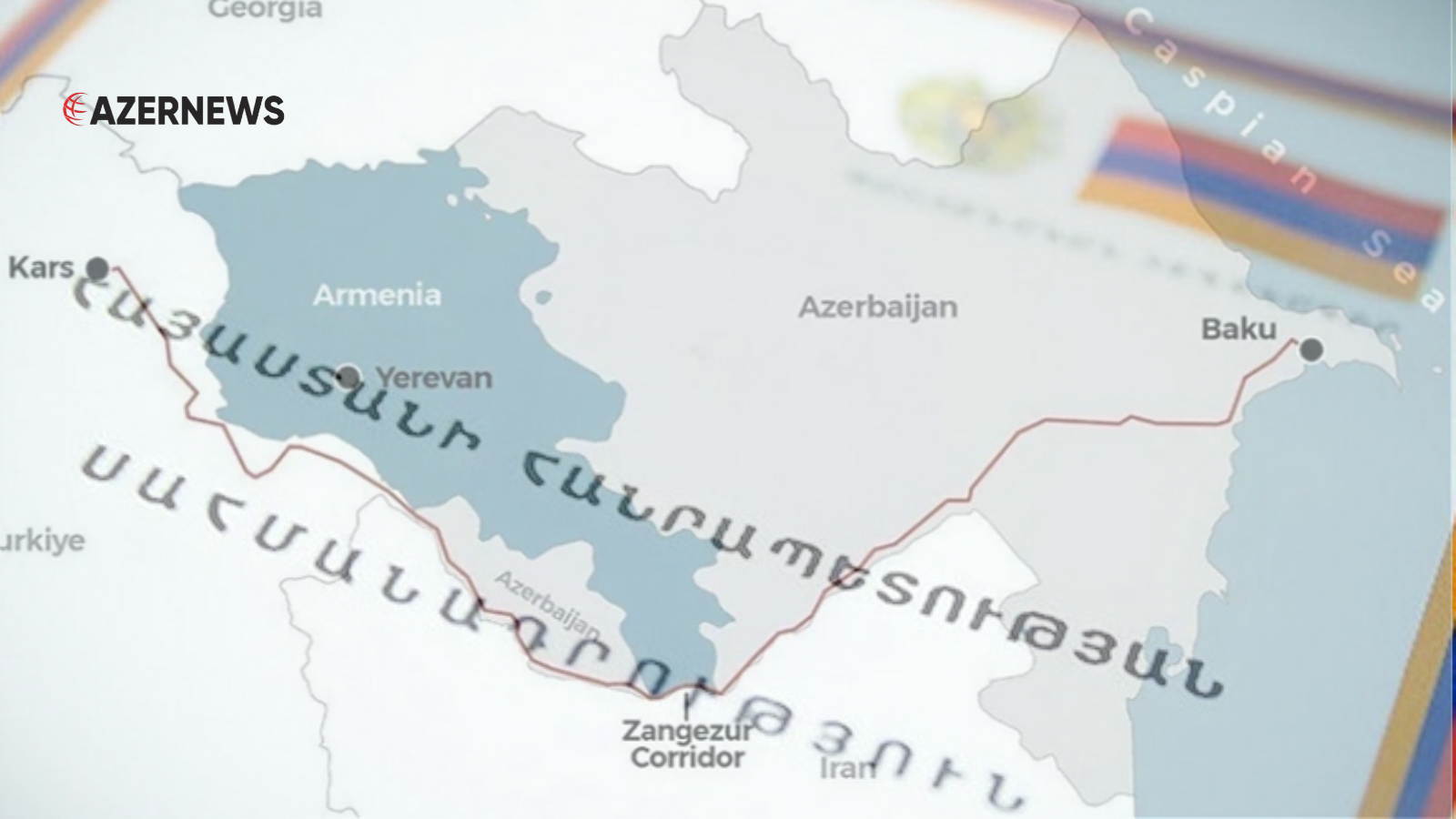
This is where the Trump Route for International Peace and Prosperity, or TRIPP, becomes particularly important. As perceived by all sides, the project could turn the political commitments made in Washington on 8 August 2025 into a functioning economic arrangement, linking mainland Azerbaijan with Nakhchivan through southern Armenia and creating a new connection within the wider Trans-Caspian transport network. Furthermore, its significance extends beyond the railway or road infrastructure itself. The framework envisages the possibility of railways, highways, oil and gas pipelines, fibre-optic infrastructure and electricity transmission projects. In other words, TRIPP could become more than a single transit line, like a broader economic corridor.
The latest US-Armenia framework agreement, published on 23 November, provides a clearer picture of how Washington and Yerevan intend to organise the project. It envisages the establishment of a joint development company in which a US entity, wholly owned by the US International Development Finance Corporation, would hold a controlling 74 per cent stake, while Armenia would own 26 per cent. The development rights would initially run for 49 years, with an option, subject to mutual agreement, to extend them for another 50 years. Under that arrangement, Armenia's stake would rise to 49 per cent. The framework also envisages special decision-making arrangements for major financial, contractual and security-related matters. This structure illustrates the scale of the American ambition, which clearly expresses that Washington is not simply supporting the reopening of a railway but seeks a long-term commercial and strategic presence in a region where transport infrastructure can influence trade patterns and political relationships for decades. For Armenia, the arrangement offers access to American institutional support, potential investment and the prospect of becoming a transit country rather than remaining economically constrained by closed borders. For the United States, it provides a foothold in a corridor connecting the Caspian region to European and Asian markets, while strengthening its influence in a strategically contested neighbourhood.
Well, when assessed financially, the framework does not publish a guaranteed investment total, a forecast of annual transit revenue or a schedule of tariffs. Nor does the 74 per cent US share automatically mean that Washington will receive 74 per cent of all transit income. The ownership structure concerns the development company; actual returns will depend on the concessions, operating agreements, financing costs, cargo volumes and commercial performance of individual projects.
There are already indications of the likely scale of the infrastructure challenge. A Carnegie Endowment assessment estimated that rebuilding the approximately 43-kilometre railway section in Armenia could cost between $250 million and $400 million. It also reported that the United States had identified around $400 million in financing by the end of 2025, although this represented an initial tranche rather than full project funding. A larger financing structure, including a proposed multibillion-dollar fund, was still being developed. The road component presents an additional challenge, particularly given the mountainous terrain of southern Armenia.
Despite all these challenges, TRIPP could strengthen this position by providing a more direct connection between mainland Azerbaijan and Nakhchivan, opening the possibility of onward links to Türkiye and European markets. It could also create additional demand for the Port of Baku, rail services, freight forwarding, warehousing and other logistics businesses. The benefit is not simply the revenue earned from transporting goods through a new route. It is the possibility of attracting a larger share of regional supply chains, increasing the volume of trade handled by Azerbaijani infrastructure and strengthening the country's role in the Trans-Caspian network.
Here we are to serve you with news right now. It does not cost much, but worth your attention.
Choose to support open, independent, quality journalism and subscribe on a monthly basis.
By subscribing to our online newspaper, you can have full digital access to all news, analysis, and much more.
You can also follow AzerNEWS on Twitter @AzerNewsAz or Facebook @AzerNewsNewspaper
Thank you!