
COP31 exposes the growing price of global climate consensus
Akbar Novruz
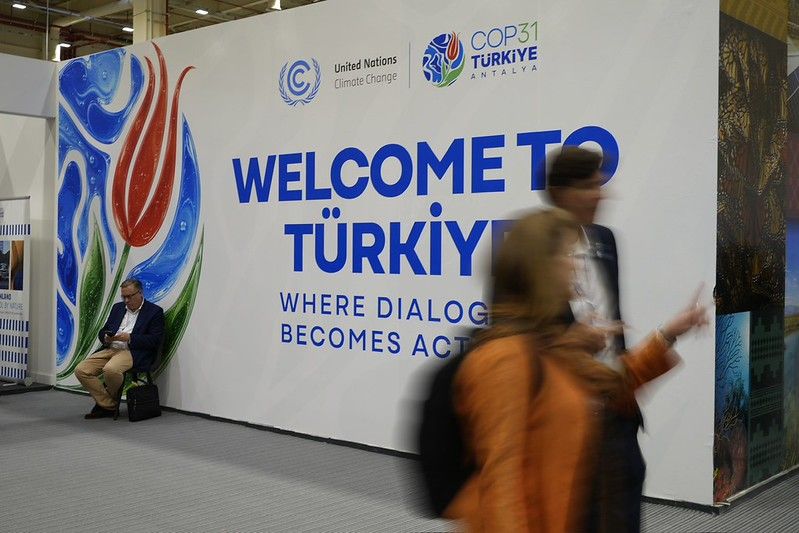
Read moreCOP31 wrapped up in Antalya on Sunday, but not with the kind of sweeping statement that is common practice in climate diplomacy - unfortunately. After 14 days of talks and two extra days of overtime, delegates exited without any political agreement. Rather than a pledge by the group to speed up their efforts, the conference showed just how challenging it is to reach consensus on energy transition terminology among almost 200 countries. Technical decisions were made at COP31. But its main objective was never passed.
This disagreement centered around a single omission. The proposed “Antalya Pact” called for increased electrification, renewable energy capacity and enhanced power networks. One aspiration sought to raise the share of electricity in final energy use to 35 per cent by 2035. However, there was no mention of fossil fuels even though their combustion remains the main source of global warming. The 35 per cent goal was a proposal, not yet a goal that had been adopted.
Well, it was a step too far for the European Union, the UK and countries affected by climate change. More than 130 countries had called for a reaffirmation of the transition away from fossil fuels agreed on at the COP28 in Dubai in 2023. The Irish minister for climate action, Darragh O'Brien, who represented the European Union, cautioned about reaching an agreement that “greenwashes fossil fuels”. Countries involved in oil production opposed wording that implied a schedule for their energy transitions. Another area of disagreement came through carbon capture. Those who advocate the technology consider it crucial for industries that are difficult to decarbonize; however, others view it as a broad endorsement that may lead to further extraction of fuels. With the attention the draft paid to carbon removal and its lack of reference to fuels, compromises were hard to make. As noted by Murat Kurum, who was Türkiye's COP President, there was no agreement among the Parties, and thus he did not want to circulate another draft.
Beneath the debate about vocabulary was the familiar financial dispute. Poor countries demand consistent finance to protect their coastal lines, safeguard crops, and recover from the impact of catastrophes. Rich countries, on the other hand, would like to see greater participation and more private finance. Antalya’s draft called for tripling adaptation finance but offered no clear baseline, leaving a striking question unanswered: triple what, and who pays?
For fragile [vulnerable] states, this is no editorial dilemma. Pledged funds in one communiqué do not translate into concessional funds spent on flood defenses or drought-plagued farmland. Some activists have complained about European governments expecting big pledges on fossil fuels without offering the requisite funds. However, the result was not a neat division between environmentally virtuous and obstructive states. It was a collision of incompatible expectations about responsibility, development and cost.
Meanwhile, the science has become less forgiving. The UN Environment Programme’s October 2026 assessment estimated that existing policies could produce about 2.8°C of warming this century. It said a pathway capable of returning temperatures to 1.5°C after a limited overshoot would require global emissions to fall 18 per cent by 2030 and 45 per cent by 2035, relative to 2025 levels.
Ever since COP29...
It is useful to compare it to COP29 in Azerbaijan. Even Baku’s COP29 in 2024 concluded after rough and protracted talks. However, the Azerbaijani presidency managed to achieve the adoption of a climate finance mechanism – an increase in the central annual figure for developing countries from $100 billion to $300 billion by 2035, as well as mobilizing $1.3 trillion per year.
The $1.3tn figure was an aspiration, and developing countries, including India, criticised the $300bn goal as far below their needs. Nevertheless, the agreement gave governments and lenders a framework against which to measure delivery. COP29 also completed long-stalled rules for international carbon markets under Article 6 and advanced implementation of the Loss and Damage Fund, established at earlier summits.
But that extra step became apparent at Belém’s COP30 in 2025. It included the final political decision and the call for tripling adaptation finance to 2035. However, developing nations were hoping for more rapid action, and there was no mechanism in the decision that guaranteed the funding would come through.
The greater disappointment was the failure on fossil fuels. Although more than 80 nations supported it, Belém failed to adopt an official path to divest from coal, oil, and gas. Brazil promised to take up the issue independently of any negotiated deal. The common Baku-to-Belém pathway described how funds could amount to $1.3tn annually, but a path to securing funds was not the funds themselves.
As a result, in Baku, there was a negotiated structure of money and markets; in Belém, a bargain was sustained, yet its most contentious elements were left hanging; Antalya could not even agree on its basic political document. The point is not that unity can be created by the host nation. The point is that successful presidencies can, at times, institutionalize competing interests, even without everyone getting everything they want. The success of Baku is the fact that it was able to make compromises with results, not settle the climate finance debate. However, Azerbaijan has expressed appreciation to Türkiye for hosting the 31st Conference of the Parties (COP31) to the United Nations Framework Convention on Climate Change (UNFCCC), highlighting the importance of translating the summit's initiatives into practical climate action. The COP31 Chairmanship has created a transparent and inclusive environment to listen to the views of all parties and achieve an agreed result, as stated.
A system larger than its host
Unfortunately, and although this reflects negatively on Ankara, Antalya's situation should not be viewed as a judgment on Türkiye as a whole. The summit was jointly steered by Turkish and Australian officials, while decisions required consent across economies with sharply different exposure to energy prices, climate damage and development pressures. A presidency can broker a settlement; it cannot compel almost 200 governments to accept one. Nor did the failed cover decision erase existing Paris Agreement obligations or the technical decisions approved during the summit.
The International Energy Agency expects global energy investment to reach $3.4tn in 2026, including $2.2tn for clean energy technologies and efficiency, against $1.2tn for fossil fuels. Markets are moving, but public finance, grid investment and policy clarity still determine whether poorer economies can participate at scale.
This is important to investors as well as diplomats. An agreement on an electrification target of 35 per cent was not meant to facilitate the immediate construction of transmission infrastructure, energy storage facilities and generation capacity, but the building of additional solar panels. An agreement does not imply that the building of a single substation will happen overnight; however, it can help governments to prioritise projects and enable banks to assess their risks. In the absence of such an agreement, countries undertake the development of similar assets by means of fragmented strategies at the national level, while those that depend on imports face volatile prices of fossil fuels.
COP32 in Addis Ababa in 2027 will inherit the unresolved questions. Antalya showed that consensus is becoming more expensive just as the climate is becoming less patient. Baku showed that agreements remain possible under pressure. From the looks of it, the climate issue will still remain the world's most difficult issue to resolve. The failure streak is going two for two, and hopefully "third time's the charm" will be said for the opposite outcome. The real measure of progress will be whether the promises that survive negotiation become money, infrastructure, and measurable emissions cuts.
Here we are to serve you with news right now. It does not cost much, but worth your attention.
Choose to support open, independent, quality journalism and subscribe on a monthly basis.
By subscribing to our online newspaper, you can have full digital access to all news, analysis, and much more.
You can also follow AzerNEWS on Twitter @AzerNewsAz or Facebook @AzerNewsNewspaper
Thank you!