
Ukraine's defense industry nears production limits despite wartime expansion

Akbar Novruz
Read moreUkraine's defense industry is approaching the limits of its production capacity despite experiencing rapid growth since Russia's full-scale invasion in 2022, as manufacturers struggle with funding shortages, labour constraints and continued Russian attacks, according to The Wall Street Journal.
The newspaper reports that Ukraine has significantly expanded domestic production of drones, missiles and other military equipment over the past four years. However, maintaining this growth while continuing to develop new technologies has become an increasingly difficult challenge.
Although Ukraine has established a substantial domestic defense manufacturing sector, its ability to produce advanced missiles remains below that of Russia.
One of the principal obstacles is the fragmentation of government funding across more than 1,300 defense companies, leaving even successful manufacturers struggling to secure sufficient resources for expansion.
Drone production expands rapidly, but missile output remains limited
Ukraine's defense manufacturing capabilities have undergone a major transformation since the beginning of the war.
Following the collapse of the Soviet Union, the country's military-industrial complex experienced decades of decline, leaving Kyiv heavily dependent on Soviet-era equipment and foreign military assistance when Russia launched its full-scale invasion in February 2022.
However, European financial support, private investment, technological innovation and battlefield experience have contributed to the rapid expansion of domestic weapons production.
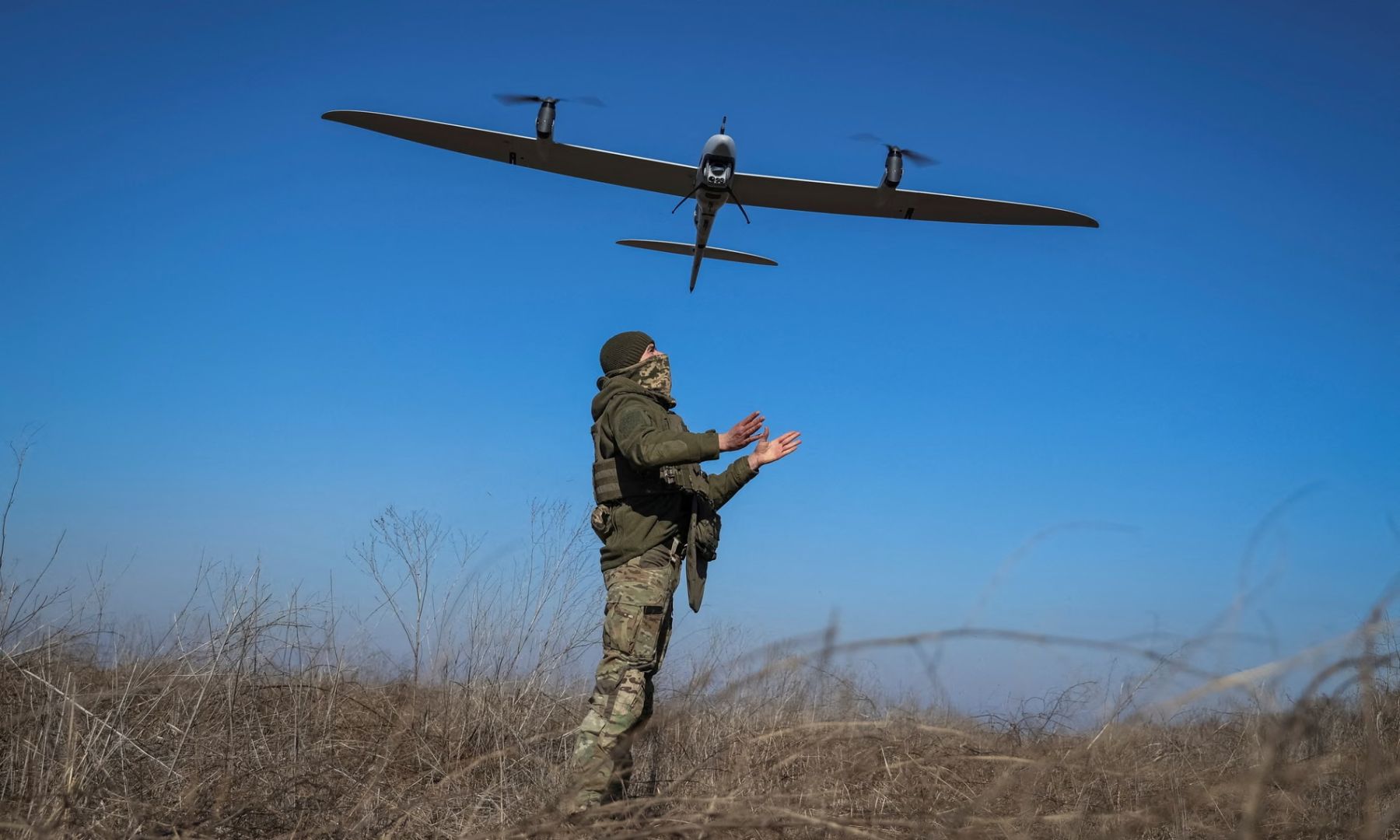
According to the report, Ukraine expects to manufacture more than seven million drones in 2026, compared with approximately 2.2 million in 2024 and only several hundred at the beginning of the invasion.
Ukrainian companies have also expanded production of long-range munitions, cruise missiles, ballistic missiles and electronic warfare systems.
Among the country's leading manufacturers is the Luch State Design Bureau, developer of the Neptune missile system.
The company's director general, Oleh Korostelyov, believes Ukraine has developed sufficient military-industrial capabilities to impose significant costs on any adversary attacking the country.
Nevertheless, he acknowledged that Ukrainian weapons production remains substantially below Russian levels.
Development of the Neptune missile began in 2010, but financing for serial production was not allocated until late 2020.
According to Korostelyov, annual Neptune production in 2026 is measured in hundreds rather than thousands of missiles.
The company also manufactures more than 1,000 Palyanytsia jet-powered drones annually.
By comparison, Ukrainian military intelligence estimates that Russia produces approximately 3,000 jet-powered attack drones per month.
Despite progress in missile development, Ukraine has yet to establish a fully domestic air defense missile system capable of providing comprehensive protection against Russian missile attacks.
As a result, Kyiv remains dependent on limited supplies of American and European air defense systems.
Fragmented defense sector faces growing financial pressure
The rapid expansion of Ukraine's defense industry has been driven partly by the emergence of private manufacturers, many established by entrepreneurs without traditional military-industrial backgrounds.
One example is Fire Point, founded in 2022. Its chief executive, Iryna Terekh, previously worked in furniture design before entering the defense manufacturing sector.
The company now produces long-range drones and missiles used by Ukrainian forces.
Other manufacturers have drawn on expertise from international technology companies, incorporating commercially available components into drones and electronic warfare equipment.
This approach has allowed Ukrainian engineers to rapidly develop, test and modify weapons based on operational feedback from the battlefield.
However, the decentralized structure that initially accelerated innovation is increasingly creating financial and organizational challenges.
With government procurement distributed among more than 1,300 companies, the domestic market cannot provide sufficient resources for every manufacturer to expand sustainably.
Nico Woods, a former adviser to the Ukrainian government on defense production, warned that some companies contribute relatively little to military operations while competing for scarce funding and skilled personnel.
The report also highlights concerns that fragmented procurement practices may prevent resources from reaching manufacturers capable of delivering the greatest operational benefits.
Russian attacks and labour shortages complicate expansion
Russian strikes on Ukrainian industrial infrastructure have forced defense manufacturers to disperse production across multiple locations and invest additional resources in security measures.
Some companies have also encountered difficulties securing suitable industrial premises because property owners fear that hosting military production facilities could expose their buildings to Russian attacks.
Meanwhile, shortages of qualified workers have become another major obstacle.
Millions of Ukrainians have left the country since the beginning of the war, while others have joined the armed forces, reducing the pool of available engineers, technicians and industrial workers.
Domestic financing constraints have further complicated expansion, encouraging manufacturers to seek foreign investment and establish production facilities outside Ukraine.
Ukrainian manufacturers increasingly turn to Western markets
Several Ukrainian defense companies have begun expanding their international operations to secure additional capital, production capacity and access to larger markets.
Uforce, a UK-based company connected to Ukraine's defense sector, plans to manufacture maritime drones at ReconCraft's facilities in Portland, Oregon.
Other Ukrainian companies have already established drone production operations in the United Kingdom and Germany.
Ark Robotics, which develops unmanned ground vehicles, has opened its headquarters in Estonia and established manufacturing operations there.
Fire Point is considering selling a stake in the company to attract investment, while Swarmer, a developer of artificial intelligence systems for military applications, is based in Austin, Texas, and is listed on the New York Stock Exchange, according to the report.
Oleg Roginsky, head of Uforce, said Ukrainian manufacturers are increasingly seeking access to Western financial markets and larger customers as domestic production becomes more difficult to expand.
The shift towards overseas manufacturing reflects the growing challenges of maintaining industrial operations under the constant threat of Russian attacks.
According to The Wall Street Journal, Ukraine's next challenge will be transforming its rapidly expanding defense sector into a sustainable industrial system capable of producing advanced weapons at greater scale.
Achieving this will require more predictable financing for leading manufacturers, solutions to skilled labour shortages and additional production capacity beyond the reach of Russian strikes.
Here we are to serve you with news right now. It does not cost much, but worth your attention.
Choose to support open, independent, quality journalism and subscribe on a monthly basis.
By subscribing to our online newspaper, you can have full digital access to all news, analysis, and much more.
You can also follow AzerNEWS on Twitter @AzerNewsAz or Facebook @AzerNewsNewspaper
Thank you!