
Shift from oil to lithium sparking new global race for strategic resources

Ulviyya Poladova
Read moreThe twentieth century unfolded under the sign of oil. Often called "black gold," petroleum powered industrial development, transformed transportation, and redrew the geopolitical map. Access to oil influenced alliances, wars, trade routes, and the rise of major economic powers. Today, the energy transition is at the forefront of the global agenda, and it needs its own fuel. Its name is lithium - the lightest metal, without which we would not have smartphones and laptops, electric vehicles, or energy storage systems for solar and wind power.
According to experts, lithium could become a resource that will largely determine the logic of future international conflicts and the technological leadership of nations. Its importance extends beyond consumer electronics because lithium is becoming a foundation of transportation, electricity infrastructure, and national security. For these reasons, lithium is frequently described as the "oil of the new economy." Nevertheless, control over lithium extraction and technological expertise may shape economic power and international competition much as control over oil did in the previous century.
Why lithium matters
Lithium has several physical and chemical characteristics that make
it particularly valuable. It is exceptionally light, has a high
electrochemical potential, and allows batteries to store large
amounts of energy relative to their weight. These properties make
lithium-ion batteries compact, rechargeable, and powerful. The
technology changed personal electronics by allowing devices to
become smaller, lighter, and portable. Mobile phones no longer
needed to remain connected to cables, while laptops and tablets
could operate for hours away from electrical outlets. The same
principle is now transforming transportation. Electric vehicles
require much larger battery packs than consumer electronics, making
the automotive industry the most important source of additional
lithium demand.
Despite a rapid expansion in mining, lithium could face a serious supply shortage within the next decade. According to the International Energy Agency (IEA), global lithium demand could increase almost fivefold by 2040, exceeding 500,000 tonnes in terms of pure lithium content. If the world continues to follow its current climate policies, demand could exceed supply by one-third by 2035. Under a more ambitious scenario aimed at achieving carbon neutrality by 2050, demand for the metal would grow even more rapidly.
Where lithium comes from
Because lithium is highly reactive, it does not occur naturally as
a pure metal. It is found in dissolved salts and solid minerals.
Commercial production generally comes from mineral-rich brines and
hard-rock deposits.
Brine extraction is especially important in the dry regions of South America. Underground water containing dissolved lithium is pumped to the surface and traditionally placed in large evaporation ponds. Over time, water evaporates and leaves behind increasingly concentrated salts, which are processed into lithium compounds. One of the world's best-known resources is Chile's Salar de Atacama, a vast salt flat covering roughly 3,000 square kilometres. Its lithium resources have helped establish Chile as a major producer, leading some observers to call the country the "Saudi Arabia of lithium." Chile, Argentina, and Bolivia form the so-called Lithium Triangle, a region containing a large share of the world's identified brine resources.
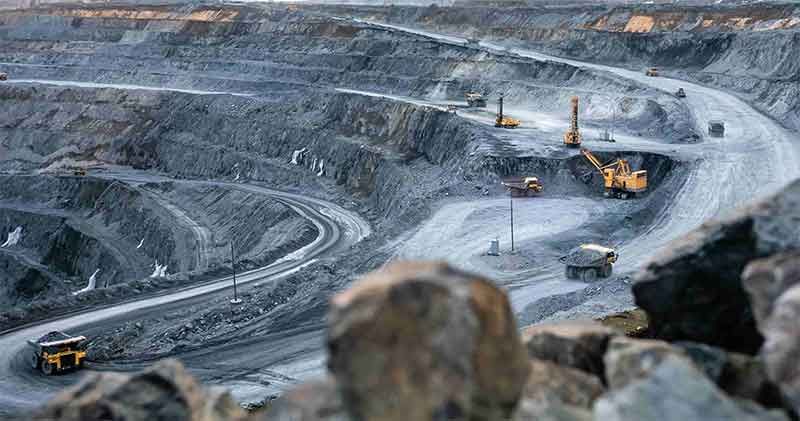
Hard-rock lithium is usually extracted from minerals such as spodumene. Australia is a leading producer of this kind of material. Hard-rock mining can bring projects into production more quickly than traditional brine evaporation, but it is energy-intensive and requires substantial crushing, concentration, and chemical processing. The United States and China are unique in this regard, as they are among the countries possessing both hard-rock lithium deposits and lithium-rich salt flats. In recent years, digitalization has become a major factor driving demand for lithium. As the number of electronic devices has increased, so too has the need for efficient and high-capacity batteries.
But that is far from all. Lithium is also used in:
- metallurgy, where it improves the flexibility and strength of alloys;
- glass production, including glass designed to block ultraviolet radiation;
- nuclear energy, for the production of tritium and potentially for use in fusion energy systems;
- medicine, particularly in the treatment of bipolar disorder and depression;
- the production of lubricants with excellent water-repellent and heat-resistant properties;
- energy storage systems for solar and wind power plants.
No analysis of lithium geopolitics is complete without China. Its strength does not rest solely on domestic mineral deposits. More importantly, China has built a highly integrated industrial ecosystem connecting overseas mining investments, chemical refining, battery materials, electric vehicles, and energy-storage systems. Chinese companies have invested in lithium projects across Australia, Argentina, Bolivia, Chile, and other resource-rich regions. These investments provide access to raw material. China accounts for around 60% of global lithium processing.
China's enormous domestic electric-vehicle market reinforces this advantage. In 2022, the country produced approximately 6.89 million new-energy vehicles, nearly double the previous year's output, and represented around two-thirds of global electric-vehicle sales. Rising battery production also increased Chinese lithium imports, even as domestic extraction expanded. Other countries increasingly view this concentration as a strategic vulnerability. The United States, members of the European Union, Japan, South Korea, and India are promoting domestic battery factories and partnerships with mineral-producing states.
Lithium supports technologies associated with the green transition, but its extraction is not automatically environmentally sustainable. This contradiction has led critics in parts of Latin America to describe lithium mining as a form of "white death." Thus, the continuously growing demand for lithium from global industry, combined with the environmental damage associated with its extraction, raises questions about the true "green" credentials of lithium-ion batteries. The world wants less oil in order to reduce environmental damage, but to produce green energy technologies, it is necessary to extract new resources, sometimes creating serious environmental problems.
The only factor that could reduce lithium prices in the foreseeable future (potentially by 30-40%) would be a large-scale global recession that significantly reduces demand for all types of vehicles, including electric ones. Even then, however, prices would not fall below the levels seen in 2021, let alone those of earlier periods. At the same time, battery production for other applications could help sustain lithium demand even if electric vehicle sales were to collapse.
Lithium mining and ore production could, within just a few years, become the "new oil," creating vast economic opportunities for entire countries and transforming the fortunes of resource-rich economies.
Countries around the world are seeking to gain control over materials that are critical to the green transition. These challenges are becoming more acute as geopolitical tensions contribute to the fragmentation of the global economy, while supply chains remain highly vulnerable to geopolitical risks. In the short and medium term, supply shortages may emerge as demand for certain materials, as lithium, continues to grow while mining remains concentrated among a limited number of producers.
Here we are to serve you with news right now. It does not cost much, but worth your attention.
Choose to support open, independent, quality journalism and subscribe on a monthly basis.
By subscribing to our online newspaper, you can have full digital access to all news, analysis, and much more.
You can also follow AzerNEWS on Twitter @AzerNewsAz or Facebook @AzerNewsNewspaper
Thank you!