
Mugham art: Living tradition carried through centuries

Laman Ismayilova
Read moreThere are sounds that belong to a particular place, and there are sounds that seem to belong to humanity itself. Azerbaijani mugham is one of them. Deeply rooted in the country's history, it carries the emotions, memories and worldview of generations, passing from one voice to another without losing its character.
Mugham is more than a musical tradition in Azerbaijan. It is part of the country's cultural memory. Its melodies can express joy without words, speak of sorrow without explaining it, and create a sense of longing, dignity and belonging through sound alone. For centuries, mugham has accompanied the lives of Azerbaijanis and remained closely connected with poetry, storytelling and traditional musical performance.
The art is built around several principal mugham modes, including Rast, Shur, Segah, Bayati-Shiraz, Chahargah, Shushtar and Humayun. Each has its own character and emotional colour. Yet mugham is not simply a collection of fixed melodies. Its beauty lies in interpretation. The performer follows a musical path while allowing room for feeling, improvisation and personal expression. No two performances need to sound exactly alike.
This freedom has helped mugham survive and develop across centuries. It has remained faithful to its roots while finding a place in new forms of music. One of the most important examples came from composer Uzeyir Hajibayli, whose "Leyli and Majnun" became the first mugham-based opera. Later, Fikrat Amirov brought mugham into the symphonic world with works such as "Shur" and "Kurd-Ovshari".
Mugham has also influenced generations of Azerbaijani composers and musicians, from Niyazi and Gara Garayev to Arif Malikov and Frangiz Alizadeh. In the hands of Vagif Mustafazadeh, it entered a new musical world through his distinctive combination of mugham and jazz. His work showed that an ancient tradition could speak naturally through a modern musical language.
Its journey has never been limited to Azerbaijan. Mugham recordings were included in UNESCO's "Anthology of Traditional Music of the World" in the 1970s. Azerbaijani mugham also reached an unexpected audience through Andrei Tarkovsky's film "Stalker". In 1977, a recording of Azerbaijani mugham was even sent into space by NASA as part of the Voyager Golden Record project, carrying a small piece of the country's musical heritage beyond Earth.
International recognition followed. In 2008, Azerbaijani mugham was added to UNESCO's Representative List of the Intangible Cultural Heritage of Humanity. The recognition reflected not only its artistic value, but also the importance of preserving a living tradition passed from masters to younger generations.
The revival of mugham in contemporary Azerbaijan has been supported by major cultural initiatives. The Heydar Aliyev Foundation has played a major role in promoting the art through international festivals, competitions, concerts, publications and educational projects. The "World of Mugham" International Music Festival, launched in 2009, has become an important meeting point for performers, researchers and lovers of traditional music from different countries.
Baku's International Mugham Center has given this art another permanent home. Opened in 2008, the building itself reflects the musical tradition it represents, with its design inspired by the tar, one of the main instruments used in mugham performance. Concerts, festivals, masterclasses and research projects held at the center continue to introduce mugham to new audiences.
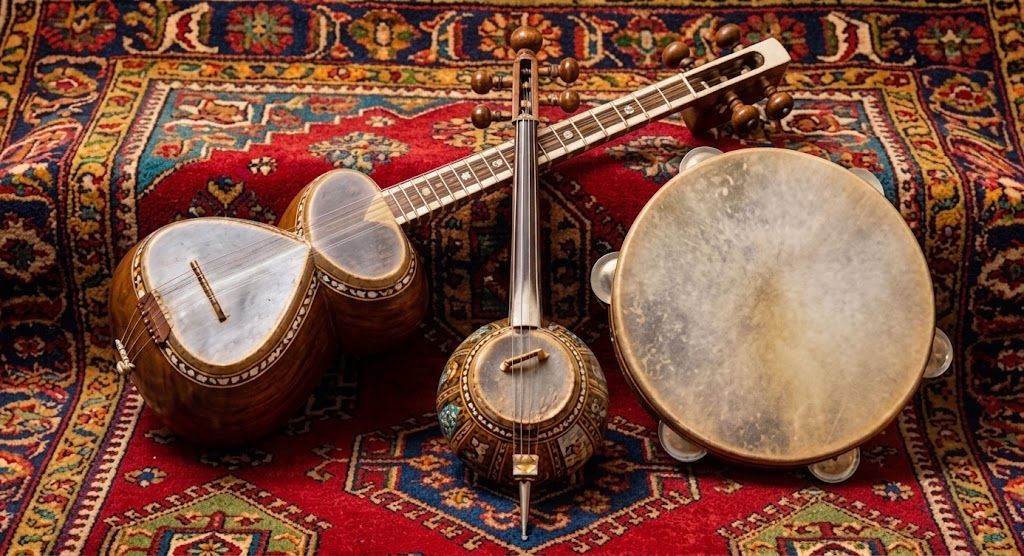
Perhaps the greatest strength of mugham is that it does not need translation. A listener may not understand every poetic reference or know the history behind a particular mode, yet the voice, the tar, the kamancha and the rhythm can still communicate something immediate and deeply human.
That is why mugham has endured. It has changed with its performers, entered concert halls and cinemas, travelled across borders and even reached outer space, but its heart has remained the same. It is the sound of a culture remembering itself - and finding new ways to be heard.
*AI-generated photo
Here we are to serve you with news right now. It does not cost much, but worth your attention.
Choose to support open, independent, quality journalism and subscribe on a monthly basis.
By subscribing to our online newspaper, you can have full digital access to all news, analysis, and much more.
You can also follow AzerNEWS on Twitter @AzerNewsAz or Facebook @AzerNewsNewspaper
Thank you!