
Poisonous substances found in former Turkish president's organs
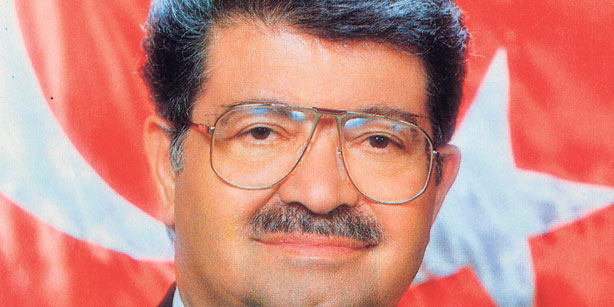
According to sources from the Council of Forensic Medicine (ATK), poisonous substances were found in the internal organs and tissues of former President Turgut Özal, not in soil taken from his grave for toxicological testing,Today's Zaman reported.
The sources told Today's Zaman over the weekend on condition of anonymity that four different poisonous substances were detected in the former president's remains and that Özal was most likely poisoned with those substances. An investigation is currently under way into the death of Özal, who was reported to be the victim of a heart attack in 1993. His remains were exhumed in October for toxicological testing.
ATK sources said that among poisonous substances found in Özal's remains were DDT (dichlorodiphenyltrichloroethane), which is used as an insecticide and was banned in Turkey in 1980, and DDE, a DDT breakdown product, which causes heavy damage to the liver after being absorbed by the body.
Experts noted that the poison, which is found in nature and the human body naturally, was present in Özal's body at 10 times the normal level. Experts also detected the presence of cadmium, a chemical element, in his body. In addition, experts also found the radioactive elements americium, a transuranic radioactive chemical element, and polonium in Özal's remains.
According to the experts, the former president's body was weakened with americium and polonium over a long period of time, and with the use of DDT his death was accelerated. The DDT might have entered Özal's body through food or drink, experts suggested. They are now investigating what food the former president consumed in the meals he ate during his last days.
The ATK has yet to finalize the report about its findings on Özal's remains, which it has to do by December. The report will then be handed over to the Ankara Chief Public Prosecutor's Office, which is investigating the former president's death.
After the ATK findings made their way into the press, some claimed that they did not reflect the truth and that poisonous substances from the soil in the grave had affected Özal's tissue. However, ATK sources refuted the claims, saying that the soil surrounding the body to a distance of 40 centimeters was also subjected to toxicological testing and that no poisonous substances were detected in the soil. According to the sources, the poisonous substances were mostly found in the former president's internal organs such as liver, brain and small intestines.
The Ankara Chief Public Prosecutor's office is also investigating a number of unusual circumstances that came to light following Özal's alleged heart attack. Certain facts -- including that on the day of his death his in-house doctor and nurse were both out, the staff was not able to start the ambulance due to a mechanical problem, there was a lack of first aid equipment at the presidential residence and other similarly unusual issues -- have led to suspicions surrounding the death of the former president.
Additionally, the office has focused on inconsistencies between the statements made by Özal's doctor and his family members regarding the initial failure to perform an autopsy. Özal's doctor, Cengiz Aslan, claimed that the family of the former president did not request an autopsy, but the Özal family denies this claim.
In early November, a Turkish daily cited an unpublished autopsy report by the ATK and claimed that Özal was poisoned by "strychnine creatine," a powerful poison that leads to respiratory arrest in 15-20 minutes and could also cause a heart attack.
Former President Süleyman Demirel, who was elected to office by Parliament after Özal's death, spoke to reporters about the new poisoning evidence in the death of Özal on Monday and called it "nonsense." He said he would never pay heed to claims or evidence that Özal was assassinated. "I will never agree with claims that Özal was killed. If this is the case, then prosecutors have got to prove it and find the perpetrators," he noted.
Ahmet Özal, the son of the late president Turgut Özal, spoke to Today's Zaman about the poisoning evidence brought forward by ATK officials and expressed his belief that large-scale probes will be launched by civilian prosecutors to investigate several incidents that have remained untouched once the ATK makes public the official report and its findings.
According to Ahmet Özal, sources from the ATK also told him that his father was definitely poisoned. "The first probe likely to be launched [after the announcement of the ATK report on Özal's death] is into the assassination attempt against my father," Ahmet Özal stated, and added that the other possible future probes will probably be launched into the assassinations of several political and military figures.
Özal survived an assassination attempt during the Motherland Party's (ANAP/ANAVATAN) congress on June 18, 1988. One bullet wounded his finger, while another bullet missed his head. The assassin, Kartal Demirağ, was immediately captured and sentenced to life in prison but was later pardoned.
Ahmet Özal said his father was killed as part of a dark plan that also led to the assassinations of journalists Uğur Mumcu and Ahmet Taner Kışlalı and military generals Cem Ersever and Eşref Bitlis as well as the killings of 33 soldiers in eastern Bingöl province in 1993 and the Madımak massacre, in which 37 people were killed in a hotel fire in Sivas. "We cannot separate any of these incidents from one another. They were part of the same plan [to foment chaos in society for a coup d'état]. They should be investigated all together," Ahmet Özal added.
Here we are to serve you with news right now. It does not cost much, but worth your attention.
Choose to support open, independent, quality journalism and subscribe on a monthly basis.
By subscribing to our online newspaper, you can have full digital access to all news, analysis, and much more.
You can also follow AzerNEWS on Twitter @AzerNewsAz or Facebook @AzerNewsNewspaper
Thank you!