
Antalya Diplomacy Forum highlights emerging Türkiye–Azerbaijan strategic axis

Ulviyya Poladova
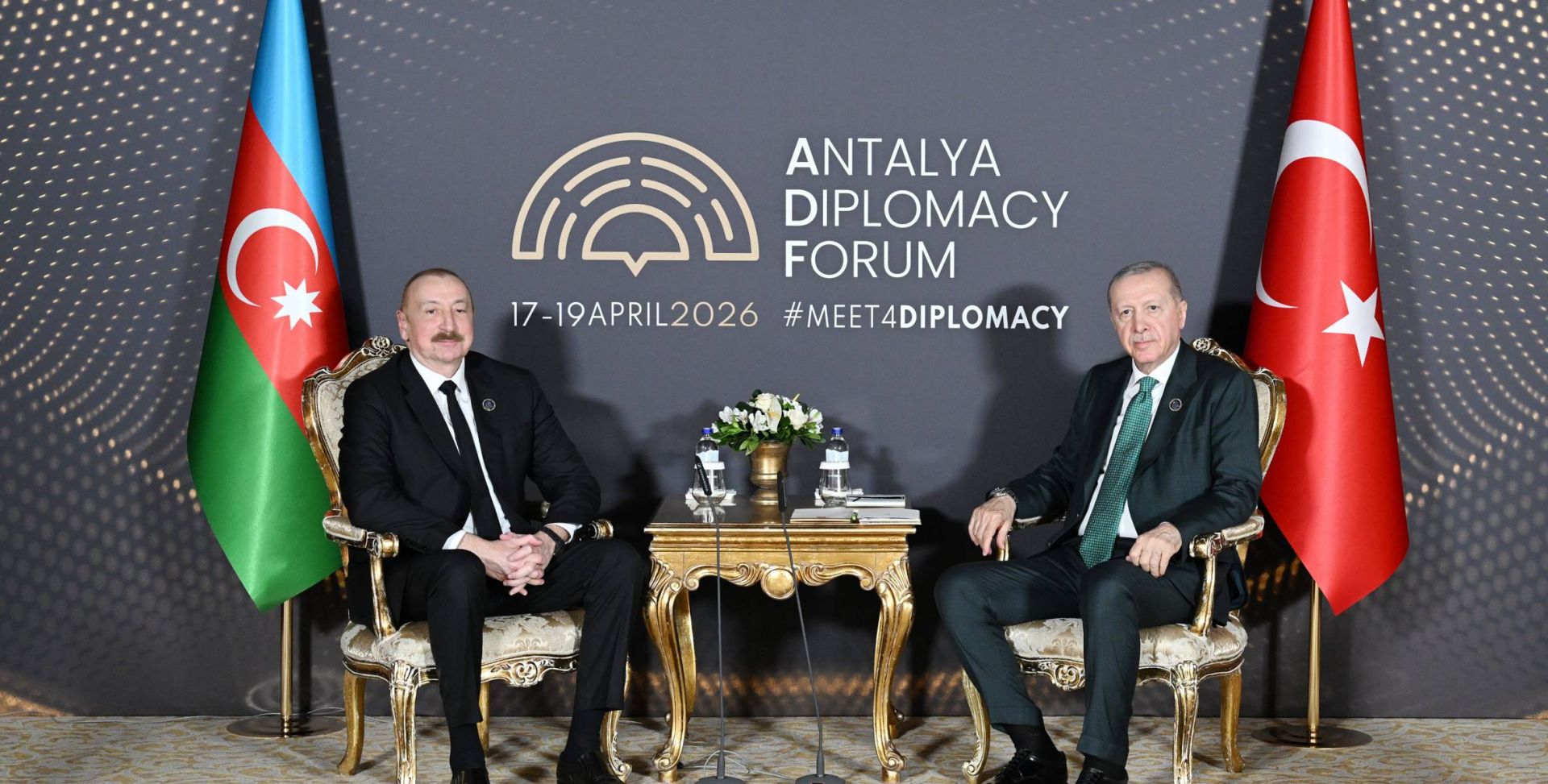
Read moreThe fifth edition of the Antalya Diplomacy Forum, held under the theme Mapping Tomorrow, Managing Uncertainties, featured a panel discussion on The Role of Regional Ownership in a Transforming World.
The timing of the forum is significant. The international system is passing through a period in which many of the traditional rules governing alliances, security frameworks and cooperation are steadily losing influence, while a new global order has yet to fully emerge.
Amid geopolitical tensions, shifting balances of power, rising trade barriers and growing pressure on multilateral institutions, the global landscape is becoming increasingly unpredictable. In response, regional actors are placing greater emphasis on locally driven solutions, strategic autonomy and partnerships based on shared interests.
Against this backdrop, the concept of “regional ownership” has gained renewed importance. Rather than relying solely on external powers to shape outcomes, countries are seeking to build mechanisms that reflect regional priorities, economic realities and security needs.
The Antalya Diplomacy Forum has become one of the leading platforms for these discussions, bringing together policymakers, diplomats and experts to examine how regional cooperation can address global uncertainty. For countries such as Azerbaijan and Türkiye, it offers an opportunity to demonstrate how middle powers can play a more active role in shaping their neighbourhoods.
Both states have increasingly positioned themselves as advocates of connectivity, energy security and pragmatic diplomacy. Through transport corridors, trade initiatives and political coordination, they have sought to strengthen regional resilience at a time when established international mechanisms are under strain.
This approach has acquired greater relevance against the backdrop of escalating instability in the Middle East, disruptions to global supply chains and persistent security crises across several regions. As strategic geography regains importance, countries capable of linking markets, energy routes and political interests are gaining greater influence.
The participation of President Ilham Aliyev in the Antalya Forum underlines Baku’s intention to remain an active diplomatic player in these emerging debates, while Türkiye continues to use the platform to project its growing regional role.
In a comment for AzerNEWS, a Professor of Erzincan Binali Yilidirim University Ainur Nogayeva noted that the gradual weakening of classical international institutions and the growing fragmentation of the global system have created a demand for more flexible, inclusive, and faster diplomatic channels.
As Nogayeva highlighted Azerbaijan has increasingly positioned itself as an influential diplomatic actor not only in the South Caucasus but also across the wider Eurasian region. A key milestone in this development is its hosting of COP29, a major global climate conference. This reflects Azerbaijan’s effort to combine its identity as an energy-producing country with green transformation, climate diplomacy, and sustainable development initiatives.
In addition, Azerbaijan has been playing a more central role within the Organization of Turkic States. Expert said that it serves as a critical hub in strengthening the Middle Corridor, improving transport links between Central Asia and Türkiye, and expanding energy connectivity. As a result, Azerbaijan is no longer only an energy exporter but also a transit hub, logistics center, and diplomatic bridge between regions.
She recalled Azerbaijan’s chairmanship of the Non-Aligned Movement from 2019 to 2023, stating that during this period the country strengthened the organization’s relevance, supported global solidarity during the COVID-19 pandemic, and consistently defended principles of sovereignty and territorial integrity. Analyst added that Azerbaijan’s current role in European energy security and regional normalization further enhances its diplomatic capacity.
On the question of whether multilateral platforms can reduce tensions between rival states, she stated that while such platforms cannot fully resolve conflicts on their own, they are extremely important tools for de-escalation. According to her, they provide neutral spaces where communication becomes possible even when direct diplomatic relations are absent, allowing confidence-building measures and informal dialogue to take place.
Speaking about Türkiye - Azerbaijan relations, she told that the partnership has gone beyond traditional alliance and is now moving toward strategic integration.
Nogayeva also noted that joint participation in platforms such as the Antalya Diplomacy Forum strengthens not only bilateral relations but also contributes to the institutional development of the broader Turkic world. Referring to projects such as TANAP, the Middle Corridor, post - Karabakh regional initiatives, and defense cooperation, she concluded that Türkiye - Azerbaijan relations now represent a strategic partnership influencing the balance of power across the Caucasus, Central Asia, and the wider Eurasian region.
The Antalya Diplomacy Forum has effectively highlighted a key trend of our time: the shift from global to regional problem-solving. In this evolving landscape, Azerbaijan and Türkiye are not merely adapting - they are actively shaping the rules of engagement in their neighborhood.
Here we are to serve you with news right now. It does not cost much, but worth your attention.
Choose to support open, independent, quality journalism and subscribe on a monthly basis.
By subscribing to our online newspaper, you can have full digital access to all news, analysis, and much more.
You can also follow AzerNEWS on Twitter @AzerNewsAz or Facebook @AzerNewsNewspaper
Thank you!