
South Caucasus and regional risks of Middle East escalation

Elnur Enveroglu
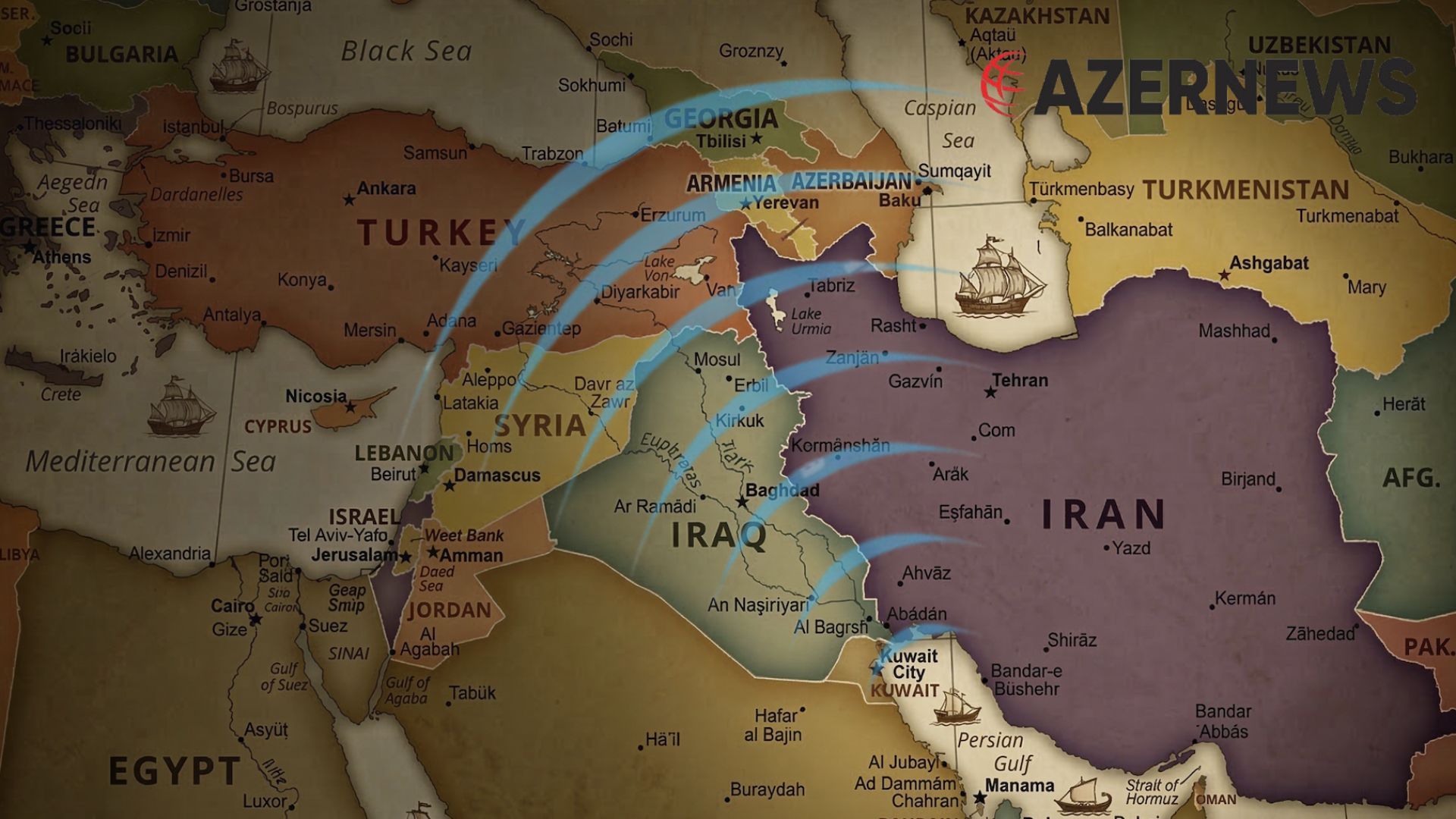
Read moreThe intensifying confrontation between Iran, Israel and the United States is no longer confined to the Middle East. Its shockwaves are being felt across the South Caucasus, a region that has quietly assumed the role of a strategic buffer between competing power centres. Because for countries such as Azerbaijan, Georgia and Armenia, the risks are no longer theoretical. They are rather structural, immediate and increasingly difficult to hedge.
At its core, the South Caucasus sits at the intersection of rival geopolitical axes. To the south lies Iran, facing mounting pressure from Israel and its Western allies. And to the north, Russia remains another rival of the West with its growing ambitions for the region despite its diminished bandwidth following the war in Ukraine. Besides, Armenia, a country at the crossroad of a fragile peace and obscure future due to its complex domestic political system, remains elusive to guarantee an eternal peace in the region. This geography, once seen as a liability, has in recent years become an asset, and today, it risks becoming a fault line.
However, the most immediate danger stems from escalation. Should the Iran–Israel confrontation widen into direct and sustained conflict, the South Caucasus could find itself exposed to spillover effects ranging from missile trajectories to cyber warfare and covert operations. As one regional analyst told Reuters, a prolonged Iran–Israel confrontation could “expand beyond its immediate theatre through proxy networks and logistical disruption”, a scenario that would place transit states such as Azerbaijan under acute pressure.
Worst case scenarios are not difficult to imagine. A closure or disruption of key maritime routes in the Persian Gulf could redirect energy flows and increase reliance on overland corridors passing through the Caucasus. While this may initially boost transit revenues, it would also expose infrastructure to security threats. Pipelines such as the Southern Gas Corridor, which carries Azerbaijani gas to Europe, could become strategic targets in a broader confrontation.
The second scenario could be the risk of Iran's proxy forces spreading further in the region as a result of heightened pressure on Iran. Although this region is not directly targeted, it could pose a serious threat to the West and Israel's allies in the region. In addition, the increase in tensions could lead to an imbalance in some ethnically and religiously sensitive regions. It is known that Israeli-Azerbaijani cooperation is also of particular importance in the defense sector. In this regard, cooperation between the parties may attract the attention of Iran as a risk factor.
A third and more severe outcome, which looks more like geostrategic, would be the fragmentation of regional trade routes. The Middle Corridor, which links Central Asia to Europe via the Caspian Sea and the South Caucasus, has gained importance since Russia’s invasion of Ukraine. However, a wider Middle East conflict could disrupt its southern connections, undermine investor confidence and slow infrastructure development. The result would be a reversal of one of the region’s most promising economic transformations.
The economic consequences of prolonged instability would be profound. Energy markets would become more volatile, with price spikes affecting both importers and exporters. Inflationary pressures could intensify across the Caucasus region, particularly in smaller economies such as Georgia and Armenia that are heavily reliant on external trade. Foreign direct investment, already sensitive to geopolitical risk, would likely decline. Insurance costs for transport and logistics would rise, eroding the competitiveness of regional corridors.
Over the longer term, the region risks being locked into a cycle of strategic uncertainty. Infrastructure projects may be delayed or scaled back. Trade diversification efforts could stall. Most critically, the perception of the South Caucasus as a stable bridge between Europe and Asia would be undermined, with lasting consequences for growth and integration.
Against this backdrop, the roles of Azerbaijan and Turkiye become particularly significant. Both countries possess the diplomatic reach and strategic positioning to contribute to de escalation efforts. Azerbaijan, which maintains working relations with Israel, Iran and Western partners, is uniquely placed to act as a quiet interlocutor. Its foreign policy has long prioritised balance, avoiding overt alignment while advancing economic cooperation across multiple fronts.
Turkiye, for its part, has demonstrated an ability to engage simultaneously with NATO allies and regional adversaries. Ankara’s past mediation efforts, including its role in facilitating dialogue during the early stages of the Ukraine war, illustrate its capacity to act as a broker. In the context of the Iran–West standoff, Turkiye’s channels with Tehran, Washington and regional actors could prove critical in preventing miscalculation.
There is also a practical dimension to their role. Both Azerbaijan and Turkiye are central to emerging energy and transport networks that the West increasingly relies upon. This creates a shared interest in stability and provides leverage in diplomatic engagement. By framing de-escalation as essential to the security of global supply chains, they can align regional priorities with broader international concerns.
However, mediation is not without risk. Any perceived tilt towards one side could invite political or economic retaliation. The challenge for both countries lies in maintaining credibility as neutral facilitators while safeguarding their own national interests.
The South Caucasus did not choose to become a buffer zone. Yet in an era of shifting alliances and expanding conflicts, that is precisely what it has become. Its future will depend not only on the trajectory of the Iran–West confrontation, but on the ability of regional actors to navigate an increasingly complex landscape. Stability, once taken for granted, is now the region’s most valuable and most fragile asset.
Here we are to serve you with news right now. It does not cost much, but worth your attention.
Choose to support open, independent, quality journalism and subscribe on a monthly basis.
By subscribing to our online newspaper, you can have full digital access to all news, analysis, and much more.
You can also follow AzerNEWS on Twitter @AzerNewsAz or Facebook @AzerNewsNewspaper
Thank you!