
'Turkic quality mark’ could ease market entry for businesses across OTS

Ulviyya Poladova
Read moreEconomic cooperation among the Organization of Turkic-speaking States is gaining momentum. But despite this, some companies still face differences in legislation, taxation, consumer demand and business practices in different countries, which complicates the application of a universal approach. At the same time, improving transport links and growing trade ties are creating new opportunities for businesses willing to build long-term partnerships in the region. The Middle Corridor, in particular, is strengthening connections between Azerbaijan, Central Asia and markets farther west, while initiatives aimed at industrial cooperation and common standards could further reduce barriers for companies.
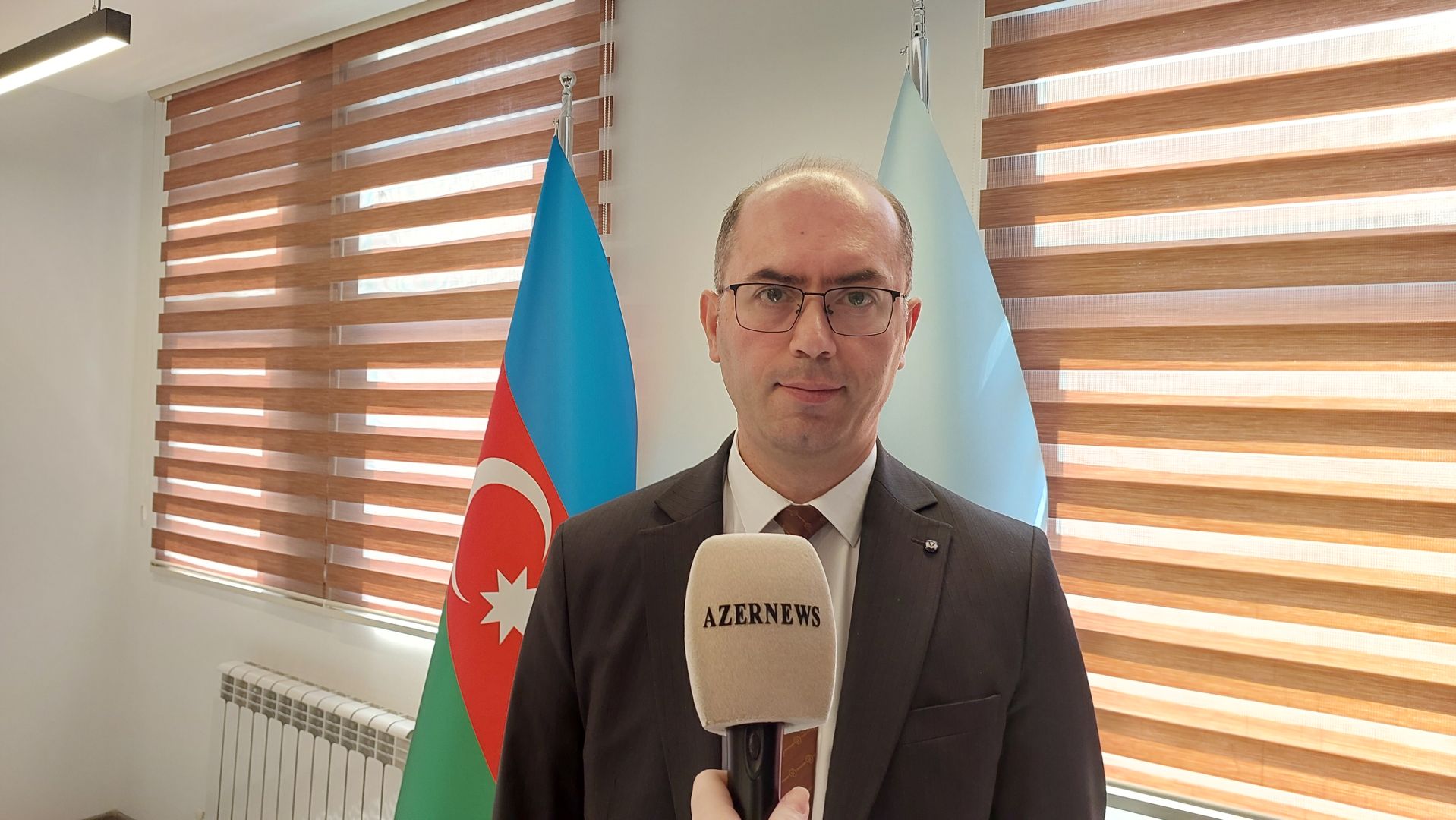
Azerbaijani companies seeking to enter the markets of the Organization of Turkic States (OTS) need to pay greater attention to market research and consider establishing joint ventures with local partners, according to Orkhan Yolchuyov, head of the CASPIA Analytical Center.
Speaking to AzerNEWS, Yolchuyov told that businesses often make the mistake of approaching OTS markets with the same strategy, despite significant differences between individual countries.
"It is necessary to study market research more carefully because every OTS market is completely different. The rules, regulations and tax policies are different," Yolchuyov said.
According to Yolchuyov, businesses could also benefit from creating joint service centers, developing joint products and establishing common supply chains.
"If these issues are taken into greater consideration, the OTS market has considerable potential," he emphasized.
Yolchuyov noted that the markets of the OTS countries are rapidly developing and have significant demographic potential. He particularly highlighted Kazakhstan and Uzbekistan, describing the Uzbek market as the largest in Central Asia in terms of population, with around 40 million people. The expert also emphasized the region’s logistics potential, particularly the role of the Middle Corridor.
"The Middle Corridor is like a vascular system, a circulatory system that feeds all these countries, inspires them and gives them oxygen," Yolchuyov said, adding that new economic relations are emerging between the countries along the route. He believes that Azerbaijani businesses will find it increasingly easier to enter OTS markets as regional connectivity develops.
Yolchuyov also proposed the development of a common "Turkic standard" that could make it easier for businesses to enter the markets of OTS member states.
"We need to create a kind of Turkic standard. There is a halal standard, right? We can create a Turkic standard," he said.
According to Yolchuyov, the CASPIA Analytical Center is already working on such an initiative, which he referred to as a "Turkic quality mark" for businesses. He said the initiative is expected to be presented at the headquarters of the Organization of Turkic States in the coming month.
"Such standards would give businesses an easier and more sustainable way to enter the markets of the OTS," Yolchuyov highlighted.
He compared the proposed system with halal certification, which provides consumers with an understanding that products comply with established standards.
Yolchuyov also pointed to the OTS Investment Fund, which he said has a budget of $500 million. In his view, part of these resources should be directed toward establishing joint ventures, industrial cooperation and industrial alliances among the member states.
He drew a parallel with the early stages of European integration, saying that industrial cooperation played an important role in the creation of the European Union. According to him, creating a strong and sustainable union within the OTS requires greater industrial cooperation and the integration of production across member states.
Regarding Azerbaijan-Uzbekistan economic relations, Yolchuyov highlighted the potential role of the Port of Alat in strengthening trade and logistics ties. He described Alat as one of the major ports in the Caspian region and pointed to the development of what he called the second southern branch of the Middle Corridor.
As the expert reported, this route would connect China, Kyrgyzstan and Uzbekistan with Turkmenistan’s railway network, before reaching the Port of Turkmenbashi and subsequently connecting with the Port of Alat.
"Uzbek business is already represented at the Port of Alat. I think there are opportunities, particularly for the creation of a terminal," he said.
Yolchuyov also highlighted the potential of the second phase of the Port of Alat, saying that the expansion would create opportunities for joint ventures and direct participation by Uzbek businesses. He particularly pointed to agriculture and the textile sector, where Uzbekistan traditionally has strong positions.
"At the moment, we are creating joint machine-building enterprises," he added, referring to projects in locations including Aghjabadi, Neftchala and Artsaram.
Yolchuyov said the Port of Alat could become an important western gateway for Uzbekistan’s trade with Europe.
Traditionally, he noted, Uzbek transit toward the West has passed through Iran and then Türkiye, while some cargo has been directed toward Iranian southern ports such as Bandar Abbas.
"Now we have a very unique opportunity when Uzbek cargo and goods can go through Azerbaijan and reach Europe and the Black Sea ports," he said. Yolchuyov linked this potential to discussions on strengthening connectivity between Azerbaijan and Uzbekistan during recent high-level visits.
He also pointed to Uzbekistan’s growing interest in connectivity through the South Caucasus and toward wider international markets via Azerbaijan, including through the Port of Alat and Azerbaijan’s railway infrastructure.
Looking ahead, Yolchuyov added that the potential operation of the TRIPP corridor through Zangezur could create additional opportunities not only for Uzbekistan but for Central Asia as a whole.
Here we are to serve you with news right now. It does not cost much, but worth your attention.
Choose to support open, independent, quality journalism and subscribe on a monthly basis.
By subscribing to our online newspaper, you can have full digital access to all news, analysis, and much more.
You can also follow AzerNEWS on Twitter @AzerNewsAz or Facebook @AzerNewsNewspaper
Thank you!