
Azerbaijan, Uzbekistan launch 'Business Barometer' to unlock new trade opportunities [PHOTOS]
![Azerbaijan, Uzbekistan launch 'Business Barometer' to unlock new trade opportunities [PHOTOS]](https://www.azernews.az/media/2026/09/15/20260915_113324.jpg)

Ulviyya Poladova
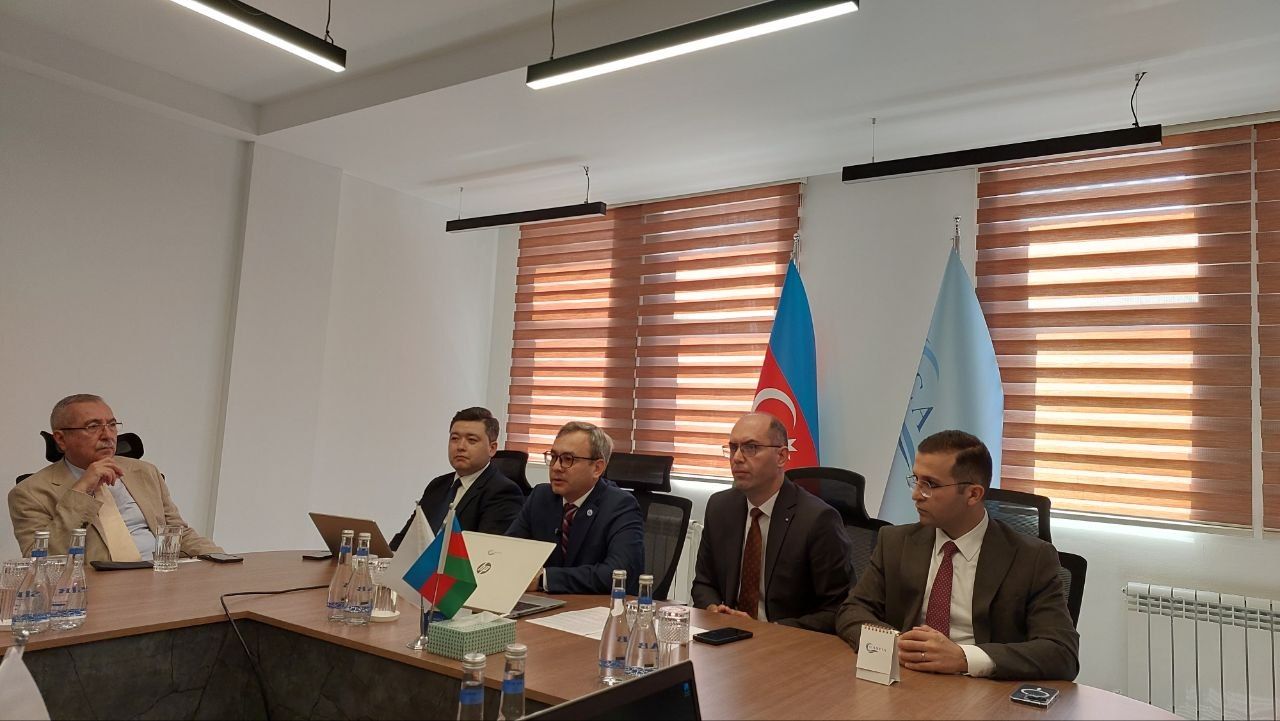
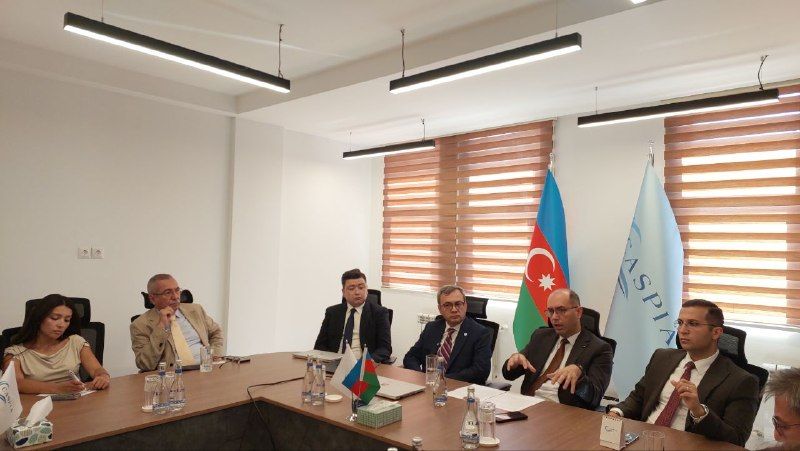
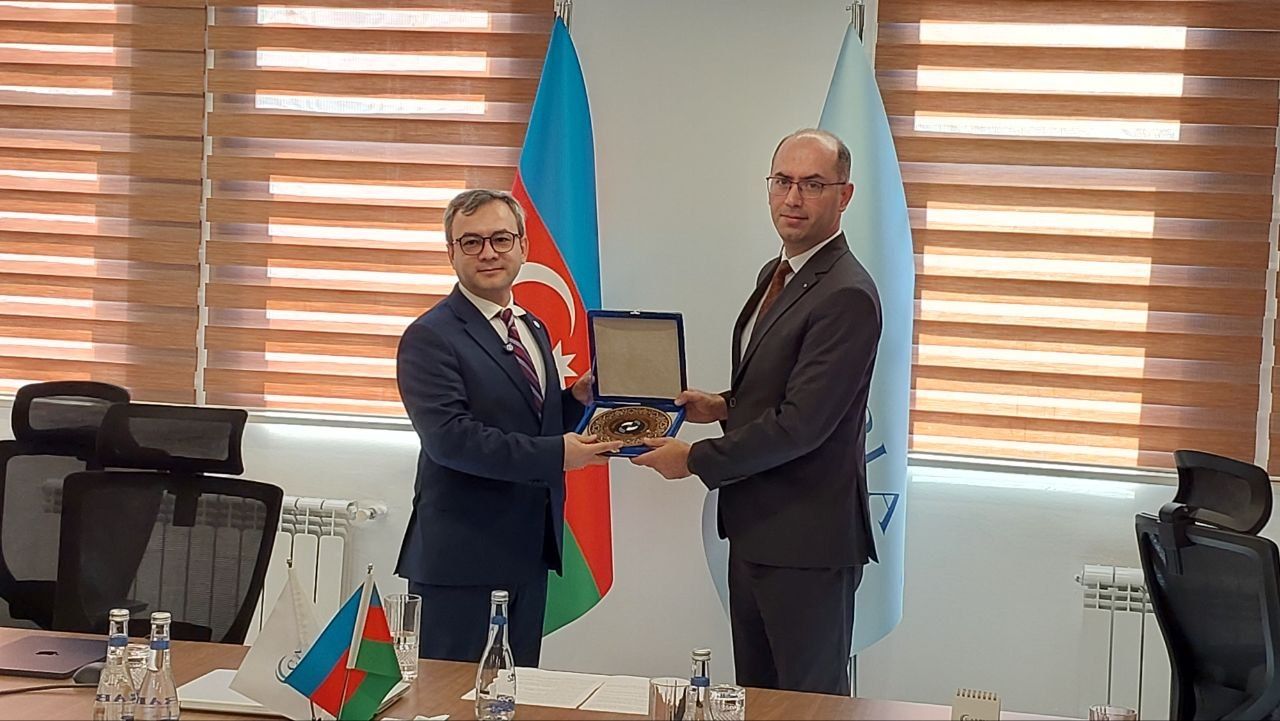
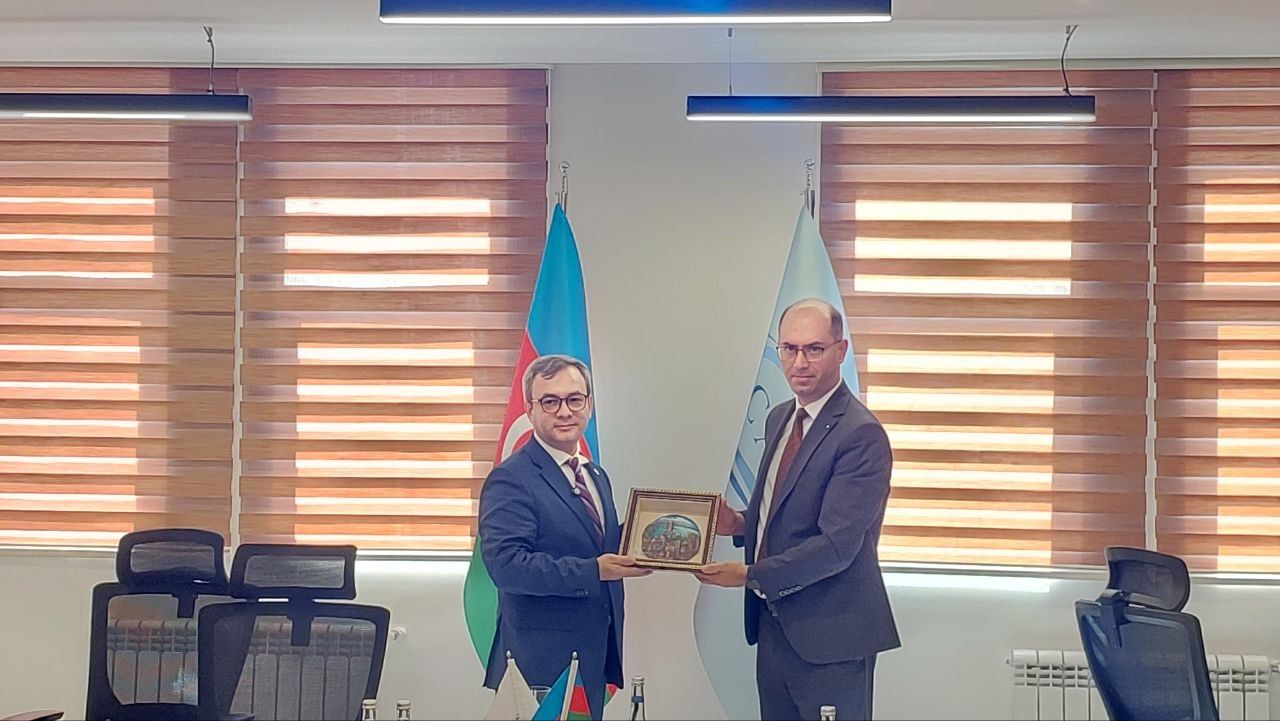
Read moreAzerbaijan’s CASPIA Analytical Center and Uzbekistan’s Center for Progressive Reforms (CPR) have presented a new joint initiative, the Azerbaijan-Uzbekistan Business Barometer, in Baku.
The platform is designed as a monthly practical bulletin that will monitor the real needs of businesses in both countries, identify existing barriers and highlight new opportunities for expanding bilateral economic cooperation.
The presentation was attended by CPR Director Mirshohid Aslanov, who is visiting Azerbaijan as part of efforts to strengthen expert and applied cooperation between the two countries.
During the meeting, experts stressed that the "Business Barometer" is intended to become a practical mechanism for regularly assessing business sentiment and identifying areas where bilateral economic cooperation can be expanded.
CASPIA Analytical Center head Orkhan Yolchuyov said that official statistics largely focus on trade turnover, figures and agreements, while the new initiative aims to examine the business environment in greater depth.
"Official statistics tell us more about trade turnover, figures and agreements, but we decided to go further and study the sentiment of businesses," Yolchuyov noted. According to him, the initiative will examine the level of integration of small and medium-sized enterprises, noting that large businesses are already actively represented in economic relations between Azerbaijan and Uzbekistan.
Yolchuyov also highlighted energy cooperation, the potential of the Middle Corridor toward the South Caucasus, as well as the development of an energy corridor, including a green energy corridor in which Azerbaijan is actively involved. The expert added that the initiative would also focus on investment and trade opportunities.
"Uzbek business is represented in Azerbaijan and is quite popular today. Uzbekistan has strong industrial potential, and we already have joint ventures. Considering the potential of Uzbekistan and Azerbaijan as a major transit hub, I believe that in the near future we can bring our joint production to premium markets," Yolchuyov stressed.
CPR Director Mirshohid Aslanov, in turn, noted that the leaders of Azerbaijan and Uzbekistan have set an important target of increasing bilateral trade turnover to $1 billion [note: at the current stage, bilateral trade has already exceeded $800 million].
Aslanov stressed that the growth achieved over the past decade demonstrates the significant potential for further expansion.
"Just 10 years ago, our trade turnover did not exceed around $10-15 million. We can therefore see that a very significant breakthrough has been achieved in a relatively short period," Aslanov pointed out. According to him, a study conducted by CPR jointly with CASPIA, based on data from ITC Trade Map, identified substantial potential for expanding mutual supplies across more than 43 product categories.
The unrealized export potential of Azerbaijani products on the Uzbek market is estimated at approximately $650 million across 22 key product categories. Among the most promising areas are polypropylene, with an estimated potential of $126 million; hazelnuts at $65 million; polyethylene at $55 million; aluminum at $47 million; and mineral water at $40 million. Other promising Azerbaijani exports include cigarettes, with an estimated potential of $35 million; apples and pears - $34 million; sugar - $29 million; potatoes - $28 million; aluminum sheets - $23 million; and caps - $16 million.
Aslanov also stressed the need for greater regional cooperation and specialization as Central Asian and neighboring markets seek to strengthen their positions amid growing competition from major global producers. He argued that countries in the region should consider creating a broader interconnected market, potentially involving Central Asian states, Azerbaijan and Afghanistan, and develop specialization in production.
"If individual countries produce certain products separately, they will not be competitive with China because production costs will be higher," Aslanov said.
He suggested that regional specialization could allow companies to focus on specific components rather than attempting to manufacture entire products independently.
"For example, if we are talking about an engine, one plant could produce a particular component, while another specializes in another part. This would allow these components to be supplied to all other markets in Central Asia," he explained. According to Aslanov, however, one of the main obstacles to such cooperation is a lack of detailed information about production capabilities in the region.
"We lack information for this. Even within individual countries, such information is insufficient," he emphasized.
He also added that businesses and policymakers need to work with highly detailed product classification data, down to 10-digit HS codes, in order to understand not only what products are manufactured, but also how they are produced, including processes such as painting and galvanizing, the types of metals used and where individual components are manufactured.
The Azerbaijan-Uzbekistan Business Barometer is expected to address part of this information gap by establishing a regular mechanism for exchanging practical data between the two business communities. The initiative is intended to support the development of new partnerships, investment projects and trade and logistics opportunities, with particular attention to the Middle Corridor and its role in connecting Azerbaijan and Uzbekistan with regional and global markets.
Here we are to serve you with news right now. It does not cost much, but worth your attention.
Choose to support open, independent, quality journalism and subscribe on a monthly basis.
By subscribing to our online newspaper, you can have full digital access to all news, analysis, and much more.
You can also follow AzerNEWS on Twitter @AzerNewsAz or Facebook @AzerNewsNewspaper
Thank you!