
Future of Hormuz shipping remains uncertain despite Iran-Oman understanding

Ulviyya Poladova
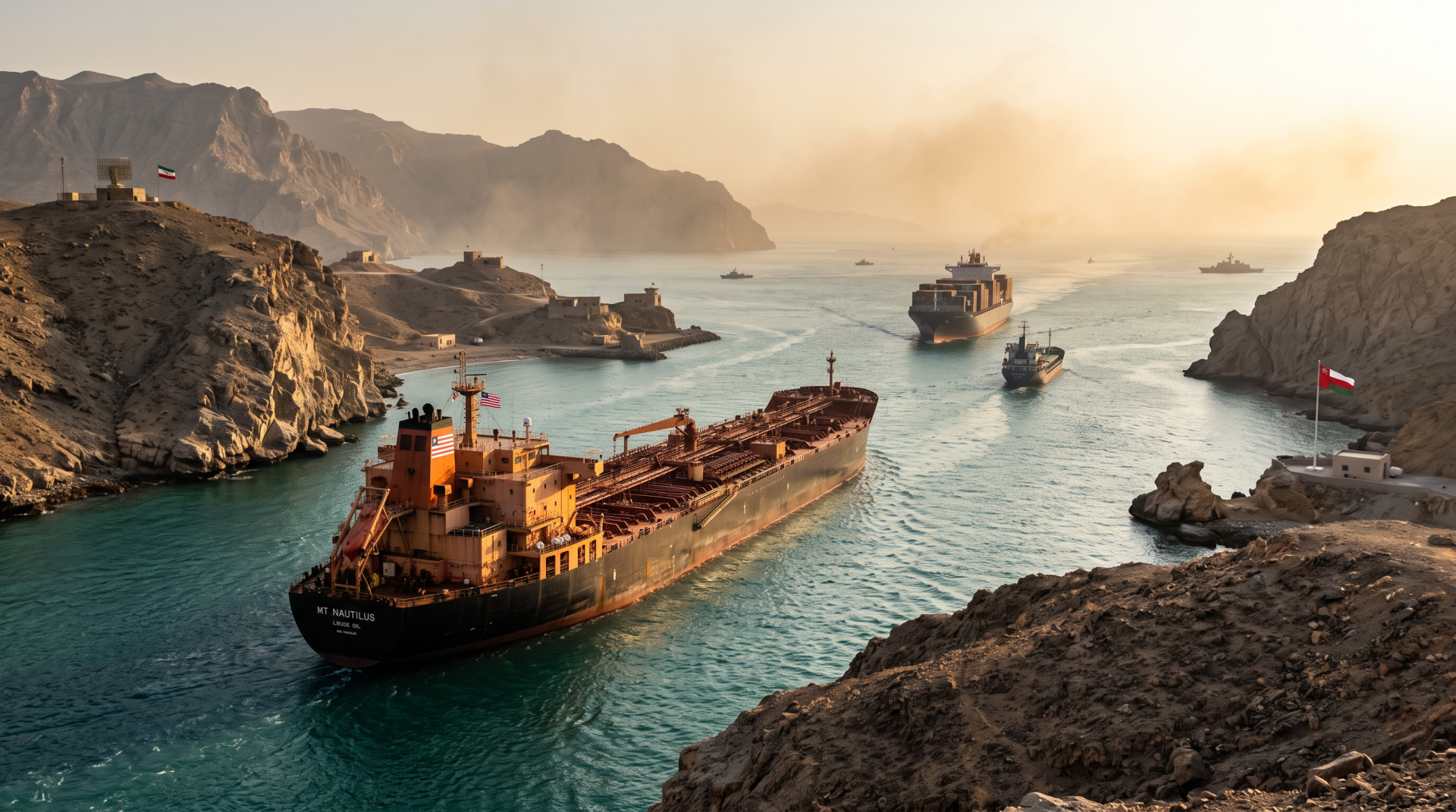
Read moreIran and Oman have reached an understanding on specific entry and exit routes for vessels passing through the Strait of Hormuz following several weeks of negotiations. Later, the Iranian side said maps and a joint document had been prepared for presentation to the Gulf states. The proposal is aimed less at "reopening" the strait than at establishing a coordinated and more predictable route for commercial shipping amid the current crisis.
On September 12, Iran conveyed seven conditions to the United States through intermediaries for the reopening of the Strait of Hormuz. According to Iranian media, the Strait of Hormuz will remain closed until the conditions, which have been approved by Iran’s top leadership, are met. It was also noted that the understanding reached between Iran and Oman does not mean that the Strait of Hormuz will be reopened. The agreement was due to be presented at a meeting between Iran and the Gulf states. However, Omani Foreign Minister Badr Al Busaidi later said that the meeting had been cancelled.
The experts believe that the sides had previously held sharply different positions on the issue. Tehran insisted on sovereign transit fees, while Muscat opposed direct charges for passage, warning that such a move could fuel tensions and conflict with international maritime law.
On August 25, Oman and Iran presented a phased plan to restore safe shipping through the Strait of Hormuz. The joint statement was issued following talks between Omani Foreign Minister Badr bin Hamad Al Busaidi and his Iranian counterpart, Abbas Araghchi. The proposal calls for the creation of a joint temporary shipping corridor through the Strait, along with a joint project to clear the area of mines. At the next stage, the two sides planned to continue technical talks on establishing a permanent shipping corridor, the future management of Hormuz, information sharing, vessel traffic regulation, and the provision of navigation and related security services.
The Strait of Hormuz links Saudi Arabia, the UAE, Qatar, Kuwait, Bahrain, Iraq, Iran and Oman to global markets. Before the start of the US-Israeli operation against Iran, around 200-300 vessels passed through the Hormuz every day. The waterway handled about a quarter of global oil and petroleum product shipments and accounted for around one-fifth of global LNG trade.
It remains unclear how other countries in the region will respond to the agreement between Iran and Oman.
Speaking to AzerNEWS, political expert Rufiz Hafizoglu said that although Iran and Oman have reached an understanding on routes through the Strait of Hormuz, there are still no clear details on how the arrangement would work in practice.
Hafizoglu noted that the issue goes far beyond the question of commercial shipping and is closely linked to broader security and political tensions in the region. He recalled that US President Donald Trump had previously warned Oman against continuing talks with Iran over control of the Strait of Hormuz. According to the expert, this indicates that any agreement reached by Iran and Oman would have to take into account the interests of the United States and other major regional players.
Hafizoglu also pointed to Trump’s recent statement that Washington would not sign an agreement with Iran if it contradicted US interests. Commenting on whether the Iran-Oman arrangement could improve the situation for shipping, the expert stressed that it would be wrong to view the issue solely from the perspective of maritime traffic.
"Even if this agreement is implemented and Iran and Oman commit themselves to it, it may not have a significant impact on the overall situation in the region," Hafizoglu said.
He added that Iran’s approach to security in the Strait of Hormuz could further complicate the situation rather than resolve it.
The expert also highlighted the unresolved question of how Saudi Arabia and other Gulf states would respond to Tehran’s initiative.
Hafizoglu pointed out that avoiding further risks in the region is currently one of Saudi Arabia’s main priorities. He noted that the recent attack on a Saudi oil pipeline has already had a significant impact on the country’s economic interests and contributed to volatility in global oil markets, while shares of Saudi companies also came under pressure. At the same time, he stressed that this does not mean Riyadh is prepared to accept Iran’s conditions.
"Saudi Arabia will not simply accept the Iranian side," Hafizoglu said, adding that Riyadh’s priorities are closely linked to reducing security risks and preventing further escalation.
He emphasized that resolving the conflict in Yemen remains particularly important for Saudi Arabia. According to Hafizoglu, Riyadh sees the Yemen issue as a vital security concern, much as the Syrian conflict was once viewed by Türkiye.
The expert also added that the future of shipping through the Strait of Hormuz will depend not only on the Iran-Oman understanding, but also on the broader balance of interests between Iran, the Gulf states and the United States.
Here we are to serve you with news right now. It does not cost much, but worth your attention.
Choose to support open, independent, quality journalism and subscribe on a monthly basis.
By subscribing to our online newspaper, you can have full digital access to all news, analysis, and much more.
You can also follow AzerNEWS on Twitter @AzerNewsAz or Facebook @AzerNewsNewspaper
Thank you!