
Moody's downgrades Azerbaijan's IBA ratings
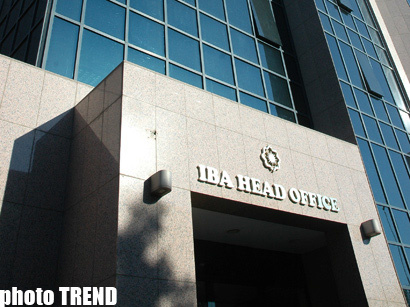
Moody's Investors Service on Thursday downgraded the following global scale ratings of International Bank of Azerbaijan: long-term local currency deposit rating to Ba3 from Ba1, long-term foreign currency deposit rating to Ba3 from Ba2, long-term foreign currency senior unsecured debt rating to Ba3 from Ba1, and long-term foreign currency subordinated debt rating to B1 from Ba2, the agency's website reported on Friday.
Concurrently, Moody's affirmed the bank's standalone bank financial strength rating (BFSR) of E+, which is equivalent to a standalone credit assessment of b3. The outlook on long-term ratings and the BFSR is negative.
Moody's rating action is largely based on International Bank of Azerbaijan's audited financial statements for 2011 and the first six month of 2012, prepared under IFRS.
The negative outlook on International Bank of Azerbaijan's supported ratings is driven by the negative outlook on the bank's standalone BFSR -- which reflects the negative pressure on the bank's financial fundamentals due to (1) low capitalisation which, together with its low pre-provision profit, leads to a weak loss absorption capacity; and (2) weak asset quality which could potentially result in higher loan loss reserves, thus exerting further pressure on the bank's capital.
The downgrade of International Bank of Azerbaijan's supported ratings to Ba3 is driven by Moody's assessment of a reduced probability of systemic support for the bank to "high" from "very high".
The International Bank of Azerbaijan is the largest bank in the country and is currently 50.2% owned by the government.
According to the rating agency, the track record of support from the government to International Bank of Azerbaijan has thus far fallen short of providing appropriate and timely support to strengthen the bank's capital base, which materially eroded in 2010. The recent capital injections from the government and the Central Bank of Azerbaijan were significantly delayed and only marginally improved the bank's capital levels.
In addition, given the Azerbaijan government's plan to privatise the bank in the medium to long term, Moody's considers that the likelihood of systemic support for the bank has decreased, in favour of support from private shareholders. Moody's says that International Bank of Azerbaijan still benefits from a high probability of systemic support, based on its 50.2% government ownership, large market shares and systemic importance for Azerbaijan's economy.
As a result of recent capital injections in Q1 2012 comprising AZN50 million (Tier 1 capital) from the Ministry of Finance and AZN150 million (Tier 2 capital) subordinated loan from the Central Bank of Azerbaijan, International Bank of Azerbaijan's Tier 1 and Total Capital Ratios (under Basel I) improved to 6.03% and 10.78%, respectively, as at 30 June 2012, from 4.95% and 7.6% at year-end 2011. According to local GAAP, International Bank of Azerbaijan reported a regulatory capital adequacy ratio (CAR) of 10.06% at end-September 2012, which is below the regulatory minimum of 12%; Moody's notes that the bank benefits from regulatory forbearance from the Central Bank of Azerbaijan.
In 2011 the bank was in breached of covenants on capital that related to funding operations carried out in the capital markets and returned to compliance in H12012 as reported in the audited IFRS as at 30 June 2012. Moody's believes that International Bank of Azerbaijan may breach these capital covenants again, as the rating agency views the recent capital increases (including an additional AZN50 million from International Bank of Azerbaijan's private shareholders which the bank expects to be allocated by Q1 2013) as insufficient in light of the current high level of problem loans, the 20% lending growth expected by the bank in 2012 and its weak internal capital generation capacity.
The rating agency notes that International Bank of Azerbaijan has a weak asset quality.
Loans overdue by more than 90 days increased in absolute terms and accounted for 12% of gross loans outstanding; moreover, the level of loans overdue less than 90 days and renegotiated loans increased to 17% and 18% of gross loans outstanding, respectively, at year-end 2011 (2010: 15% and 13%, respectively). As some of those loans will likely become non-performing in 2012 and 2013, Moody's expects International Bank of Azerbaijan will have to increase provisions going forward given the currently low provisioning coverage. During H1 2012, International Bank of Azerbaijan did not increase loan loss reserves, which accounted for 13.2% of gross loans as of 30 June 2012 and, in Moody's view, the bank's loan portfolio remains under-provisioned.
For the first six month of 2012, International Bank of Azerbaijan reported net profit of AZN23 million, up from AZN6.3 million reported in H1 2011, which translated into a weak return on average assets (RoAA) of 0.9% (annualised), up from 0.4% in 2011. Moody's notes that modest improvement of the bank's financial results was due to lower loan loss provisions, while its pre-provision profitability has been decreasing since 2008 due to shrinking interest margin (1.9% at mid-2012). The rating agency believes that International Bank of Azerbaijan's bottom-line results will likely be pressured by higher loan loss provisions in the next 12-18 months.
Considering the negative outlook on International Bank of Azerbaijan's long-term ratings, any upgrades are unlikely in the medium term; however, the outlook could be changed to stable from negative if the bank would benefit from a material capital injection that would be considered by Moody's as sufficient to offset asset quality pressure, the report says.
Here we are to serve you with news right now. It does not cost much, but worth your attention.
Choose to support open, independent, quality journalism and subscribe on a monthly basis.
By subscribing to our online newspaper, you can have full digital access to all news, analysis, and much more.
You can also follow AzerNEWS on Twitter @AzerNewsAz or Facebook @AzerNewsNewspaper
Thank you!