
Azerbaijan boosts domestic investment as private sector confidence grows

Qabil Ashirov
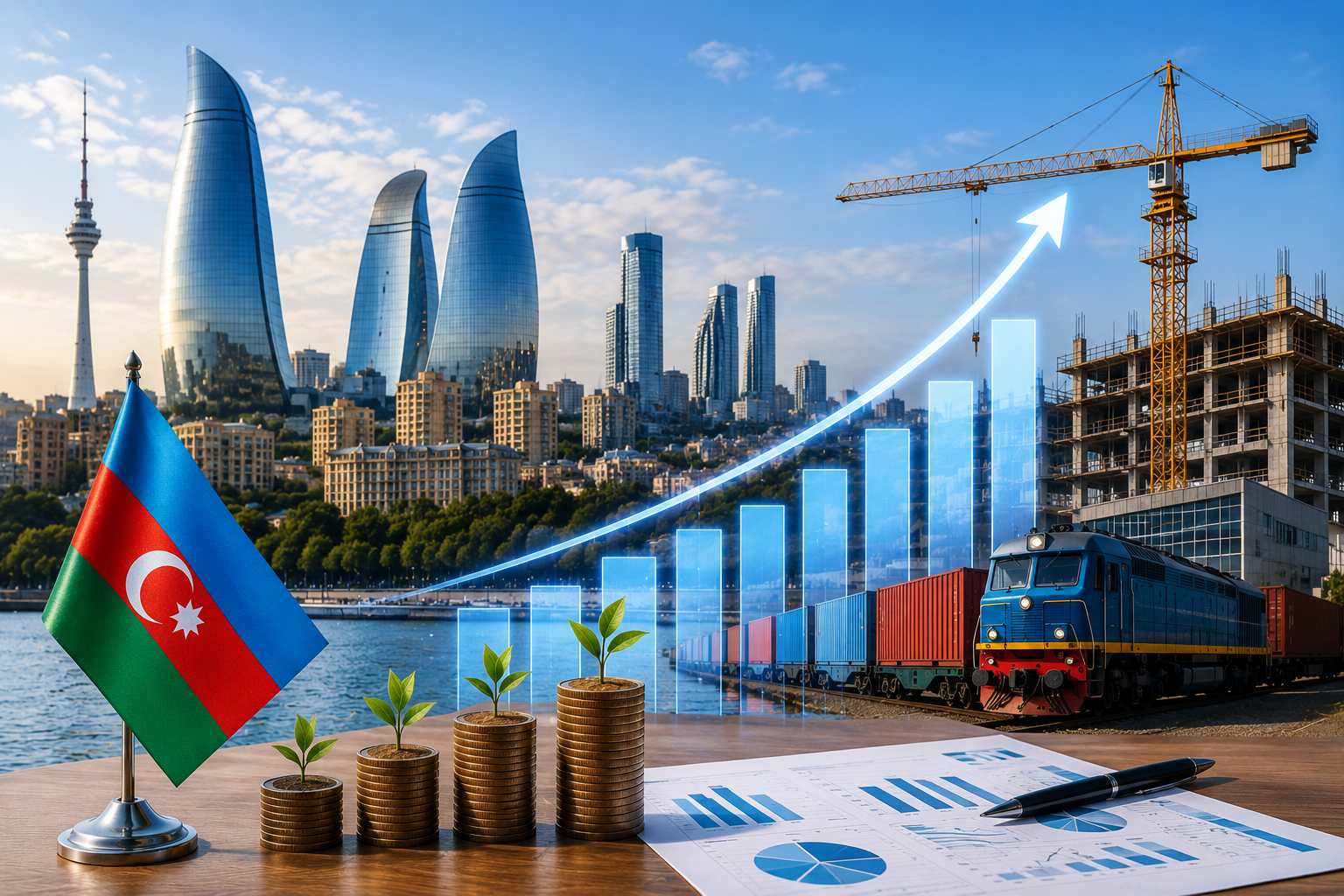
Read moreAs global markets continue to wrestle with geopolitical uncertainty, volatile energy prices and slowing trade flows, Azerbaijan has entered 2026 with a notable increase in investment activity. According to data released by the Central Bank of Azerbaijan, investments directed toward fixed capital rose by 14.9 percent in the first quarter of the year, reaching 4.05 billion manats. On the surface, the figures suggest confidence, momentum and a growing appetite for long-term economic expansion. Yet beneath the optimistic headline lies a more complex reality about the structure of Azerbaijan’s economy and the pace of its transformation.
Investment trends often reveal more about a country’s future than short-term growth statistics. Unlike temporary increases in consumption or trade, capital investment reflects strategic decisions about where economic actors believe future profits and opportunities will emerge. In Azerbaijan’s case, the latest data shows that the country continues to attract substantial financial resources into productive sectors, particularly industry, transport infrastructure and construction. These are not symbolic expenditures; they are investments designed to shape the country’s economic landscape for years to come.
One of the most striking aspects of the report is the dominance of the production sector, which absorbed more than half of all investments. Industry alone accounted for nearly 48 percent of total investment flows. Such figures demonstrate that Azerbaijan is continuing to expand its industrial base and logistical capacity. Significant investments in transport and warehousing further reinforce Baku’s ambition to position itself as a regional transit hub connecting Europe, Central Asia and the Middle East through the increasingly important Middle Corridor.
This strategic direction is not accidental. Over the past several years, Azerbaijan has sought to capitalize on changing global trade patterns and the geopolitical fragmentation that has reshaped Eurasian transport routes. As tensions erupted in North and South, global supply chains continue to alter commercial flows, the South Caucasus has acquired renewed relevance. Investments into railways, ports, highways and logistics infrastructure suggest that Azerbaijan is attempting to convert geography into economic advantage.
At the same time, the figures also underline the resilience of domestic capital. Nearly four-fifths of all investments originated from internal sources, while the private sector contributed close to two-thirds of total investment spending. These are important indicators of macroeconomic stability. They suggest that Azerbaijan is not relying exclusively on foreign borrowing or state-driven spending to sustain investment activity. A stronger role for domestic private investors often signals greater confidence in the local business environment and a healthier economic ecosystem overall.
Yet the report simultaneously exposes a familiar structural challenge that has followed Azerbaijan for decades: the overwhelming gravitational pull of the oil and gas sector.
Investments into the hydrocarbon sector surged by 44.6 percent compared to the same period last year, while growth in the non-oil sector amounted to only 2.2 percent. This imbalance matters because it highlights the extent to which Azerbaijan’s economic engine still depends on energy revenues and extractive industries. Although officials frequently emphasize diversification, the investment data suggests that the country’s most dynamic capital flows continue to concentrate around oil, gas and heavy industry.
This does not necessarily represent a short-term problem. Energy revenues remain the foundation of Azerbaijan’s fiscal stability, foreign currency reserves and geopolitical influence. In a world where energy security has once again become a strategic priority, Azerbaijan benefits from strong external demand for its hydrocarbons. Increased investment into extraction and processing industries may therefore generate higher export revenues and strengthen the country’s financial position in the coming years.
In the broader picture, the latest investment figures indicate that Azerbaijan is entering a new phase of economic modernization driven by infrastructure expansion, industrial development and rising domestic business activity. Large-scale investments in transport corridors, logistics and productive sectors are strengthening the country’s role in regional connectivity and international trade. At the same time, the growing participation of private investors reflects increasing confidence in the national economy and its long-term prospects. If the current pace of investment continues alongside efforts to improve productivity and regional integration, Azerbaijan may further consolidate its position as the South Caucasus’ most economically influential and strategically connected states.
Here we are to serve you with news right now. It does not cost much, but worth your attention.
Choose to support open, independent, quality journalism and subscribe on a monthly basis.
By subscribing to our online newspaper, you can have full digital access to all news, analysis, and much more.
You can also follow AzerNEWS on Twitter @AzerNewsAz or Facebook @AzerNewsNewspaper
Thank you!