
Brussels’ blind spot: why a convicted figure still commands EU sympathy
Akbar Novruz
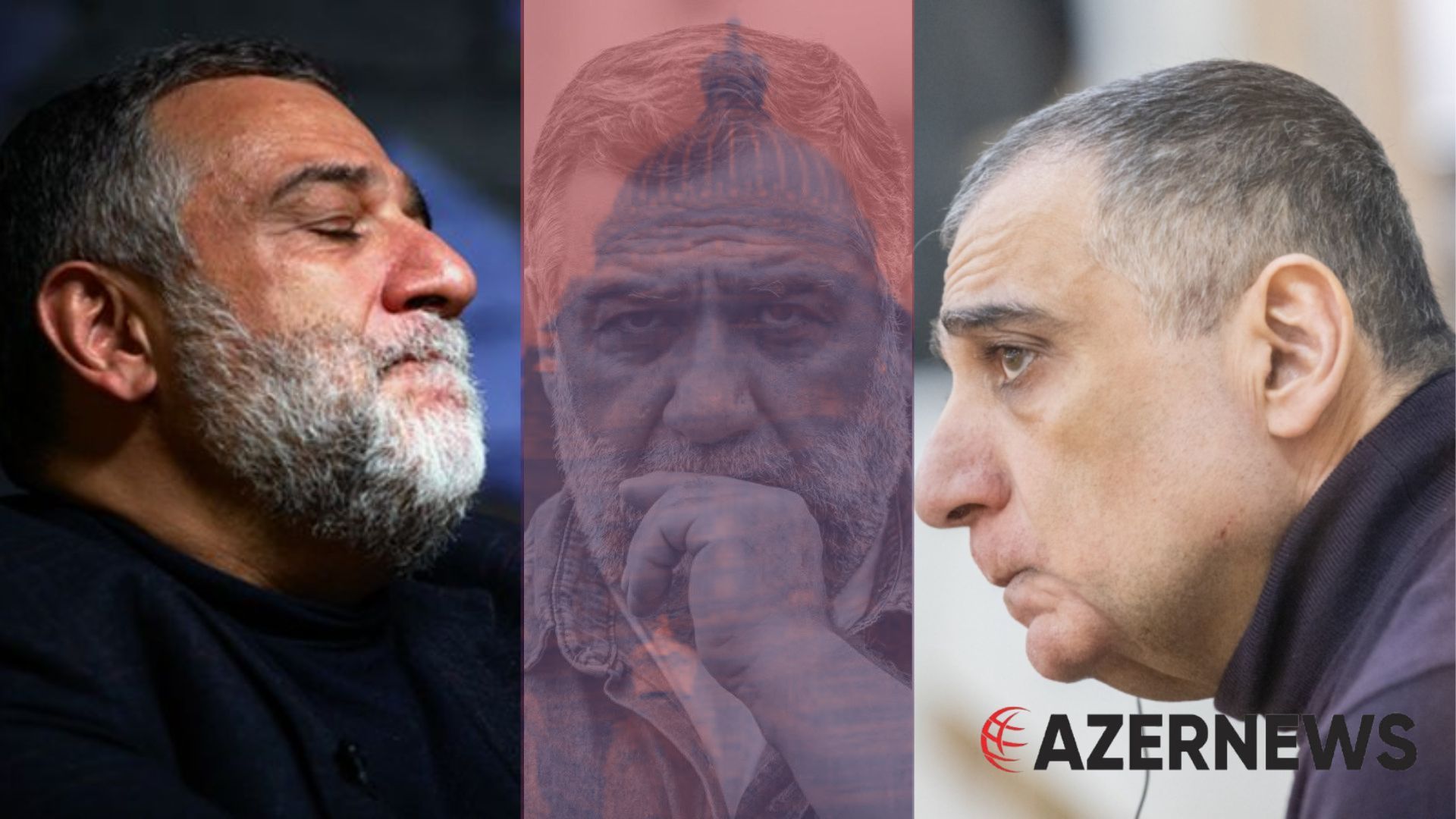
Read moreIn February of this year, a court in Baku delivered its verdict. Ruben Vardanyan, former State Minister of so-called Nagorno-Karabakh, was sentenced to 20 years in prison by the Baku Military Court following a trial that began in January 2025. He was the last of sixteen ethnic Armenian leaders to be tried. The others, former presidents, defence ministers, and parliamentary speakers, received sentences ranging from lengthy prison terms to life imprisonment.
The organisation said it had requested information from Azerbaijani authorities about the trial and the evidence, and received no response.
Vardanyan was found guilty under several articles of the Criminal Code, including crimes against peace and humanity, war crimes, terrorism, and financing of terrorism. The specific charges included planning and waging a war of aggression, deportation of populations, persecution, mercenary activity, violations of the laws and customs of warfare, intentional murder and attempted murder, creation of a criminal group, and illegal acquisition of weapons.
Now that we have that out of the way, one thing has been clear throughout this entire court process: These criminals are living rent-free in Europe's certain politicians' heads. Especially Ruben Vardanyan.
Into the recent delicate moments that have been ongoing between Azerbaijan and Armenia stepped the EU's ambassador to Armenia, Vassilis Maragos, and promptly put his foot in it.
Responding to a question from an Armenian news outlet, Ambassador Maragos confirmed that the European Union was "closely following" the case of Ruben Vardanyan and other ethnic Armenians held in Baku's jails, and expressed hope that "sensitive humanitarian issues" could be resolved as part of the bilateral peace process. To Baku, this was not diplomacy. It was partisanship wearing a diplomatic badge.
This is, on the surface, a reasonable diplomatic position. It acknowledges the humanitarian concern without weaponising it. It keeps Brussels within the lane of a supportive partner rather than an antagonistic interlocutor. And it reflects an awareness, clearly present in European chancelleries, whatever the European Parliament's louder resolutions might suggest, that the region is at a genuinely historic juncture.
But the criticism from Baku, however, is equally intelligible. The use of the phrase "Armenian prisoners of war" by European officials, a framing that implies protected status under international humanitarian law rather than criminal defendants, grates on a government that regards these individuals as having been convicted of serious crimes by a functioning domestic court. Azerbaijan has invested considerable diplomatic capital in presenting the trials as lawful, orderly, and transparent. External characterisations that imply otherwise are, from Baku's perspective, unhelpful interference at precisely the wrong moment.
Making of a cause célèbre
In order to understand the reason for such widespread support for a convicted terrorism financier and leader of an illegal armed formation in the West's highest echelons, one must look beyond the courtroom. Ruben Vardanyan is no cause célèbre by happenstance. He has been busily constructing the framework for such support over the course of several decades.
The centerpiece of this work has been Vardanyan's Aurora Humanitarian Initiative, an award given annually in honor of survivors of the Armenian Genocide that has managed to attract an elite list of patrons and sympathizers across the globe. To many politicians in Europe, opposition to Vardanyan's imprisonment is not so much a measured response to his trial as it is an unthinking defense of a man they see as one of their own – a kindred spirit within the internationalist liberal elite. That this is a man accused of funding separatist terrorism within a sovereign state is seen as an inconvenient detail rather than a defining characteristic.
Since his detention, a well-funded process involving top public relations companies and international human rights lawyers, most notably the Washington-based attorney Jared Genser, who has made a career defending high-profile political prisoners, has gone about the task in a systematic fashion. The approach is a familiar one: strip the story of the legal complexity it deserves, reduce it to the tale of a philanthropist being persecuted by an authoritarian government, and propagate it as widely as possible. And it has worked. Vardanyan's name is now a regular feature in European Parliament resolutions, in the columns of sympathetic European newspapers, and in the public statements of EU ambassadors, as this most recent instance demonstrates.
The double standard implicit in this approach ought to be stated as such: any European government faced with a citizen who had funded an armed separatist movement on their territory, refused to recognize the authority of their central government, established a de facto parallel state on their territory for three decades, would not hesitate to prosecute him. They would call it a national security threat. It would not welcome foreign diplomats describing the suspect as a humanitarian case. The fact that different standards are applied when the territory in question lies in the South Caucasus reflects not a principled legal position, but a preference for political convenience over legal consistency.
One further element of the Vardanyan story merits attention. The renunciation of his Russian citizenship in 2022, an act which coincided with the implosion of Russia's image in the eyes of the West in response to the Ukraine invasion, was a masterful move in terms of rebranding. He was able to distance himself from the negative connotations of being a billionaire with decades-long ties to Russia's elite, and reappear as a member of the Western-leaning civil society movement, making a selfless sacrifice in Karabakh. Azerbaijan has offered evidence to dispute the characterization. However, the rebranding effort was successful in terms of the image in the West, where Vardanyan continues to be viewed as a reluctant idealist rather than as the destabilizing force he is alleged to have been, serving the interests of foreign powers at the expense of Azerbaijan's territorial integrity.
None of this is to say that the legal proceedings against Vardanyan are above criticism. Serious questions about due process have been raised by credible institutions and cannot simply be dismissed. But there is a material difference between scrutinising a judicial process and adopting wholesale the political narrative that a sophisticated lobbying operation has spent considerable resources constructing. When EU diplomats speak of Vardanyan as a humanitarian case, they are not engaging in independent legal analysis. They are, in effect, amplifying a campaign and lending it a credibility it has not earned through the merits of the case alone.
Armenia and Azerbaijan initialled a peace agreement in Washington on August 8, 2025, brokered by U.S. President Donald Trump, with both leaders signing a joint declaration alongside the framework document.
It was, by the standards of a conflict that has consumed decades and thousands of lives, a remarkable moment. It was also an incomplete one. The agreement has been initialled, not signed. The final ratification remains outstanding. And the distance between initialling and signing, in this region's diplomatic history, has a habit of stretching into something considerably longer than intended.
The EU-Armenia summit, the first of its kind, is expected to be held in Yerevan on 4 May 2026, following the 8th European Political Community Summit in the same city.
Brussels is deepening its engagement with Yerevan at precisely the moment the bilateral relationship with Baku requires careful management. The EU has committed a €270 million resilience and growth plan for Armenia, opened the European Peace Facility to Armenian use, and launched visa liberalisation dialogue - all significant steps in what amounts to a gradual westward reorientation of a country that spent the post-Soviet decades anchored to Moscow.
Azerbaijan, for its part, remains a critical supplier of energy to Europe, a reality that shapes Brussels' calculus in ways that are rarely stated plainly but never entirely absent from the room.
In light of the global concern surrounding detention conditions, it is important to highlight the findings reported by Azerbaijani authorities themselves. Sabina Aliyeva, the Human Rights Commissioner of Azerbaijan, along with representatives from the National Preventive Mechanism, conducted an official visit to the Temporary Detention Centre and the Pre-Trial Detention Centre of the State Security Service. They assessed various aspects such as nutrition, medical care, opportunities for outdoor activity, access to meetings and phone calls, and the treatment of detainees. During this visit, Aliyeva personally engaged with Vardanyan, listened to his account, and evaluated the improved facilities.
This is not an insignificant institutional action. It is not an action that in any way alleviates the international community's concerns regarding the legitimacy of the trial itself, an issue that is located at a very different level of legal analysis altogether. It is, however, an action that implies the Azerbaijani authorities are not indifferent to issues of conditions of detention, and one in which institutional monitoring, whatever one makes of the independence of such monitoring in other respects, is being exercised in an official fashion.
The danger, as this diplomatic dialogue progresses, is not that humanitarian concerns are being raised in good faith. They are, and in any properly functioning international system, they should be. The danger is that they dominate the political space for a peace process, one that, for all its tenuousness, represents the only serious vehicle for peace in the South Caucasus in a generation.
The careful words of the EU ambassador, in which humanitarian concerns are acknowledged, the peace process is prioritised, and bilateral channels are highlighted, demonstrate an awareness of this very conflict. It may not satisfy those who wish Brussels to be more vocal. It may not satisfy Baku, which wishes the issue to be avoided altogether in diplomatic communiqués. But it is more important than satisfaction: a recognition that this moment, for all its shortcomings, is one that must not be missed.
Here we are to serve you with news right now. It does not cost much, but worth your attention.
Choose to support open, independent, quality journalism and subscribe on a monthly basis.
By subscribing to our online newspaper, you can have full digital access to all news, analysis, and much more.
You can also follow AzerNEWS on Twitter @AzerNewsAz or Facebook @AzerNewsNewspaper
Thank you!