
Institute of Botany to publish book on Azerbaijani flora

Laman Ismayilova
Read moreAzerbaijan is renowned for its rich and diverse plant life, with thousands of species thriving across its varied landscapes.
To better understand and document this natural wealth, the Institute of Botany of the Ministry of Science and Education has launched a major scientific research program titled "Synopsis of the Azerbaijan's Flora," AzerNEWS reports.
The program aims to systematically study the country's flora, exploring everything from common plant species to rare and endemic varieties unique to Azerbaijan. The research will culminate in the publication of a comprehensive book, "Synopsis of the Azerbaijan's Flora," scheduled for release by the end of the year.
Leading this ambitious project is Professor Seyyara Ibadullayeva
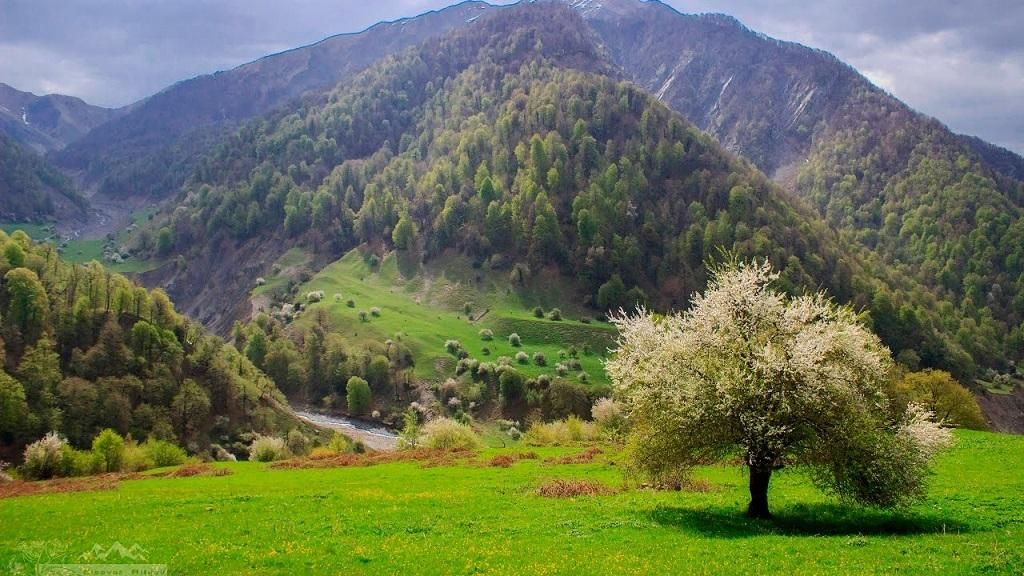
The Azerbaijan is distinguished by its exceptionally rich and diverse flora. More than 4,500 species of flowering plants grow across the country, making its plant life significantly more varied than that of other South Caucasus nations. Overall, Azerbaijan accounts for about 66 percent of all plant species found in the Caucasus region.
The country is also notable for its abundance of relict plant species dating back to the Tertiary period. These species are found throughout Azerbaijan, but are especially widespread in the Talysh region. Among them are ironwood, Lankaran acacia, chestnut-leaved oak, Caucasian persimmon, and boxwood. In addition, around 240 plant species are endemic, meaning they grow naturally only within the country.
Azerbaijan's vegetation includes nearly all major plant distribution types, such as ancient forest, boreal, steppe, xerophytic, desert, Caucasian, and adventive types. Ancient forest vegetation is most prominent in the Talysh region, while boreal plants are typical of the mountainous zones of the Greater and Lesser Caucasus. Steppe, desert, and xerophytic vegetation dominate the plains and foothills, particularly in the Kura-Araz Lowland, where dry conditions favor these plant communities.
Wetland ecosystems are also widespread, especially in lowland areas, coastal zones, and around lakes and marshes. These environments support dense reed beds and a variety of aquatic and semi-aquatic plants. Along riverbanks, irrigation canals, and swampy areas, tall grasses and reed thickets form distinctive landscapes. On the Absheron Peninsula, sandy habitats host rare and short-lived plants that grow rapidly in spring and disappear just as quickly.
Forest ecosystems in Azerbaijan are highly diverse and vary by region and elevation. Tugay forests grow along major rivers such as the Kura River and the Araz, where species like poplar, willow, and elm are common.
Lowland forests in regions such as Guba-Khachmaz and Karabakh include oak, hawthorn, and medlar trees. The forests of the Talysh region are particularly unique, forming part of ancient Hyrcanian ecosystems with relict species and dense vegetation.
In mountainous areas of the Greater and Lesser Caucasus, broadleaf forests are found at elevations between 600 and 1,800 meters, dominated by oak and Oriental beech.
Azerbaijan's diverse landscapes and climates make it one of the most botanically and ecologically rich regions in the Caucasus.
Here we are to serve you with news right now. It does not cost much, but worth your attention.
Choose to support open, independent, quality journalism and subscribe on a monthly basis.
By subscribing to our online newspaper, you can have full digital access to all news, analysis, and much more.
You can also follow AzerNEWS on Twitter @AzerNewsAz or Facebook @AzerNewsNewspaper
Thank you!