
Baku built biggest housing forum in history with production of genuine innovations
Akbar Novruz
Read moreThe flag was lowered from the Baku Olympic Stadium later that Friday afternoon, marking the end of the biggest gathering of the World Urban Forum in its 25-year history. The number of events in WUF13 reached 579, including 260 Urban Expo exhibitors, while also hosting 11 heads of state, 88 ministers, 76 deputy ministers, and 130 mayors, with inclusion of more than 56.000 participants - the largest number recorded. These numbers in succession indeed represent a genuine accomplishment of an international gathering at a time when multilateralism seems to fail everywhere else. With the closing ceremony of WUF13 in Azerbaijan coming right after COP29, the world witnessed the launch of the Baku Call to Action and the handover of the WUF13 baton to Mexico City, the venue of WUF14. As with all previous WUFs, the lingering question now is whether it mattered.
The answer is yes, with qualifications that are important enough not to bury. UN-Habitat executive director Anacláudia Rossbach called the Baku Call to Action "the highlight of WUF13," saying that the discussions held in Baku made clear that housing must be at the centre of comprehensive urban policies related to land, infrastructure, climate action, financing, and governance. This perspective of viewing housing as part of an urban policy issue, as opposed to an isolated welfare issue, represents a significant progression from past forum declarations. This perspective, in addition to having real implications with regard to how countries set up their urban ministry departments, is a significant achievement in its own right. The Declaration on World Urbanization Prospects (also known as the Call to Action) is not an enforceable treaty. It is, however, the most proactive document that the World Urban Forum has produced to date.
What the Baku Call to Action says about the current state of affairs in housing finance is as important as its proposals. For instance, in stating that "housing finance systems remain fragmented, uncoordinated and inaccessible, with limited public investment, unequal access to credit and mechanisms that fail to reach low-income households and communities," and that there needs to be "a comprehensive rethinking of the entire value chain in housing finance," it does not paint a picture of optimism, as it does not seem to assume that the existing structure simply needs improved communication. In fact, the statement seems rather pessimistic in relation to the present-day reality. What is more, in the multilateral document, there are quite explicit demands regarding stronger municipal fiscal autonomy, increased scale of public investment, as well as the need for south-south and north-south cooperation mechanisms. Finally, the adaptation of housing systems to climate change, which should guarantee protection from floods, droughts, biodiversity loss, high temperatures and poor air quality, is explicitly mentioned.
Innovations that will outlast the week
There are some institutional innovations coming out of WUF13 that will persist regardless of what individual governments do with the Call to Action. The Leaders' Summit organized by President Aliyev and involving 27 heads of state, marks the first time that the WUF has had its policy discussion elevated to the heads of government level since the conference's founding 25 years ago. Whether such elevation yields any results beyond the communiques will depend on whether future hosts of WUF choose to sustain this new format, something that is now in Mexico City's lap to decide. The WUF NGO Forum, a new addition to this particular edition of WUF, yielded formal expressions from the civil society community about their desire for inclusion in urban governance processes, which will be used moving forward in the post-2030 agenda discussions. There is also the Baku Urban Award, an innovation launched by Azerbaijan that promises to persist through future forums.
The Letter of Intent entered into between Azerbaijan’s State Committee for Urban Planning and Architecture and UN-Habitat for developing a set of operational guidelines using the “WUF13 Baku standards” is the most quietly important legacy item here. This implies that whatever procedure is followed in Baku, from multi-stakeholder consultations to online consultation with draft documents, and finally to holding a Leaders’ Summit, would be developed into guidance for host countries to follow in the future. This way, the organizational procedure of the forum, not only the document itself, makes a contribution to future forums.
Azerbaijan has been chosen for such an event because Baku is equipped to host this event at a level that many other countries may not be able to afford. Perhaps a city filled with a rich heritage and history. The second largest event held in the country since COP29, it had to be held at a level that would require logistics, security, translation, accommodation, and event management. Azerbaijan managed all of these, which has also been highlighted in the Chairman’s Summary issued by the ministerial body. The reconstruction program of Karabakh has been used by Azerbaijan as a real-life example for post-conflict urban redevelopment, capturing the attention of several other delegates from countries dealing with similar issues in Africa and the Middle East. The smart village plans, green energy zones, nine cities, and more than 100 villages being reconstructed in the liberated territories of Karabakh are very much relevant to the event, which has been organized on this issue.
The issue, raised by some delegates in side meetings but not formally during the sessions, is one of context. The 80,000 or so individuals who have made their way back into Karabakh under the “Great Return” initiative are not the same group of 100,000 or more that left in September 2023. The process of rebuilding cities from which the previous residents have left en masse, in conditions described by the European Parliament and others in language that Baku denies, does not sit comfortably with a forum that, in its Call to Action, refers to “adequate housing” and “the dignity of displaced communities.” On the other hand, participants at the WUF13 forum also issued an official statement regarding colonial injustices and housing inequities, a document which, while not specifically targeting the country, was nevertheless an indirect reference to what could have been addressed directly in the forum’s agenda.
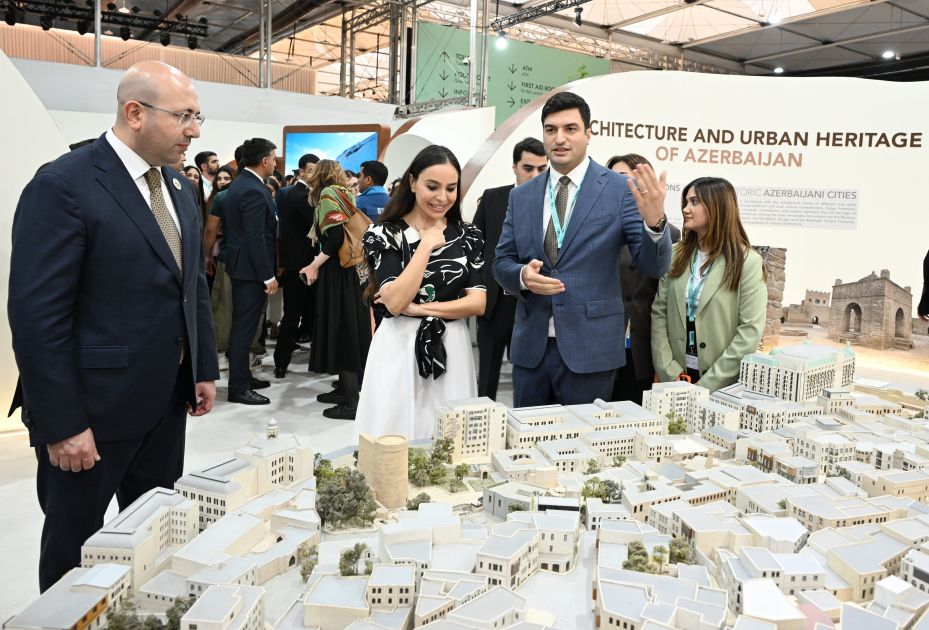
But one notable substantive achievement needs mentioning that did not receive much media coverage around the world outside of the headline figures. The high-level forum on air quality and green infrastructure, convened by Leyla Aliyeva, Vice-President of the Heydar Aliyev Foundation, issued a communique titled the “Baku Challenge for Breathing Cities,” in which the participants pledged their commitment to make access to clean air a permanent issue on the WUF agenda moving forward. According to the World Health Organization, air pollution causes the death of approximately 7 million people every year, and it disproportionately impacts poor-quality neighborhoods and slums, and is closely connected to the housing issues debated at the forum.
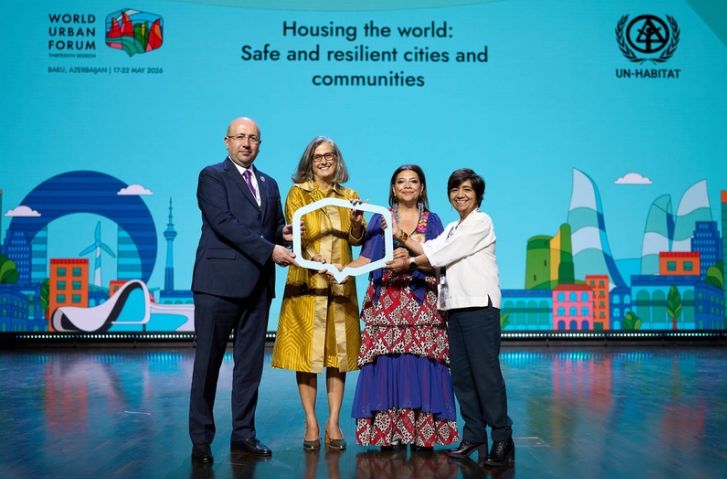
Torch is now passed to Mexico!
The Baku Call to Action makes very clear its ambition to make the coming decade, the next five sessions of WUF from 2026 to 2036, "a decade of action to accelerate implementation of the New Urban Agenda and deliver measurable progress on the Sustainable Development Goals." Now the torch is passed to Mexico. The use of the word accountable and its related concepts, such as trackable, measurable, and documented, represents an attempt to avoid the charge that WUF declarations generate aspirations and little else.
Some three billion people are still living in sub-standard housing. Three billion people were living in such conditions last Sunday when the conference opened. The Baku Call for Action did not construct any house. It is true that, at best, it made the language about what needs to be done clearer, raised the political profile regarding this need, and provided a better process for future conferences. This is by no means insignificant. Given the state of current multilateral diplomacy, this could be viewed as an important accomplishment. The question remains whether it is sufficient and how many answers the three billion will provide.
Here we are to serve you with news right now. It does not cost much, but worth your attention.
Choose to support open, independent, quality journalism and subscribe on a monthly basis.
By subscribing to our online newspaper, you can have full digital access to all news, analysis, and much more.
You can also follow AzerNEWS on Twitter @AzerNewsAz or Facebook @AzerNewsNewspaper
Thank you!