
Penultimate day of WUF13: What world's largest urban gathering actually achieved in Baku
Akbar Novruz
Read moreThere is a figure that has characterized every discussion held so far during the current week's World Urban Forum in Baku, and it is worth stating upfront because it should serve as a wake-up call before anything else: three billion. This refers to the number of individuals in the world living in poor housing: either expensive, unsafe, or non-existent.
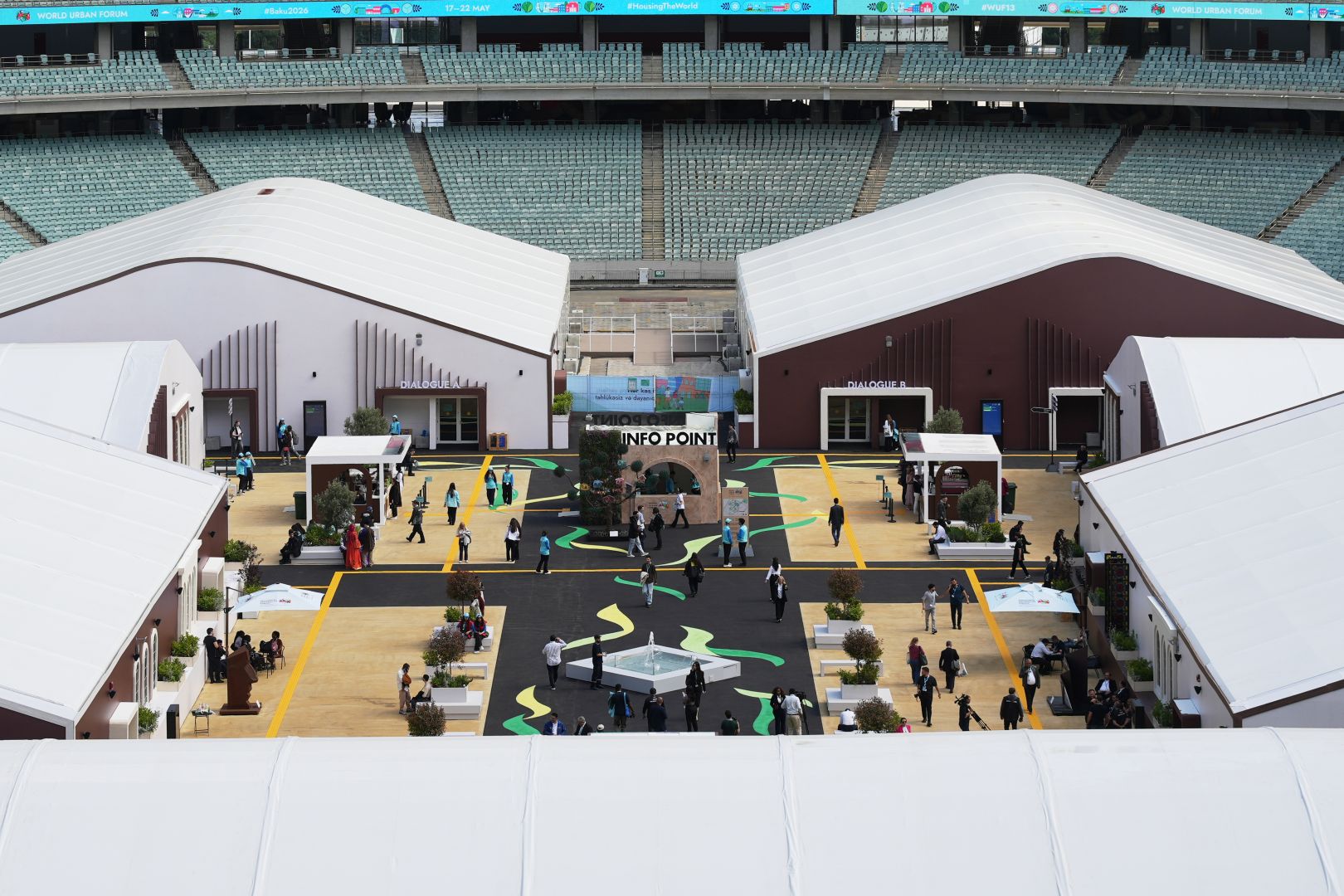
More than one billion live in informal settlements and slums, while more than three hundred million live as homeless. These are facts taken from the World Cities Report 2026, released during the ongoing World Urban Forum for the first time on its third day. The sad reality is that these statistics do not reflect a situation expected in the future but something happening at the moment, worsened by such global challenges as climate change, conflicts, and rapid urbanization which surpasses any sanitation, transportation and education infrastructure development efforts of governments. As WUF13 draws to a close tomorrow in the Baku Olympic Stadium, it has spent the past five days working towards turning the figures into commitments.
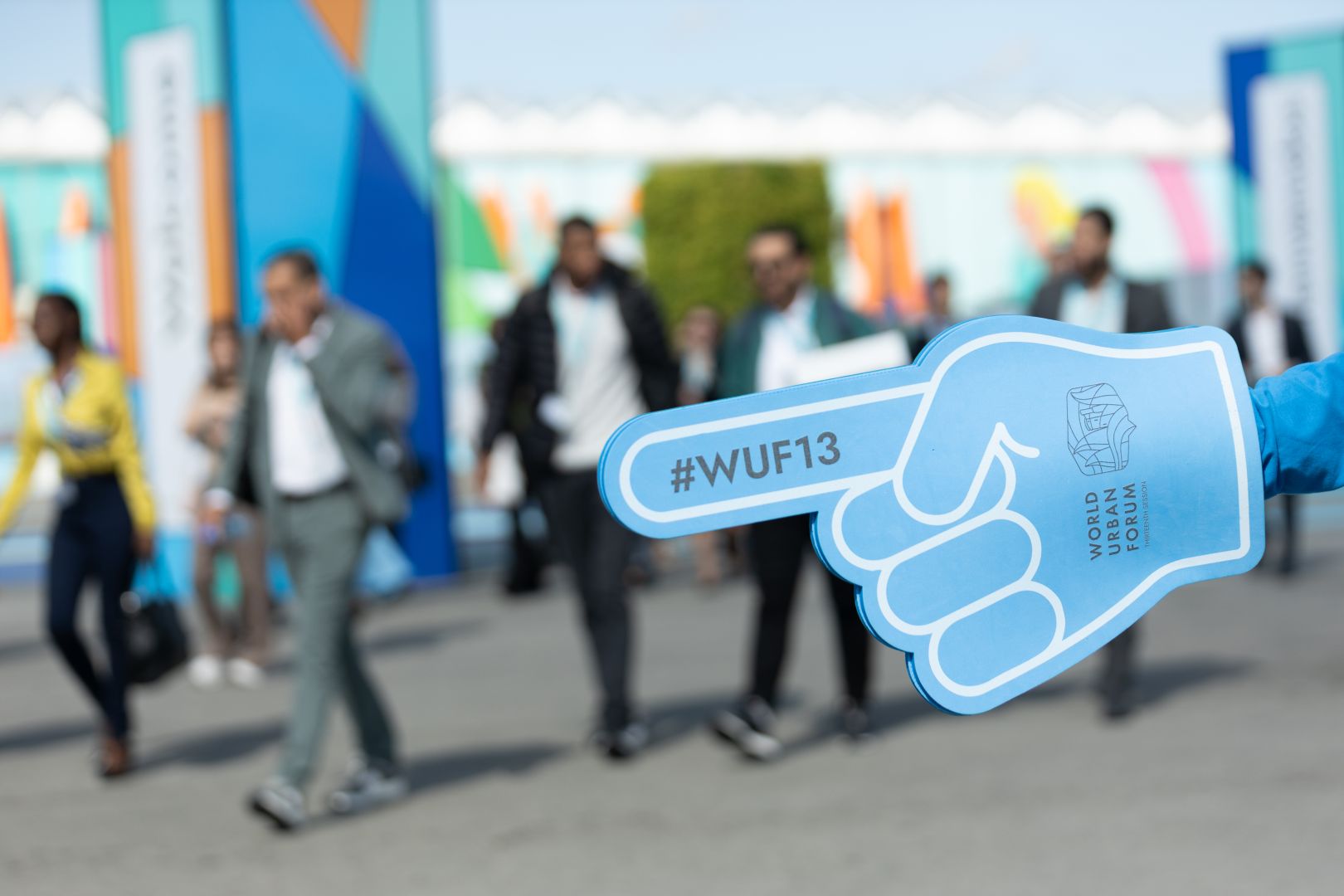
More than 45,000 registered participants from 180 countries, the largest attendance in WUF history. And the inclusion, for the first time in WUF's history, of a Leaders' Summit segment, reflects Azerbaijan's ambition to elevate the forum from a technical conference into a genuine geopolitical platform.
Now, let us go day-by-day on what has happened.
Pre-Forum Day, 17th of May
Ministerial Meeting on the New Urban Agenda + five stakeholder Assemblies
Government ministers gathered to assess progress on the New Urban Agenda at its midpoint, ten years after Quito, ten years before the agenda's 2036 end date. The session, chaired by Azerbaijan, was designed to feed directly into the UN Secretary-General's 2026 midterm review report. Five dedicated stakeholder Assemblies, covering women, civil society, local and regional governments, youth, and the private sector, ran simultaneously, ensuring that the ministerial commitments made upstairs were at least interrogated from below. A flag-raising ceremony for the UN and Azerbaijani flags marked the formal opening. Anar Guliyev, the WUF13 national coordinator, announced the creation of a new Baku Urban Award to recognise innovation in urban planning at future WUF editions.
Monday 18 May - Day 1
Opening WUF13 were President Ilham Aliyev of Azerbaijan and the Executive Director of UN-Habitat, Anacláudia Rossbach, at a forum which attracted many Heads of State and delegations. According to President Aliyev, the forum was “the second biggest international event ever hosted by Azerbaijan after COP29.” This comparison was not without significance because it set a benchmark for the forum. An interesting structural change introduced to the forum was the afternoon’s opening of the Leaders’ Summit which marked the first time ever that such high-level dialogue had been organized in the 25-year history of the World Urban Forum as a way of raising the level of urban issues on the political agenda just like climate change issues have been. México City inaugurated its pavilion for hosting WUF14 as the forum city in the future.
Tuesday 19 May - Day 2
First-ever WUF NGO Forum + Global South platform
The most structurally innovative day at the forum. It was the first time that a WUF NGO Forum took place, having been organized by the State Support to NGOs of the Republic of Azerbaijan in cooperation with the Global South NGO Platform, which connects CSOs from 116 nations. "A historic moment," as defined by Rossbach. The geopolitical context, as defined by Hikmat Hajiyev, head of the Department of Foreign Policy at the Office of the President of the Republic of Azerbaijan, was that Azerbaijan is acting as a bridge between the Global North and the Global South.
Wednesday 20 May - Day 3
World Cities Report 2026 launched + housing coalitions
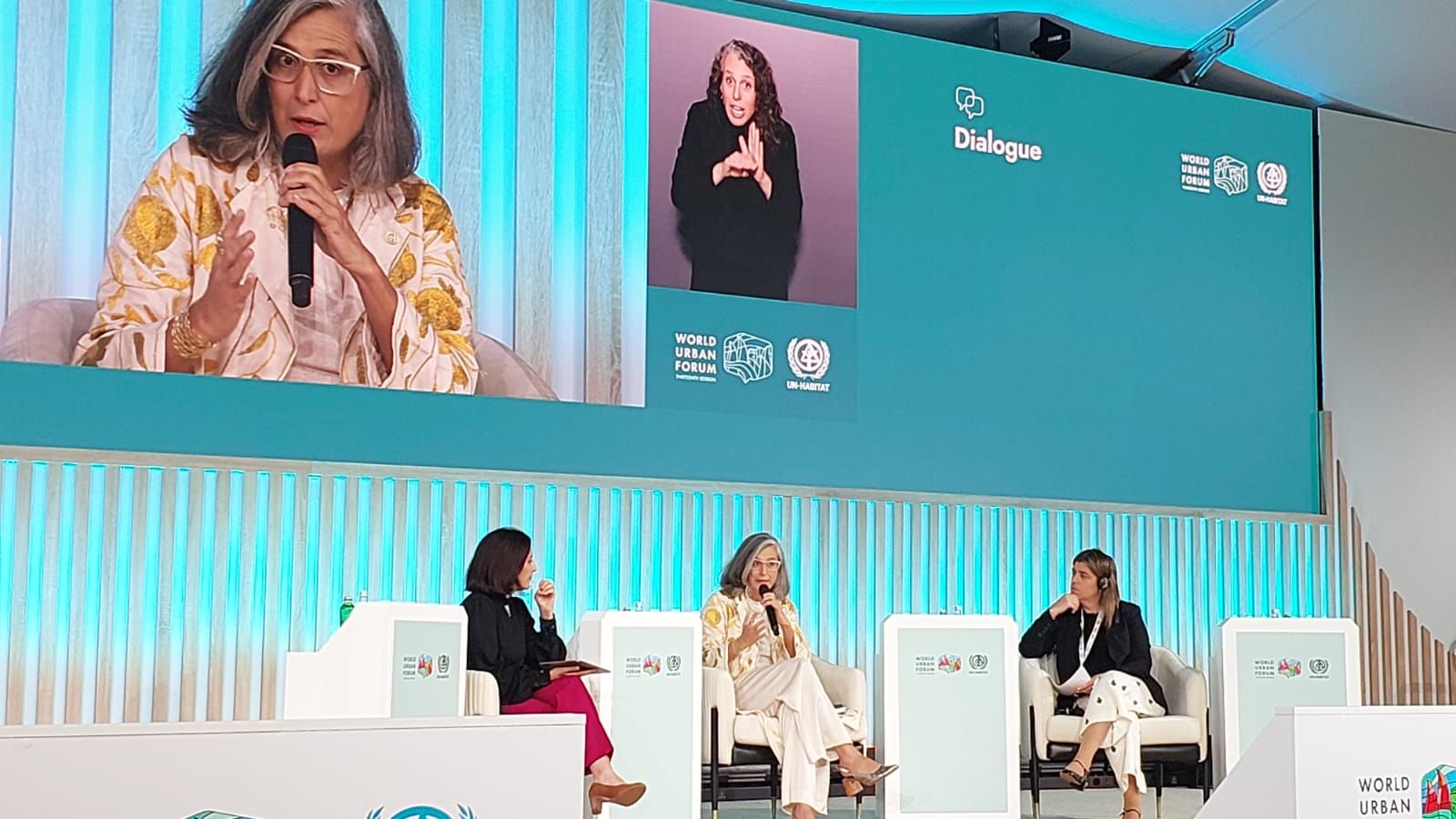
Substantively, the most packed day. The UN agency UN-Habitat released its World Cities Report 2026: The Global Housing Crisis - Pathways to Action, the flagship document that would form the basis for the Baku Call to Action and the 2026 UN General Assembly review. "Three billion people suffer from inadequate housing, calling for greater public investment, inclusionary housing policy, and community participation" - the primary conclusion of the report provided a foundation for the evidence-based discussion throughout the day. Various discussions were held on AI & urban governance, green urbanism, social equity, climate resilience, and sustainable mobility. "Housing is not only a social problem," emphasized Guliyev. "It is a climate, economic, and developmental problem, and one of human dignity." Discussions were also held on global coalitions aimed at accelerating housing investments, particularly in Africa where the pace of urbanization exceeds infrastructure investment.
Thursday 21 May - Day 4 (today)
Post-crisis recovery dialogue + Baku Call to Action drafting
The topics that will be discussed today are those of urban housing and urban recovery post crisis - an issue very relevant to Azerbaijan since the country's own Karabakh Reconstruction Initiative has been the talk of the international community all week long. Indeed an important issue regarding how delegates, participants from several countries are uninformed by this, which I have observed through my interactions with a bunch of them. These discussions includes financing mechanisms for rebuilding resilient cities, the involvement of international institutions in development, and also the drafting of the Baku Call to Action, which is set to be launched officially tomorrow during the concluding ceremony. The delegations from Latin American, African, and South Asian cities have proven to be particularly active in this regard.
Document that matters the most
The Baku Call to Action, the content of which will have to be finalized and presented by the end of tomorrow, is what makes this forum worth attending. In contrast with a communiqué and even a press release, the Call to Action represents an instrument specifically designed to encourage actions on different scales, local, national, and international, as well as serve as input for the UN Secretary-General's 2026 report on the implementation of the New Urban Agenda. It is the first time such a forum has been arranged right in the middle of the period during which the implementation process is expected to take place, and thus has received added significance because of it. While being non-binding, like all other UN documents dealing with urban areas, the fact that it is to be action-oriented makes the document somewhat more substantial than those usually adopted after five days of global discussions.
From the debates taking place over the past four days, there seem to be three issues that will undoubtedly form the bedrock of the report. These include public investment, the role of which in addressing the problems of insufficient housing has consistently been highlighted since the start of the ministerial conference, the Leaders’ Summit, and now the coalitions’ session. The second key theme of the session has been the role of climate integration in which housing has emerged as an issue of climate change rather than being restricted solely to its socio-economic dimensions, given the post-COP29 context in which the forum takes place, especially given the hosting of two environment-related conferences by Azerbaijan in the last eighteen months.
The host city has been, inevitably, both backdrop and subject. A city rich in heritage and architectural history, yet one that has faced a housing crisis since gaining independence from the USSR. Azerbaijani IDPs from Karabakh and those expelled from modern-day Armenia due to the conflict have been particularly affected. Azerbaijan's Karabakh reconstruction programme, which Guliyev noted has "generated great interest among international organisations", was presented throughout the week as a case study in building from scratch to modern sustainability standards, with delegations visiting the smart village projects and green energy zone designations in the liberated territories. They did spark some interest. More interestingly, however, there were some rather pointed questions asked by delegates who knew the background behind the issue concerning how the people previously living there had been displaced; these questions were off-the-record, as they were posed during side discussions.
The process of Baku's own urban development did not go unnoticed either, but the analysis turned out to be rather controversial, as compared to what the Azerbaijani authorities were trying to advertise through promotional materials. While the image of the magnificent Flame Towers against the background of informal areas, which are known to urban planners to be located on the outskirts of Baku, could hardly remain unnoticed by the delegation of professionals whose work revolves around that dilemma every day, several members of the delegation pointed out privately that the vision put forward in Baku Masterplan 2040 – including demolition of 122,000 residential buildings in order to build a pedestrian-friendly and transit-oriented city, is probably one of the most ambitious urban transformation projects of the decade.
What should be expected from the close tomorrow?
Perhaps the day is yet to end, and any significant step could certainly be established. Nevertheless, the closing ceremony on Friday is expected to deliver the Baku Call to Action, officially endorse the WUF13 outcomes document, and ceremonially hand over the baton to Mexico City, host city for WUF14. This final session will conclude the first World Urban Forum ever to be staged in the Caucasus, geographic evidence, according to the Azerbaijani President, that makes a statement about the increasing importance of the region to international decision-making. Azerbaijan will have the gratitude of UN-Habitat for organizing an event whose sheer scale, pioneering initiatives, and quality of substantive content have surpassed expectations and perhaps even ambitions for the Cairo meeting.
What will remain unchanged tomorrow is the housing problem, unfortunately. That three billion number will still be three billion on Saturday morning. The informal settlements will persist. There will be the same gap between the requirements for housing finance of cities in developing countries and what multilaterals can presently offer after five days of discussions in Baku. The call represents a reflection of the existence and intensification of the housing problem. But the reality is that the money needed to fund the construction of homes is even more significant.
Here we are to serve you with news right now. It does not cost much, but worth your attention.
Choose to support open, independent, quality journalism and subscribe on a monthly basis.
By subscribing to our online newspaper, you can have full digital access to all news, analysis, and much more.
You can also follow AzerNEWS on Twitter @AzerNewsAz or Facebook @AzerNewsNewspaper
Thank you!