
ANAS hosts launch of landmark book on Azerbaijan’s 44-Day Patriotic War [PHOTOS]
![ANAS hosts launch of landmark book on Azerbaijan’s 44-Day Patriotic War [PHOTOS]](https://www.azernews.az/media/2026/05/22/whatsapp_image_2026-05-22_at_185628.jpg)
Elnur Enveroglu
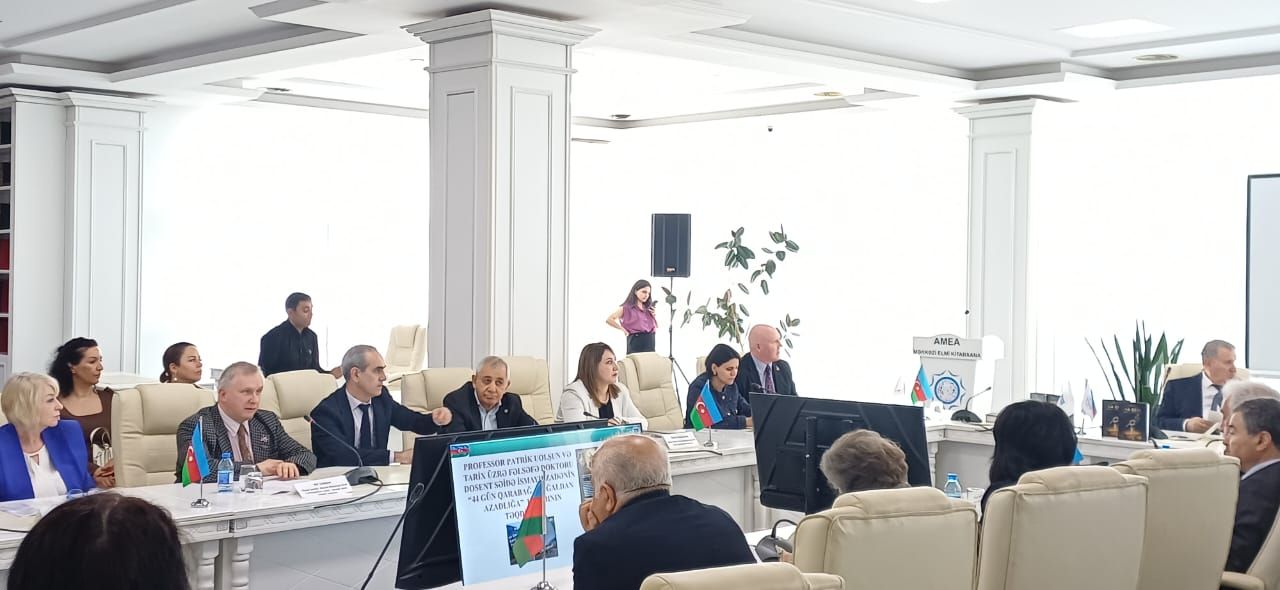
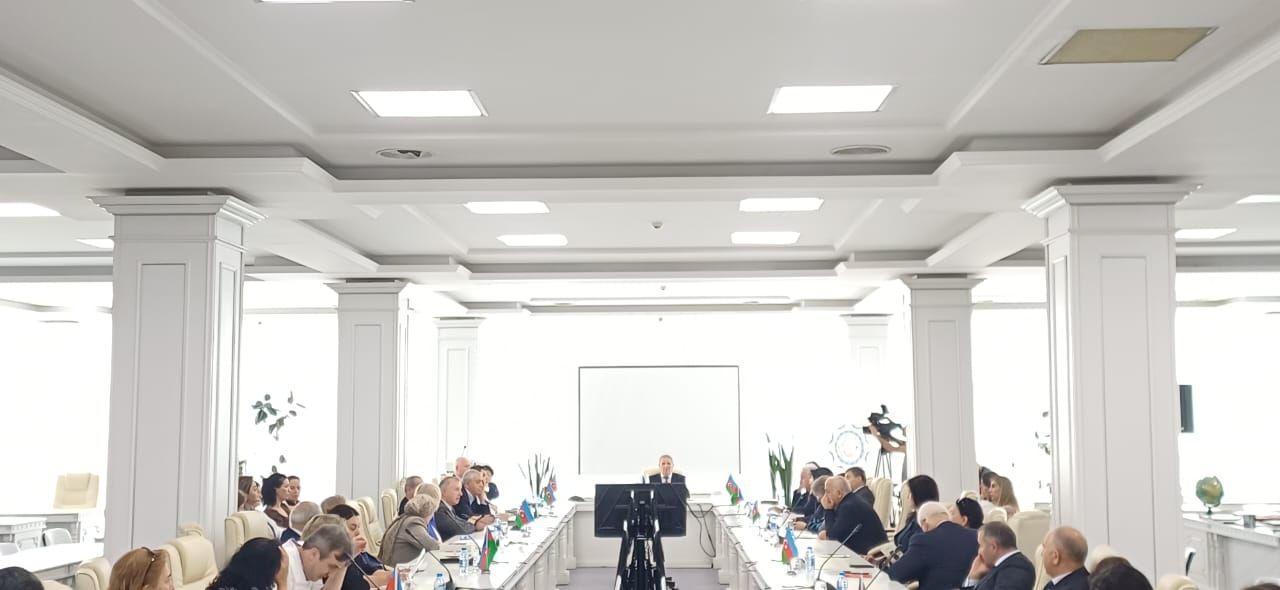
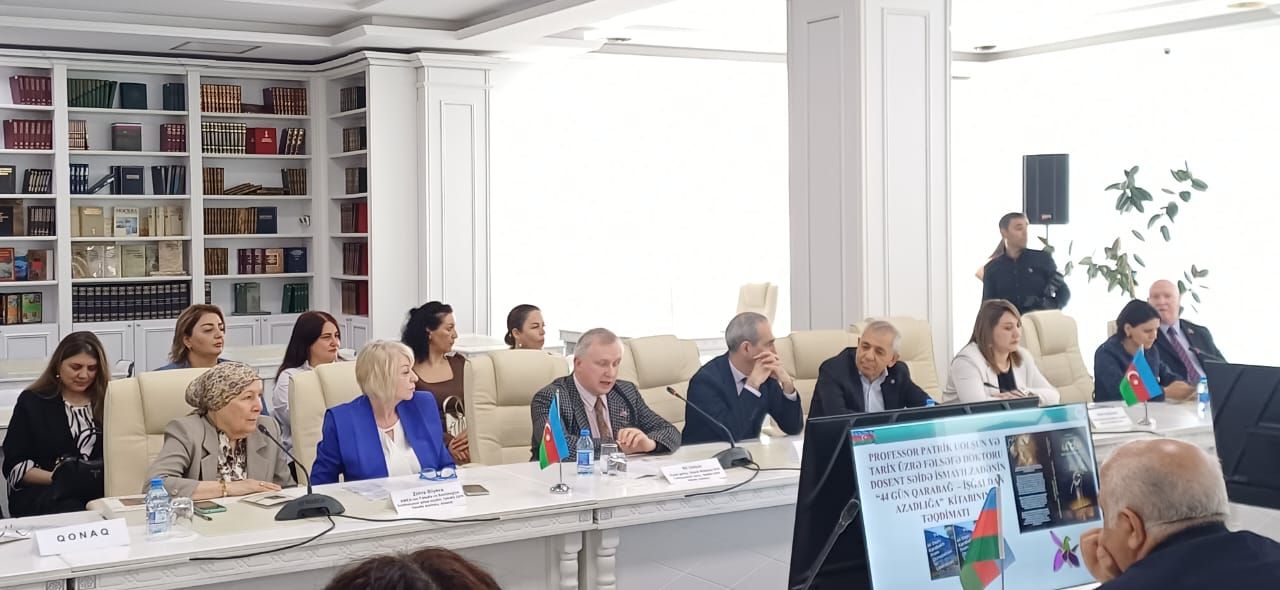
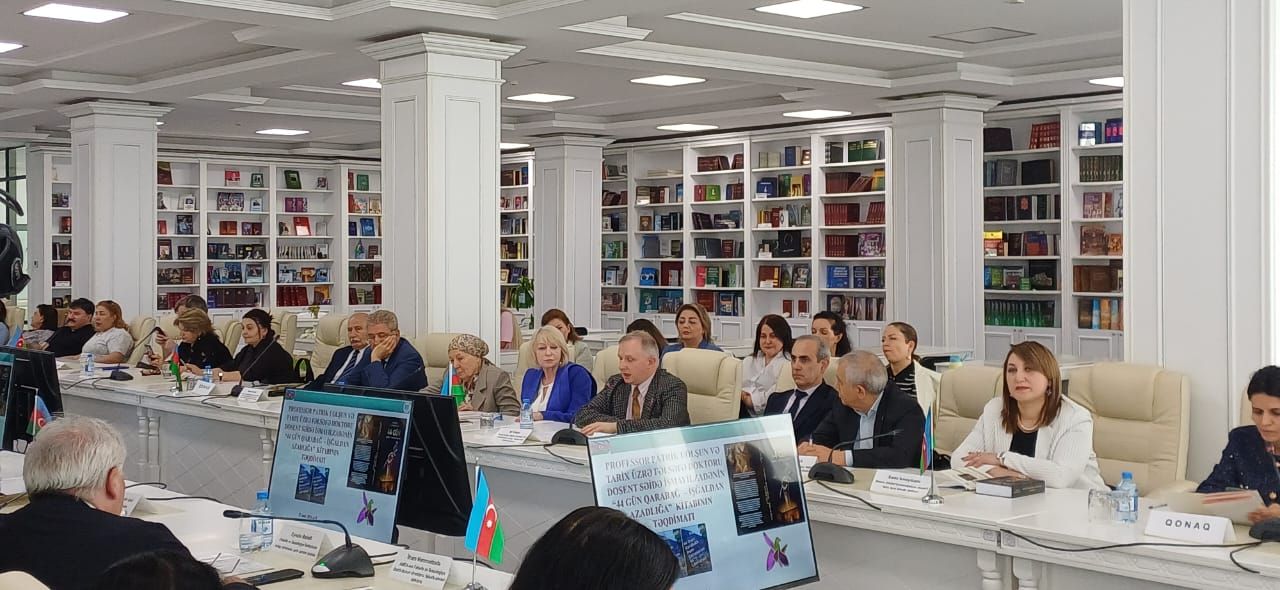
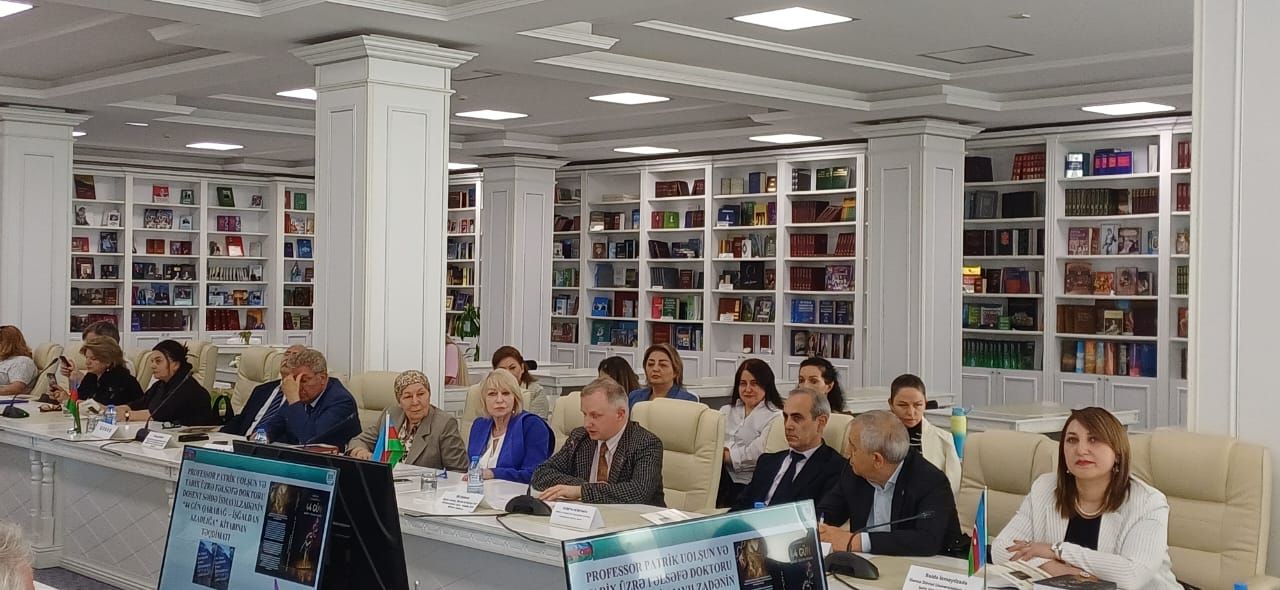
Read moreThe presentation of the book “44 Days: Karabakh – From Occupation to Liberation”, produced through the joint initiative of Irish professor and historian Patrick Walsh and Doctor of Philosophy and Associate Professor Saida Ismayilzade, was held today in the conference hall of the Central Scientific Library of the Azerbaijan National Academy of Sciences (ANAS).
Opening the event, ANAS President Isa Habibbeyli welcomed all participants and first spoke about the significance of the newly published book, expressing his deep gratitude to both authors for their efforts.
According to the head of the Academy, the book systematically reflects all details, from historical figures to major events. The heroism of Azerbaijani soldiers during both the First and Second Karabakh Wars, as well as the diplomatic and military competence and foresight of Commander-in-Chief Ilham Aliyev, are presented with extensive documentary evidence.
Another important aspect of the publication is that it presents the truth about Azerbaijan’s Patriotic War and Karabakh to European and Western readers in English.
During the event, author Patrick Walsh was also given the floor. He first thanked ANAS President Isa Habibbeyli for organising the event.
Walsh also expressed special appreciation to Professor Ilham Mammadzadeh, Director of the Institute of Philosophy and Sociology and scientific editor of the book, whose support, deep understanding of historical processes, and intellectual engagement played a crucial role in preparing the publication.
In his speech, the author also expressed his gratitude to the Institute of Philosophy and Sociology of ANAS for supporting academic and cultural dialogue and for its important mission in preserving historical memory and developing the humanities in Azerbaijan.
Thanking his co-author, Associate Professor Saida Ismayilzade, Patrick Walsh praised her scholarly work, professionalism, and profound knowledge of the historical material, which significantly expanded the book and provided it with considerable academic depth and analytical strength.
“Our collaboration has been a valuable intellectual experience for me,” he said.
Patrick Walsh continued his speech by expressing his gratitude to Zohra Aliyeva and Neil Watson for their organisational and intellectual support.
“I would especially like to thank the project coordinator, Zohra Aliyeva, for her outstanding organisational and intellectual contribution, without which this book could not have been completed and presented in its current form. I would also like to thank my friend Neil Watson for his continuous support, his long-standing interest in Azerbaijan, and our many intellectual discussions on the history, culture and contemporary development of the region,” he added.
The author also provided brief information about his experiences in Azerbaijan, noting that his interest in the country and his appreciation of Karabakh have deep roots.
“My interest in Azerbaijan goes back many years. For a long time, I have been studying the history of the South Caucasus, the formation of collective memory, the dynamics of conflict and the international perception of Karabakh. The deeper I engaged with Azerbaijani history and culture, the more I came to appreciate the strength, dignity and resilience of the Azerbaijani people.
This book is not only a scholarly project for me but also an expression of deep respect for Azerbaijan, its history and its people, who have preserved their national identity, culture and sense of justice.”
Concluding his remarks, Walsh expressed his gratitude to ANAS for translating the book.
“It is especially meaningful that the book has been translated into Azerbaijani and published by the printing house of the Azerbaijan National Academy of Sciences. This gives the work special significance, as it becomes part of the national academic and cultural space of the country to which it is dedicated.”
According to the author, “44 Days: Karabakh – From Occupation to Liberation” is not merely a book about military history. It is also about historical memory, international law, human dignity, and the right of a people to restore its territorial integrity.
“We aimed to present a complex historical picture of the Karabakh issue based on documents, sources and scholarly analysis,” Patrick Walsh said, adding that the 44-day Patriotic War of 2020 was not only a military victory.
“It reshaped the political and historical reality of the region. For many people around the world, it also became a moment of reassessing the history of Karabakh and the role of Azerbaijan in the contemporary world.”
British journalist Neil Watson, who has consistently promoted and defended Azerbaijan’s position in the United Kingdom, also addressed the presentation.
He first spoke about his impressions of Baku and recalled his first visits to Azerbaijan.
“I have visited Azerbaijan more than 30 times since 2009 and have had the opportunity to become acquainted with different regions of the country and its cultural environment. I have witnessed much of its development and, notably, its victory in the Second Karabakh War and the liberation of its territories.
Each visit has further broadened my understanding of the country, and I am aware of its pivotal, expanding and evolving role in today’s international dialogue, both geopolitically and in terms of trade and communications routes.”
It should be noted that Neil Watson, who has been particularly active in representing Azerbaijan in the United Kingdom, has also participated closely in several conferences held in Shusha since the Karabakh victory.
“A particularly significant experience was participating in the inaugural International Media Congress held in Shusha. This forum brought together representatives from various countries, alongside experts from the fields of media, communications and public engagement. The discussions focused on the development of the media landscape, digital technologies and international information cooperation,” he said.
Watson described his experience in Shusha as particularly memorable.
“However, for me, the most remarkable element was being in Shusha. When I started working with Azerbaijan, it seemed almost unfathomable to think that the Armenian-occupied regions would be liberated.
Yet there I was, staying in a new hotel constructed amid the ruins left by nearly 30 years of occupation, watching President Aliyev answer uncensored questions from journalists in a manner that would be unthinkable in the West.
For me, this was a surreal yet proud moment and a vindication of the patriotic work and sacrifices of the Azerbaijani people and armed forces.
It was especially symbolic to be in Shusha, the spiritual capital of Azerbaijan, at a time when the city is once again becoming a platform for international meetings and professional dialogue. The positive atmosphere of the congress reflected a strong commitment to the exchange of ideas and strengthening mutual understanding between nations, with Azerbaijan at the centre.”
Neil Watson also expressed his admiration for President Ilham Aliyev, who has gained international recognition through his diplomatic skills and leadership. He said he had attended many conferences featuring President Aliyev and had been impressed by his performance.
However, Watson also expressed regret over one matter — that he never had the opportunity to meet National Leader Heydar Aliyev.
“Over the years, I have attended many events featuring President Aliyev, including his address at the leading London-based think tank Chatham House. Even when confronted with difficult or hostile questions, he always remains calm, polite and precise.
He effectively reflects the stability, pragmatism and progressive nature of Azerbaijan, and this is now being transmitted to the other two South Caucasus nations as they work together more closely and increase their relevance to the West at a time of strategic realignment and the emergence of a new world order.
Sadly, I never had the opportunity to meet National Leader Heydar Aliyev. However, his legacy is legendary in the United Kingdom, largely because of his UK-focused foreign policy adopted shortly after Azerbaijan regained its independence.
His character is also fondly remembered. I once visited the head of the BBC Azerbaijani-language service, which was then housed at Bush House in London. The journalist recalled that during Heydar Aliyev’s first visit to London, the century-old lift carrying the National Leader and his entourage became stuck between floors.
It was a tense moment, broken only by the President’s laughter at the absurdity of the situation. Others who met him also recall his photographic memory for names and facts, as well as his enthusiasm for Azerbaijani arts and culture.”
In concluding his speech, Watson also spoke about his personal experiences regarding Karabakh.
He emphasised that he had come to regard Karabakh as an integral historical part of Azerbaijan through his professional experiences as a journalist from a young age.
“Over many years of work in English- and French-language media and editorial activities, I have always aimed to provide objective and professional coverage of the countries and events with which I have been associated.
When Azerbaijan crossed my path, I understood its position, recognised its historical connection to Karabakh and the seven surrounding districts, and sympathised with the humanitarian catastrophe caused by war and occupation over nearly three decades.”
Finally, Neil Watson highlighted the efforts made by his friend Patrick Walsh in writing the book.
“In this context, I would also like to highlight today’s event — the presentation of my colleague Patrick’s book. He approached Azerbaijan and the Karabakh War as an Irish historian who writes with the courage of his convictions.
This landmark work reflects thoughtful academic analysis and the author’s effort to interpret contemporary events. Particularly valuable is its attention to the human dimension, which helps us better understand the complexity of our modern world; the war, the role of external actors and Armenian political leaders, the factors that led to Azerbaijan’s victory, the prospects for peace, and the reconstruction of the liberated territories, as well as the emergence of a more integrated and internationally relevant South Caucasus.”
The event also featured remarks by the book’s co-author, Doctor of Philosophy Saida Ismayilzade.
She thanked ANAS President Isa Habibbeyli for organising the event and expressed her gratitude to all guests in attendance.
Saida Ismayilzade also spoke about her cooperation with Patrick Walsh during the preparation of the book. Describing the information contained in the publication as a national asset, she assessed the work as an exceptionally rich resource that could be used as a university textbook in the future.
Here we are to serve you with news right now. It does not cost much, but worth your attention.
Choose to support open, independent, quality journalism and subscribe on a monthly basis.
By subscribing to our online newspaper, you can have full digital access to all news, analysis, and much more.
You can also follow AzerNEWS on Twitter @AzerNewsAz or Facebook @AzerNewsNewspaper
Thank you!