
Azerbaijan marks March 31 as memory of massacres meets era of reconstruction
By AzerNEWS staff
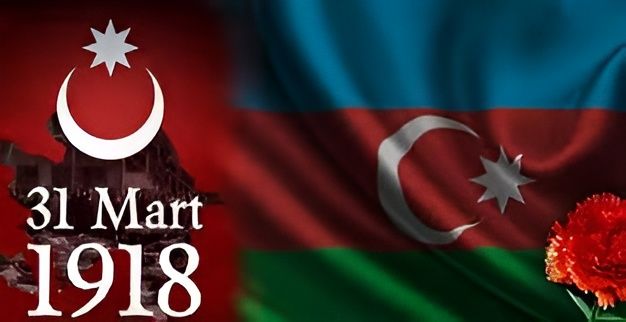
The memory of March in the Azerbaijani consciousness is a complex tapestry woven with threads of profound grief and unbreakable resilience. As we stand in the spring of 2026, the dates of March 31st serve as a somber bridge between two eras: the systematic ethnic cleansing of 1918 and the harrowing "Tunnel" massacre of 1993 in Kalbajar. Yet, today, these narratives of victimhood have been fundamentally transformed into a saga of restoration and sovereign strength. To understand the Azerbaijan of today, one must look deep into these scars, not merely as historical footnotes, but as the catalysts for the grand construction policy currently reshaping the liberated territories.
The tragedy of March 1918 remains a cornerstone of our national sorrow, representing a calculated attempt to erase the Azerbaijani identity from the map. Under the guise of revolutionary shifts, Bolshevik-Dashnak forces unleashed a wave of terror across Baku, Shamakhi, Guba, and beyond. This was not collateral damage of war; it was a pre-meditated genocide where tens of thousands were slaughtered for no crime other than their ethnicity. Historical reality reveals a chilling level of cruelty, from the burning of the Ismailiyya building to the desecration of holy sites. The Guba mass grave, discovered decades later, remains a silent, terrifying witness to this brutality, where the remains of women and children tell a story of a hatred that knew no bounds. For a century, this pain was suppressed, but today’s reality demands that we acknowledge these facts to ensure that "never again" is not just a slogan, but a state-guaranteed reality.
Seventy-five years after the 1918 massacres, history repeated its darkest patterns in the rugged mountains of Kalbajar. By late March 1993, the district was surrounded, and the civilian population found themselves trapped in a frozen hell. The "Tunnel" massacre of March 31, 1993, stands as one of the most agonizing episodes of the First Karabakh War. As thousands of civilians—elderly men, women carrying infants, and the wounded—attempted to flee through the only available mountain passage, they were ambushed within the confines of a tunnel. In that claustrophobic darkness, amidst the smoke of burning vehicles and the echoes of heavy gunfire, hundreds of innocent lives were extinguished. Those who survived the bullets often succumbed to the unforgiving frost of the Murov Mountains, walking barefoot through the snow in a desperate flight for survival. The occupation of Kalbajar was a wound that bled for nearly thirty years, symbolizing the displacement of an entire community from their ancestral paradise.
However, the narrative of the 21st century has taken a defiant turn. The liberation of Kalbajar in 2020, achieved through a combination of military pressure and diplomatic brilliance by President Ilham Aliyev, signaled the end of the era of lamentation. Today, the very tunnels that once saw blood and despair are being replaced by state-of-the-art engineering marvels. The vast construction policy in Kalbajar is nothing short of a miracle in the middle of a high-altitude wilderness. The government is not just building roads; it is carving out a future through the hardest rocks of the Caucasus. Modern tunnels under the Murovdağ range now symbolize safety and connectivity rather than entrapment. Reportages from the region no longer focus on the debris of war, but on the humming of machinery and the rising silhouettes of "smart" villages and luxury sanatoriums that utilize the region’s famous thermal waters.
Central to this rebirth is the human element—the return of the people to whom this land belongs. The resettlement process is a deeply emotional journey, often highlighted by the President’s personal visits to the homes of returning families. In these newly built residential areas, the standard of living often surpasses that of modern metropolitan centers. When we see materials from the homes where the President has sat at the dinner table with local families, we see a bridge between the state and the citizen that was missing for decades. These families are no longer "IDPs" defined by their loss; they are pioneers of a new Karabakh. In cities like Lachin and Shusha, and villages like Aghali and Talish, the household life of the residents is a testament to the state’s commitment to dignity. High-speed internet, green energy solutions, and modern educational facilities are the new reality for people who once lived in the shadow of occupation.
The policy of building and restoration is the ultimate response to the genocides of the past. Every stone laid in Kalbajar, every school opened in the liberated territories, and every child born in a revitalized village is a victory over the darkness of 1918 and 1993. Azerbaijan has moved beyond the status of a mourning nation to a leading regional power that honors its martyrs by creating a prosperous haven for their descendants. As we reflect on the 31st of March, we do so with a heavy heart for the past, but with a firm hand on the steering wheel of the future. The transition from the "Tunnel" of death to the tunnels of progress is the most poetic justice history could provide, proving that while a nation can be wounded, a nation with such a deep will to live can never be broken. Today, the reports from the field do not speak of massacre, but of harvest, heritage, and the eternal return of a people to their rightful home.
Here we are to serve you with news right now. It does not cost much, but worth your attention.
Choose to support open, independent, quality journalism and subscribe on a monthly basis.
By subscribing to our online newspaper, you can have full digital access to all news, analysis, and much more.
You can also follow AzerNEWS on Twitter @AzerNewsAz or Facebook @AzerNewsNewspaper
Thank you!