
€90bn and counting: Orbán gone, but will anything really change for Ukraine?

Akbar Novruz
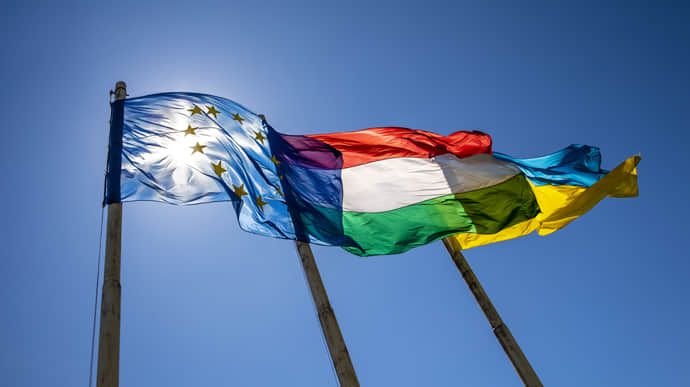
Read moreThe political earthquake in Hungary, marked by the electoral defeat of Viktor Orbán and the rise of Péter Magyar, signals more than just a domestic transition. It opens a new chapter for the European Union, one that may now operate with fewer internal blockages on key strategic decisions, particularly regarding support for Ukraine.
For years, Budapest under Orbán had acted as a brake within the EU system, frequently delaying or vetoing decisions related to sanctions on Russia and financial assistance to Kyiv. With that obstacle now removed, attention has quickly shifted to the unblocking of a major €90 billion aid package intended to support Ukraine’s war effort and state stability.
Yet the central question remains: does this political shift meaningfully alter the trajectory of the war?
In his comment on the issue for AzerNEWS, international relations expert Ognjen Petronijevic says expectations should remain measured:
"It is highly unlikely that the change of government in Hungary and the adoption of the €90 billion aid package for Ukraine will significantly alter the course of the war. The loan itself remains modest compared to the financial support provided by the Biden administration between 2022 and 2025, which alone reached $174 billion in total. Currently, without strong financial support from Washington and an active role of Brussels in the future diplomatic initiatives, a significant shift on the ground appears highly improbable. Nonetheless, the loan will help Kyiv maintain state functionality, sustain fundamental governance, and enhance its military capabilities to a certain extent. Whether this will translate into a meaningful military balance remains doubtful. At best, it only suggests that Ukrainian resistance to Russian military pressure will be further consolidated, rather than reversed. The new leadership in Budapest will prioritize economic and financial revitalization."
He believes that Hungary's political shift may not significantly change the trajectory of the Ukraine War:
"Magyar has announced that Hungary will neither veto the €90 billion loan nor contribute to it. Regaining access to frozen EU funds will be among the most important objectives of the incoming government, an effort that will inevitably demand democratic reforms and restoration of the rule of law. The new government has also identified energy diversification as the cornerstone of its energy security strategy. Whether this is the best possible path forward under current global circumstances – closure of the Strait of Hormuz and rising energy costs driven by U.S. pricing pressures – remains an open question. This uncertainty is the reason why Magyar is proceeding cautiously when it comes to fully distancing Budapest from Moscow. The Kremlin announced that they expect a pragmatic dialogue with the new Hungarian leadership, which signals that Budapest and Moscow will remain significant and closely monitored factors in European politics."
Ukrainian expert Vadim Tryukhan, in addition, underscores that the financial package, while important, is far from decisive. According to him, the funds in question are not enough to significantly change the course of Russia's war against Ukraine. "They represent the vital resources needed to maintain Ukraine's defense against Russian aggression at the same level of intensity as before. Thus, the allocation of 90 billion euros, which is likely to be unblocked once Orbán is no longer in power, serves to prevent catastrophe. Without this financial support, Ukraine would have struggled to withstand the ongoing conflict, likely facing severe territorial losses. However, with this funding, Ukraine’s defense will be strengthened, and there may even be opportunities for some local successes."
However, Tryukhan sees the political implications of Orbán’s departure as more consequential for the EU itself, as he describes Hungary as the former Trojan Horse of Russia:
"We should not anticipate rapid changes, as some inertia from Orbán's policies will remain. Yet, several significant issues need to be addressed. First, Russia has lost its Trojan horse in the European Union, represented by Orbán and his government in Hungary. As a result, the threat of restricted access to information concerning decision-making within the EU will be reduced, and EU initiatives will no longer face obstruction. Decisions about Russia and Ukraine, including the 20th sanctions package, will move forward. This package will be a severe blow to Russia, particularly alongside the allocation of the 90 billion euros. Secondly, Magyar has expressed interest in meeting with Zelenskyy, and this has been reported in the press. Zelenskyy is also keen on this meeting, which I believe will occur within the next few weeks. A specific action plan to reset relations between Ukraine and Russia, as well as between Ukraine and Hungary, will likely be discussed. Both Ukrainians and Hungarians are interested in restoring good-natured relations, similar to those they had in the past. Ukraine is expected to unblock the Druzhba pipeline, allowing Hungary to continue receiving Russian oil for some time. Nevertheless, Magyar has already indicated his support for diversifying energy sources, meaning he will negotiate with Croatia to receive oil via its pipeline."
At the same time, in his view, expectations of a dramatic policy shift from Budapest should be tempered. The expert says Magyar aims to reinvigorate the V4, which is quite significant because this group previously drove Ukraine’s integration into the EU. Tryukhan added that his first visit will obviously be to Poland to meet with Donald Tusk, a true friend of Ukraine who has a strong personal relationship with Zelenskyy. "During this meeting, Tusk is likely to emphasize the importance of advancing Ukraine's European Union aspirations, especially in light of Ukraine's military strength and its crucial role in containing Russian aggression, he said. However, the Ukrainian expert emphasized that Magyar is unlikely to bring about any immediate shift in the situation concerning Ukraine. "He has already stated that there will be no swift accession to the EU—Ukraine must complete all necessary procedures. This stance reflects not only his views but also those of Germany, Slovakia, and several other countries; hence, there is nothing particularly new about it. Nevertheless, it appears that key EU states will move towards changing the decision-making framework from consensus to majority voting, preventing leaders from dubious backgrounds from obstructing the European Union's progress in the future," he concluded.
Here we are to serve you with news right now. It does not cost much, but worth your attention.
Choose to support open, independent, quality journalism and subscribe on a monthly basis.
By subscribing to our online newspaper, you can have full digital access to all news, analysis, and much more.
You can also follow AzerNEWS on Twitter @AzerNewsAz or Facebook @AzerNewsNewspaper
Thank you!