
US-Israel-Iran war exposes cracks in transatlantic alliance, limits of Western strategy [COMMENTARY]
![US-Israel-Iran war exposes cracks in transatlantic alliance, limits of Western strategy [COMMENTARY]](https://www.azernews.az/media/2026/03/25/us_israel-iran.png)
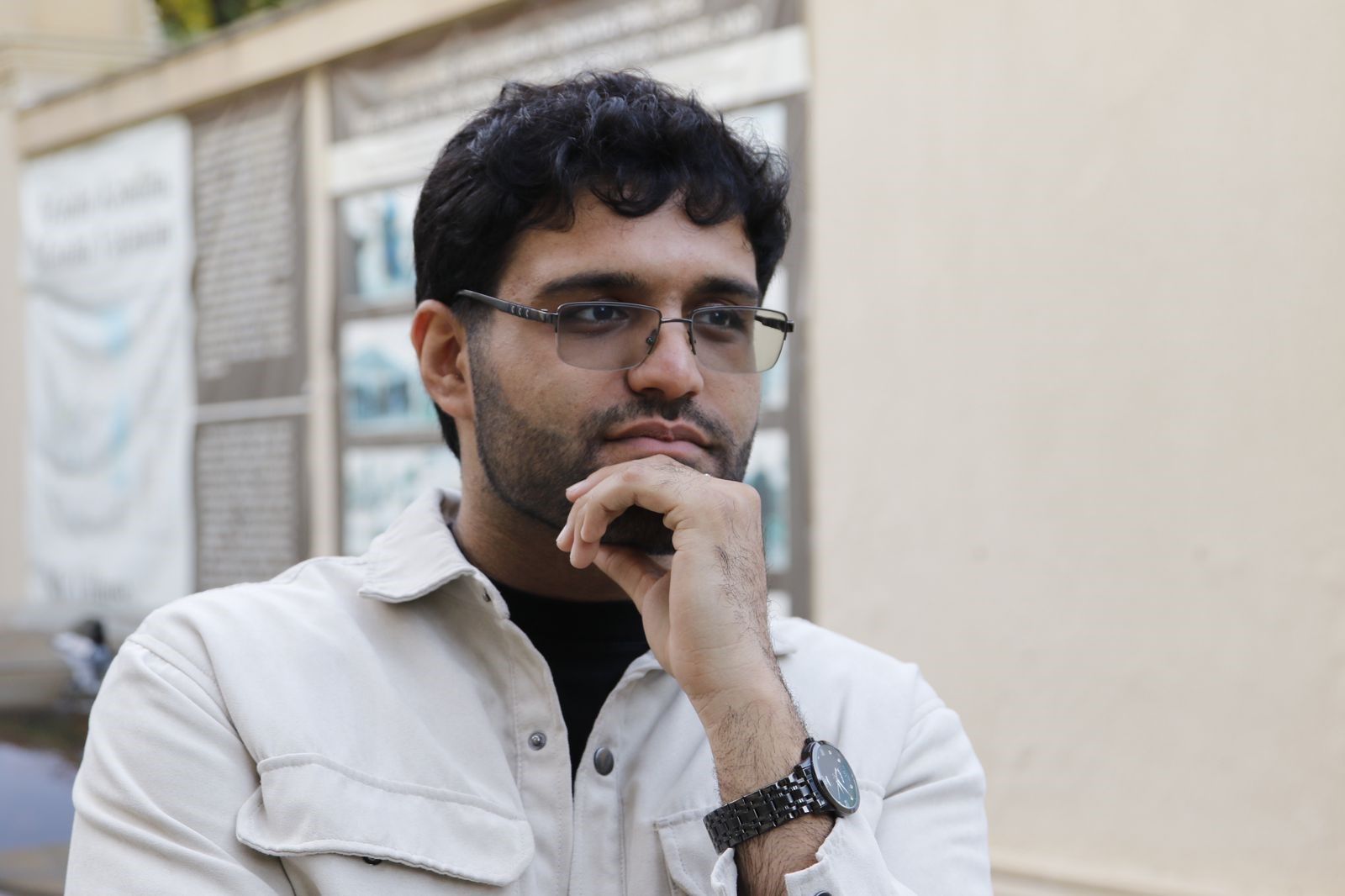
Akbar Novruz
Read moreThe US–Israel war with Iran is entering a phase where escalation and limitation are unfolding simultaneously, creating the illusion of both climax and continuation. On one hand, Washington has begun floating ceasefire frameworks and even paused certain strikes, suggesting an awareness that the conflict may be approaching strategic limits. Yet on the ground, the war is expanding geographically and operationally, undermining any notion of imminent closure.
Recent developments illustrate this contradiction clearly. Despite reports of a US-backed peace proposal, including a temporary ceasefire and constraints on Iran’s nuclear and regional activities, Iran has outright rejected the premise of negotiations, dismissing them as unilateral narratives rather than genuine diplomacy. At the same time, mutual strikes continue unabated, with Israel targeting infrastructure deep inside Iran while Tehran responds with missile and drone attacks not only on Israel, but also on US positions and regional states.
This widening theatre of conflict signals that the war has already spilled beyond a bilateral confrontation into a regional security crisis. Attacks affecting Gulf states, Lebanon, and critical energy infrastructure indicate a deliberate "horizontal escalation" strategy, raising the costs of war without directly matching US military superiority.
Meanwhile, Washington’s posture reflects strategic ambiguity. Even as US leadership speaks of "victory" and explores diplomatic off-ramps, it is simultaneously preparing additional troop deployments and reinforcing its regional presence. This dual-track approach, negotiation alongside escalation, suggests not a war nearing its end, but one struggling to define its objectives.
Complicating matters further is a growing divergence between the US and Israel over the war’s endgame. While Washington appears to favor a limited campaign focused on containment, Israel continues to pursue a broader objective that edges toward systemic destabilization within Iran. The absence of a unified strategic vision among key allies raises a critical question: can a war end if its participants do not agree on what "ending" means?
Turkish military expert Abdullah Ağar, in his assessment to AzerNEWS, frames this moment not as a turning point toward peace, but as a structural inflection point in which the war itself begins to dictate outcomes. "The war has reached its limits in its final phase", he claims.
According to Ağar, what appears externally as diplomatic movement is in fact a reaction to deeper systemic pressures. The emergence of ceasefire discussions, amid conflicting statements from political leaders, signals not resolution, but strain within the war’s own dynamics:
"A ceasefire is not a ‘search for peace,’ but a reflex to avoid losing control. It doesn't matter who Trump is talking to. Because on the ground, it's no longer the leaders speaking, but the war that has crossed the threshold of control. The downed F-35s, F-16 allegations, long-range ballistic missiles, energy pressure, the risk of uncontrolled reactions…They all say the same thing: This war was becoming unmanageable."
From his perspective, the introduction of a ceasefire, whether announced, denied, or contested, does not reflect a breakthrough but a necessity imposed by circumstances:
"And at this point, a ceasefire emerged not as an act of mercy, not as a search for lasting peace, but as a necessity. A ceasefire in war is a reassessment, realignment, and a reshaping of decisions and actions. It should not be forgotten: Ceasefires do not end wars. They take wars to a higher phase. It doesn't matter whether Trump met with an Iranian decision-maker or a corporal. Because the war demanded a ceasefire."
He further outlines what such a pause enables within a conflict environment:
"Because a ceasefire is an opportunity. It allows time for regrouping scattered forces, facilitates troop deployment and adjustments to front lines, and provides much-needed breathing space. This pause enables updates to strategic plans, addresses uncertainties, and enhances coordination among allies. Overall, it creates a chance to tackle vulnerabilities."
Ağar identifies a growing set of risks that suggest the war has entered a more volatile phase, one where small incidents could trigger disproportionate consequences:
"Additionally, the uncertainties caused by the war have reached a critical threshold. The downing of an F-35 by Iranian air defenses (Bavar-373, Majid) and other undisclosed allegations have heightened tensions. There is a potential for ballistic access to Diego Garcia, located 4,000 kilometers away, and the risk of "uncontrolled reflexes" from countries involved in the conflict, particularly Iran. The ongoing energy crisis is significantly influencing the course of the war, with its side effects putting pressure on the US-Israel alliance and their allies, who are beginning to push back against both the US and Israel. Furthermore, Iran has been targeting locations near nuclear facilities in Israel.
In this environment, the ceasefire becomes less of a diplomatic achievement and more of a strategic necessity, an attempt to reintroduce structure into a system approaching disorder.
"All of this highlights a key observation: during phases of increased tension, the dynamics of our reactions shift significantly. What begins as controlled reactions can easily devolve into uncontrolled responses, leading to a state of chaos that is no longer manageable. Similarly, the controlled chaos we might initially experience can spiral into an uncontrollable situation, resulting in heightened disorder. This pattern extends to various aspects of our perception and emotional state, where controlled uncertainty can transform into uncontrolled uncertainty, and controlled fears evolve into overwhelming, unchecked anxieties. Ultimately, even our perceptions can slip from a state of control into a realm of uncontrolled interpretations, illustrating the profound impact that heightened tension can have on our mental and emotional landscapes.
For these reasons, the U.S. strategic leadership and Trump, in order to bring the war back into a manageable framework, played the "temporary ceasefire" card, he concluded.
Irish historian and political analyst, Ronan Vaelrick, argues that even though the war seems winding down a bit, the limits are yet to be seen:
"After U.S. President Donald Trump stated on Monday that there was a possibility of ending the Iran war by the end of the week, Israeli and American sources emphasized how strongly the war would continue if a ceasefire were not reached. As much as he is an unpredictable man, there is a reality in his message: the war is not slowing down, and other than a few limited energy sector targets, nothing is off limits. In the early days of the war, both Israel and the United States were dropping approximately 1,000 bombs or striking around 1,000 targets daily. However, this pace was not sustainable for either side, considering the wear and tear on the fighter jets and the need to allow the limited number of pilots time to rest. As a result, after just a few days of conflict, the operational tempo began to slow down. It is normal, perhaps."
However, the historian also thinks of the possibility of this war ending during this week or by the end of this month, the US could extend the war for some weeks, with side battles related possibly to the Straits:
"There are numerous reasons why Trump might consider ending the situation, either this week or in the near future. Some are strategic concerns, such as the global economic crisis he faces due to Iran's blocking the Strait of Hormuz. However, part of the reason could simply be that, unless Trump changes his stance to support a large-scale ground invasion of Iran, which he currently can't do because the US forces arriving later this week are too small to do more than guard a small area like Kharg Island, Israel and the US might soon run out of an enemy to fight."
Whatever the consequences of this war, he thinks, it has shown lots of 'unseen holes':
"There are lots of things we can talk about regarding the war in the Gulf - whether who lost it, who gained the most, and possible scenarios, etc. Nevertheless, this war showed that a war without any strategy in a period of history is indeed a big mistake and a result of miscalculation. We can surely say that this war was planned years before, but the questions of how and when were not answered.
In contrast to Israel, the United States might be more inclined to accept a substantial and lasting reduction in Iran's nuclear and missile capabilities, as well as a diminished influence of its allies, especially Hezbollah. If U.S. officials determine that enough of these threats have been neutralized to ensure Israel's safety for at least the next several years, they could be open to a compromise that resembles an "Ayatollah" scenario with a different theological regime. On the other hand, for Israel and Prime Minister Benjamin Netanyahu, this conflict is of much greater significance. Their aim is to completely eliminate the hostile Iranian regime in order to secure Israel's dominance in the region.
Now this would be my only projections. Perhaps, I know one thing that became even clearer is that the US-Israeli military campaign has driven the last nail in the coffin of the 'rules-based world order', and Europe is yet again the biggest loser here, as it lost its relevance even further."
Here we are to serve you with news right now. It does not cost much, but worth your attention.
Choose to support open, independent, quality journalism and subscribe on a monthly basis.
By subscribing to our online newspaper, you can have full digital access to all news, analysis, and much more.
You can also follow AzerNEWS on Twitter @AzerNewsAz or Facebook @AzerNewsNewspaper
Thank you!