
When memory becomes battlefield: Politics of denial in Armenia’s election year [Op-Ed]
![When memory becomes battlefield: Politics of denial in Armenia’s election year [Op-Ed]](https://www.azernews.az/media/2026/03/23/dm2imw2u8qso9sdorudq0sxlxgdqx1lnjtu3ewc7.jpg)
Akbar Novruz
Read moreAs elections approach in Armenia, the government’s efforts to normalize relations with Azerbaijan are being met with a wave of domestic populist pressure and a refusal to reckon with international legal realities. In a village that two people call by different names, history is being rewritten from below, and the consequences reach all the way to Yerevan's ballot box
The dust has long settled on the battlefields of the 2020 and 2023 conflicts, but in the corridors of power in Yerevan and the reconstructed villages of Azerbaijan’s liberated territories, a new and perhaps more complex struggle is unfolding. It is a war of narratives, where the clinical requirements of international law collide with decades of deeply entrenched national sentiment.
At the heart of the current tension is the village of Xanyurdu (known in Armenian sources as Khnatsakh). Recent reports from monitoring groups have highlighted the removal of monuments and the resettlement of Azerbaijani civilians to the area. While Armenian advocacy groups characterize these actions as a "destruction of heritage," a more neutral lens reveals a different story: the complex, often painful process of a sovereign state reasserting control over its internationally recognized borders and dismantling the political symbols of a three-decade-long occupation.
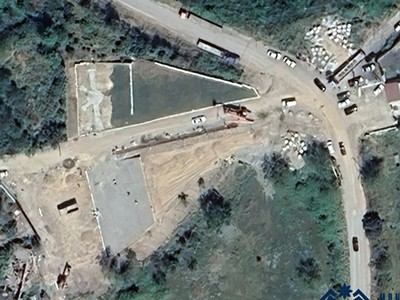
Azerbaijan resettled the village in 2025 and distributed photographs confirming the return of its population. According to Monument Watch, the Azerbaijani side had, back in July of that year, destroyed monuments erected in honour of victims of the Second World War and the Karabakh wars, as well as the graves of village defenders from the First Karabakh War. Significant excavation work accompanied the demolition, visible when satellite images from 2023 are placed alongside more recent ones, as a wound in the landscape.
Monument Watch has argued the destruction violates Article 4 of the 1954 Hague Convention on the Protection of Cultural Property in Armed Conflict, its 1999 Second Protocol, and binding decisions issued by the International Court of Justice in December 2021, which specifically obliged Azerbaijan to prevent and punish acts of vandalism against Armenian cultural heritage, churches, monuments, cemeteries and artifacts.
Under the 1954 Hague Convention, cultural property is indeed protected. However, a significant legal nuance arises when the "monuments" in question are heritage sites of a defunct, unrecognized separatist entity. For Azerbaijan, the removal of symbols celebrating what it views as a period of illegal occupation is not an act of vandalism, but a necessary step in urban renewal and the restoration of constitutional order.
The renaming of the village to Xanyurdu is not "fictitious" in a legal sense. It is the restoration of an indigenous toponym within the sovereign jurisdiction of Azerbaijan, a fact recognized by the United Nations and the broader international community.
That 2021 ICJ order had, for a time, appeared to produce a degree of restraint. Researchers noted that while some cemeteries and churches had been damaged since 2023, there had been no large-scale erasure of heritage sites comparable to what occurred in Nakhichevan, where between 1997 and 2006, Azerbaijan eradicated the entire known inventory of Armenian Christian sites, an estimated 89 churches, over 5,800 carved stone crosses, and more than 22,000 tombstones.
The geopolitical reality, however, is being increasingly obscured by the fog of domestic Armenian politics. As Nikol Pashinyan prepares for upcoming parliamentary elections, he finds himself walking a tightrope between pragmatic statecraft and a public still reeling from territorial loss.
Recent incidents underscore the volatility of the mood in Yerevan. In a widely circulated video from the city’s metro, a former resident of the Karabakh region confronted the Prime Minister, accusing him of "selling the land." Similarly, during a recent campaign stop, an elderly woman’s plea that Pashinyan had "given away Artsakh" highlights a profound disconnect.
They are the result of decades of internal narratives that framed these territories as an existential part of the Armenian state, despite their status under international law as Azerbaijani soil. This "brainwashing", a term used by some critics to describe the persistent refusal of the radical opposition to acknowledge the 1991 Almaty Declaration, now acts as a shackle on the peace process. Pashinyan has framed his project under the slogan "Real Armenia", contrasting pragmatic reconciliation with what he calls his opponents' vision of a "Historic Armenia" built on territorial claims against neighbours.
There is, however, an emerging fear among regional analysts that some foreign powers and "home-grown" revanchist groups are exploiting these emotions to delay the peace treaty. The strategy is to paint each move towards rebuilding in Azerbaijan as a "cultural genocide" in an attempt to undermine the legitimacy of the normalization process.
If peace is ever to take hold in this region, the conversation has to move beyond the emotional symbols of the past to the practical necessities of the future. The rebuilding of Xanyurdu and the return of displaced persons to Azerbaijan are signs of a new status quo, however uncomfortable they may be to accept in Armenia, which is the only foundation upon which a new border can be constructed.
The tragedy of the current moment is that while the politicians in Baku and Yerevan may have never been in a better position to negotiate a peace treaty, the "home-grown" resistance in Armenia, driven by a lack of willingness to accept the finality of international law, is the biggest impediment to a South Caucasus free from the shadow of war.
Here we are to serve you with news right now. It does not cost much, but worth your attention.
Choose to support open, independent, quality journalism and subscribe on a monthly basis.
By subscribing to our online newspaper, you can have full digital access to all news, analysis, and much more.
You can also follow AzerNEWS on Twitter @AzerNewsAz or Facebook @AzerNewsNewspaper
Thank you!