
Oil, tourism and security: Why Gulf states loom as losers in US-Israel-Iran war
Akbar Novruz
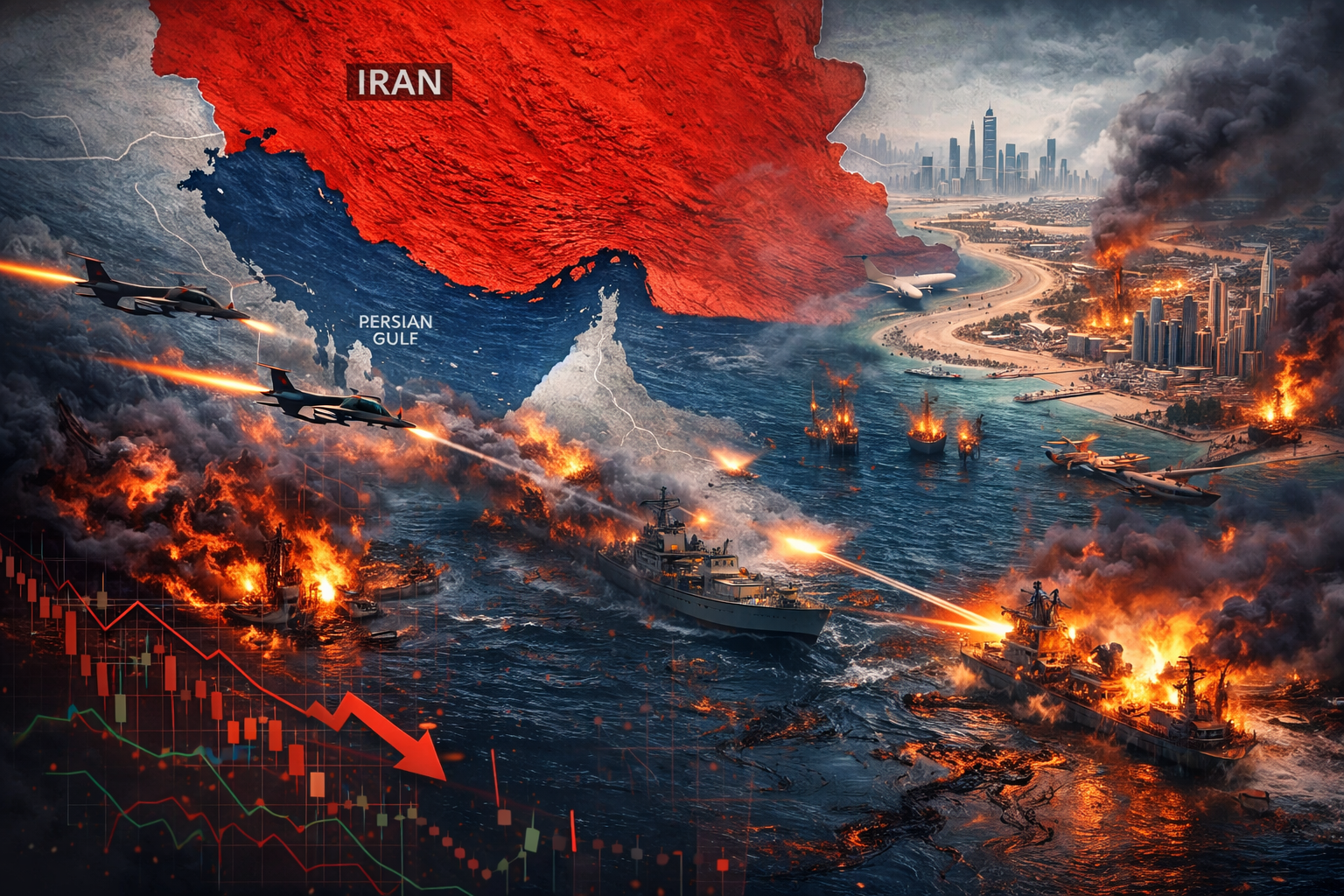
Read moreThe US-Israel-Iran war has been ongoing for more than two weeks already, and as the war engulfs further, the cracks seem to appear more visible. The war has lasted longer than many expected, and as the fighting intensifies, the consequences are no longer confined to the battlefield; economic pressures, energy insecurity, and widening instability are spreading across the Middle East.
US and Israeli forces continue to carry out strikes on Iranian targets, with reported attacks on cities such as Tehran, Hamadan, and Isfahan. At the same time, Iran has launched counterattacks against Israel, with damage reported in several Israeli cities. The escalation has also begun to affect the wider region. Authorities in Dubai reported a drone incident that caused a fire near the international airport, while Bahrain, Kuwait, Qatar, and Saudi Arabia have all announced interceptions of drones and missiles. Israel has also intensified operations on another front, launching new waves of attacks in southern Lebanon as it deploys tanks and troops along the border. The death toll there has reportedly risen to 850 people, including more than 100 children.
Amid the ongoing escalation, US President Donald Trump has stated that Washington remains in contact with Tehran, although Iran has not yet shown readiness to negotiate an end to the conflict. At the same time, Trump has called on NATO allies to assist in reopening the Strait of Hormuz, one of the world’s most important maritime chokepoints for oil shipments. Given the fact that the IDF has just recently announced a ground operation against Lebanon, it seems this war is forming itself into some sort of parasite.
But the central question increasingly debated is not only how the war will end, but who stands to lose the most from a prolonged confrontation?
Moscow-based geopolitical analyst Andrew Korybko debates AzerNEWS that the consequences extend far beyond the immediate parties involved:
“The global oil crisis caused by the Third Gulf War imperils the energy security of major economies like the EU and Japan, which non-Gulf energy suppliers like Russia and some African nations can take advantage of to profit accordingly.”
In other words, while the conflict directly involves the United States, Israel, and Iran, its ripple effects are felt most sharply in energy-importing economies that depend heavily on stable Gulf supplies. Any prolonged disruption in the region risks pushing global energy markets into deeper volatility.
Korybko also highlights another dimension of vulnerability revealed during the conflict: the exposure of Gulf states to drone and missile attacks.
“On the financial front, Iran’s drone and missile attacks against the Gulf Kingdoms highlight their vulnerability to such threats, which could reduce the allure of those like the UAE that are gradually transitioning their economies away from resource exports.”
From a military standpoint, the war has inflicted significant damage on several of the main actors.
“Militarily, they, Iran, and Israel have been hit very hard during the war, while the US’ regional assets are relatively unscathed if one takes the Department of War’s claims at face value.”
He warns that the most dangerous outcome may not be a decisive victory by any side, but a drawn-out conflict with cascading economic and political consequences.
“The scenario of a protracted conflict could greatly reduce economic growth and possibly lead to political unrest and even potentially related security threats in countries that are unable to meet their energy needs.”
Irish historian and political analyst, Ronan Vaelrick, on the other hand, thinks Gulf countries are the 'biggest losers' of this war, for now:
"The first and biggest losers are the Gulf countries. Their "trustworthy," neutral image suffered damage. The longer this process continues, the more harm it will cause these countries. A significant part of the Arab countries' economies here depends on tourism and oil industry revenues. According to statistics I read the other day, 600 million dollars are lost daily due to tourism. The situation in the Strait of Hormuz is clear; in short, they are losing on all sides."
He further discussed various aspects of the war's consequences, including potential scenarios that could alter the image of its losers and shift the dynamics of geopolitics:
"Now, there is another recent development that needs to be addressed: China. Since the war began, many analysts have pointed out that China is still unable to intervene effectively in such situations. They make large investments, but these situations make it hard for them to the point where they almost do nothing.
Iran just declared it might reopen the Strait of Hormuz, and every single barrel of oil is paid for in Chinese yuan. Nearly 89% of Hormuz's flow goes to Asia, with China alone taking 37.7%. Despite the blockade, data from Kepler shows Iran exported 11.7 million barrels since February 28, averaging 1.22 million barrels per day, all to Chinese refineries through shadow fleets. By enforcing a yuan-only rule, Iran is dismantling the 52-year-old petrodollar system that originated from the 1973-1974 US-Saudi pact. If Saudi, Iraqi, and Emirati tankers must settle in yuan, the dollar demand for billions in monthly trade disappears. Already, Russia settles 90% of its Chinese oil in yuan or rubles, while Iran handles 80-90% of its exports to Beijing in yuan via CIPS and barter.
With that, fewer petrodollars flow back into US Treasury bonds, pushing up borrowing costs and fueling inflation, possibly imploding the US economy significantly," he said.
Here we are to serve you with news right now. It does not cost much, but worth your attention.
Choose to support open, independent, quality journalism and subscribe on a monthly basis.
By subscribing to our online newspaper, you can have full digital access to all news, analysis, and much more.
You can also follow AzerNEWS on Twitter @AzerNewsAz or Facebook @AzerNewsNewspaper
Thank you!