
Japan’s Jiji Press publishes report on Shusha’s reconstruction

Ulviyya Poladova
Read moreJapan’s Jiji Press has published a report highlighting the rapid reconstruction of Shusha in Azerbaijan’s Karabakh region.
The report focuses on Shusha, a strategically important city that Azerbaijan regained during the 2020 war. Since then, the Azerbaijani government has launched a large-scale reconstruction campaign aimed at restoring the city and developing it as a cultural and tourism center.
According to Jiji Press, the transformation of Shusha is particularly visible along Karabakh Street in the city center. Newly built stone structures, traditional-style arches, wooden balconies, paved streets and landscaped areas have replaced much of the damaged urban landscape.
An Azerbaijani government official who guided the Jiji Press team through the city said that only damaged buildings could be seen in the area four years earlier.
Shusha has historically been an important center of Azerbaijani culture and is particularly renowned for its contribution to traditional music. In May 2021, the Azerbaijani government designated Shusha as the country’s cultural capital.
The report says authorities have since accelerated the development of tourism infrastructure, including highways and an airport. Azerbaijani authorities reported that more than 550,000 tourists visited Shusha in 2025.
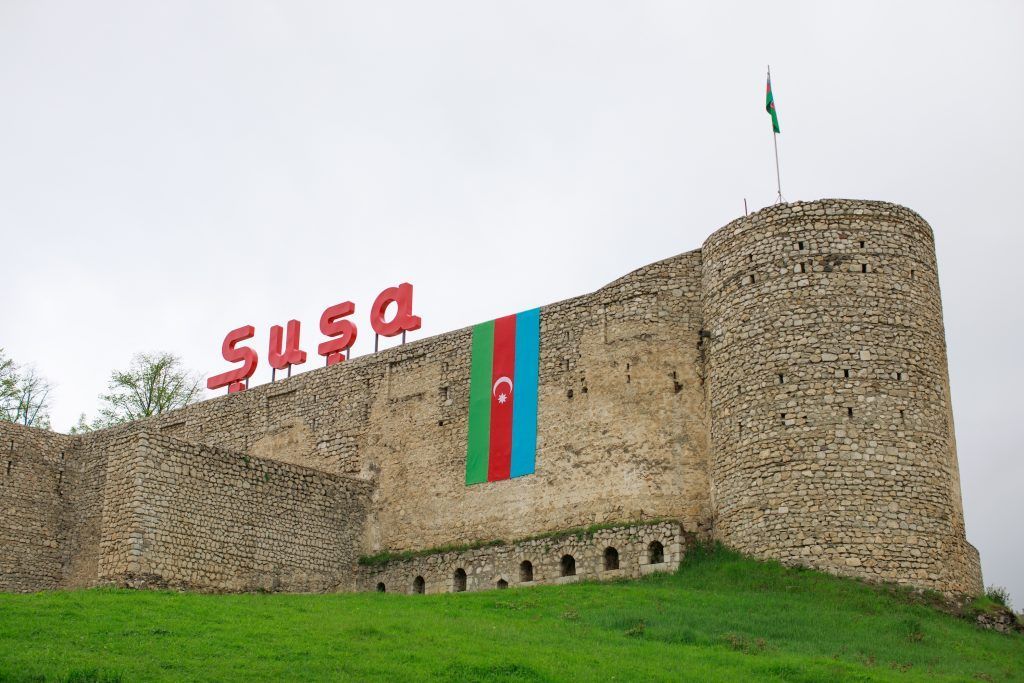
Jiji Press also describes the patriotic atmosphere among Azerbaijani visitors. At Jidir Plain, known for its dramatic views of the surrounding landscape, young people were seen carrying Azerbaijani flags. At the 18th-century Shusha Fortress, a woman in her 70s expressed strong emotion over Azerbaijan’s recovery of the city and thanked President Ilham Aliyev.
The Azerbaijani government aims to return more than 8,000 people to Shusha by 2030. At the time of the report, 377 households, totaling 1,411 people, had returned. For some returnees, the rebuilt city does not fully resemble the home they remember.
Jiji Press interviewed a man in his 60s who returned to Shusha after almost three decades away. He left the city in 1992 following the advance of Armenian forces and subsequently lived in several European countries. Although he eventually returned to Azerbaijan, he found that many of the places associated with his former life had disappeared. Cafes and billiard halls that had once been popular gathering places were no longer there, while he had still not been reunited with friends and relatives separated by the conflict.
"This is no longer the Shusha I remember," he said, according to the report.
For Azerbaijan, Shusha has become a symbol of national victory and cultural revival.
Here we are to serve you with news right now. It does not cost much, but worth your attention.
Choose to support open, independent, quality journalism and subscribe on a monthly basis.
By subscribing to our online newspaper, you can have full digital access to all news, analysis, and much more.
You can also follow AzerNEWS on Twitter @AzerNewsAz or Facebook @AzerNewsNewspaper
Thank you!