
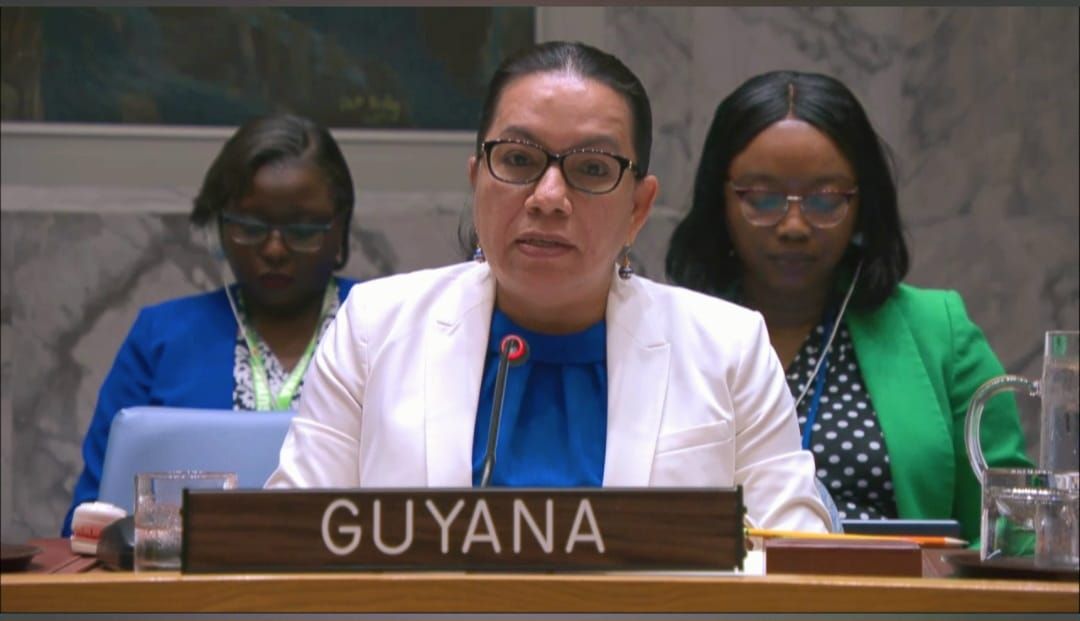
Guyana’s Carolyn Rodrigues-Birkett leads race for next UN Secretary-General

Ulviyya Poladova
Read moreThe United Nations Security Council (UNSC) conducted its second non-binding straw poll as part of the selection process for the next UN Secretary-General, with Guyana’s Ambassador to the UN, Carolyn Rodrigues-Birkett, emerging as the frontrunner among the declared candidates.
Uganda’s Olara Otunnu gained the sharpest percentage increase support for his candidacy. Yet no nominee drew the required nine yes votes from the Council poll to fully command a lead.
The secret straw polls are designed to gauge the level of support among the 15 members of the Security Council and gradually narrow the field before the Council makes a formal recommendation to the UN General Assembly. The General Assembly typically endorses the Security Council’s choice.
During the confidential voting procedure, Security Council members are asked to mark each candidate on the ballot as "encourage," "discourage," or "no opinion." The results are not officially published, but the assessments are confidentially communicated to the countries that nominated the candidates.
The term of current UN Secretary-General António Guterres expires at the end of December 2026. The candidates seeking to succeed him include former Chilean President Michelle Bachelet, International Atomic Energy Agency (IAEA) Director General Rafael Grossi, UNCTAD Secretary-General Rebeca Grynspan, former Senegalese President Macky Sall, former Ecuadorian Foreign Minister María Fernanda Espinosa, and Guyana’s Permanent Representative to the UN, Carolyn Rodrigues-Birkett.
Whoever succeeds Guterres will face significant challenges amid escalating global conflicts and growing criticism of international institutions from far-right populist movements.
The next UN chief will therefore be tasked with revitalizing an organization facing a decline in influence and mounting pressure for institutional reform.
In a formal Security Council vote, a candidate must secure at least nine of the 15 votes to advance. However, any of the five permanent members - the United States, China, France, Russia, or the United Kingdom - can veto a nominee, making the support of the permanent members crucial to the selection process.
Here we are to serve you with news right now. It does not cost much, but worth your attention.
Choose to support open, independent, quality journalism and subscribe on a monthly basis.
By subscribing to our online newspaper, you can have full digital access to all news, analysis, and much more.
You can also follow AzerNEWS on Twitter @AzerNewsAz or Facebook @AzerNewsNewspaper
Thank you!