
Azerbaijan sets its sights on more complex, higher-value economy

Qabil Ashirov
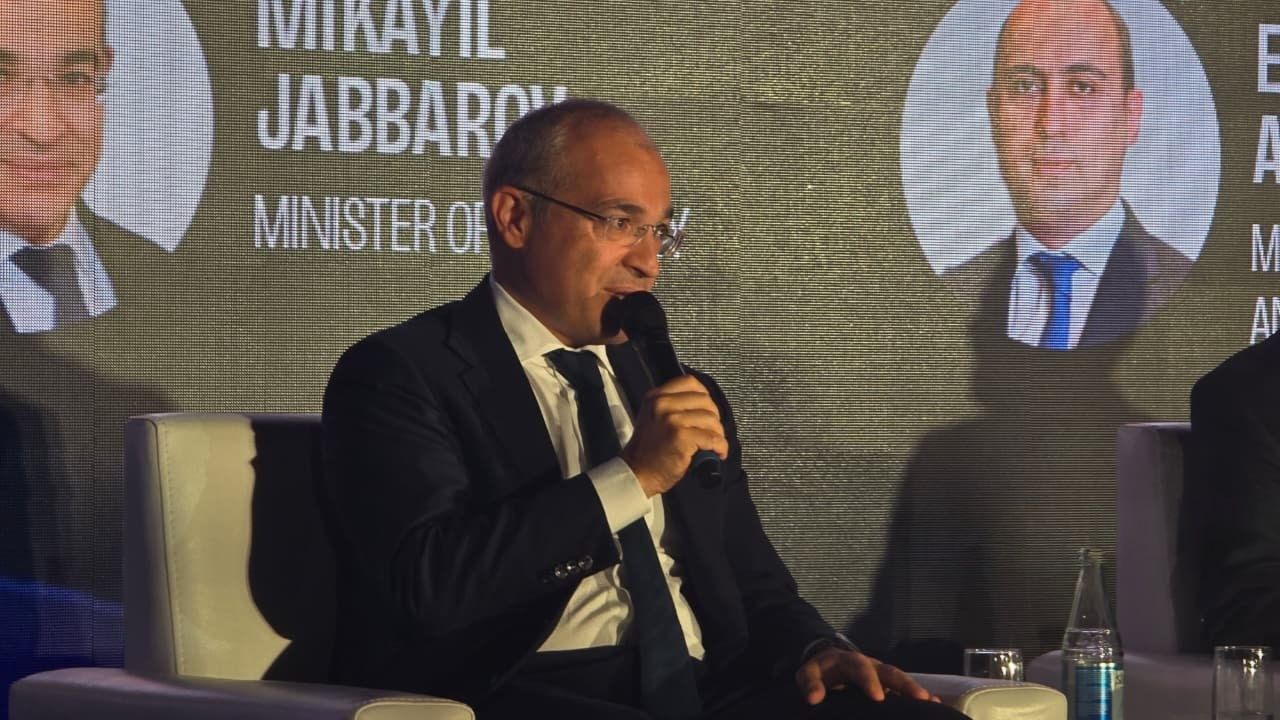
Read moreIncreasing the complexity of Azerbaijan’s economy is one of the country’s key objectives, Minister of Economy Mikayil Jabbarov said.
Jabbarov made the remarks during the opening ceremony of the “Baku ID 2026” innovation festival held at the SABAH.city innovation campus.
The minister said the goal is not simply to produce more goods, but to create goods and services with higher added value.
“Our main goal and ambition is to increase the complexity of Azerbaijan’s economy. Put simply, this does not mean merely producing more goods, but creating goods and services with higher added value,” Jabbarov said.
According to him, the integration of talent, technology and the ecosystem is essential to achieving this objective.
“When the necessary policies and a favorable environment are provided, human capital stands at the very center of the process. Today, the concepts of illiteracy or a skilled employee are also taking on entirely new meanings,” the minister added.
Jabbarov noted that in the modern economy, people are not merely individuals seeking jobs, but also people who create new employment opportunities.
He said this was also at the core of the philosophy behind “Baku ID” and the festival’s fifth anniversary, and thanked those who had contributed to the project.
The minister said Azerbaijan had also gained important experience through cooperation with the World Economic Forum.
“Several years ago, the Centre for the Fourth Industrial Revolution (C4IR) was established in Azerbaijan. I am personally proud to have participated in its activities within the framework of the Job Accelerator,” Jabbarov said.
He noted that technological transformation in the labor market is accelerating and that artificial intelligence is playing an important role in this process.
According to Jabbarov, one of Azerbaijan’s key objectives by 2030 is to become not only a creator of technology, but also a country capable of effectively adopting and applying such technologies to high standards.
Jabbarov said the indicators outlined in the “Future of Jobs” report point to the direction of changes expected in the labor market in the coming years.
“The share of jobs based solely on human labor, without technological involvement, is expected to decline, while the share of jobs involving cooperation between humans and technology is expected to increase. At the same time, the share of automated processes carried out solely by technology and artificial intelligence is also expected to grow,” the minister emphasized.
He said these trends indicate that the labor market of the future will be based on the interaction between human capabilities and technology.
At the beginning of his speech, Jabbarov said the project was more than physical infrastructure, describing it as a platform bringing together economic actors, the education ecosystem, innovators, financial institutions and community representatives.
“We see this space not simply as physical infrastructure, but as a point where economic actors, the education ecosystem, innovators and everyone important to the ecosystem, from financing to the community, come together,” the minister said.
Image: Trend
Here we are to serve you with news right now. It does not cost much, but worth your attention.
Choose to support open, independent, quality journalism and subscribe on a monthly basis.
By subscribing to our online newspaper, you can have full digital access to all news, analysis, and much more.
You can also follow AzerNEWS on Twitter @AzerNewsAz or Facebook @AzerNewsNewspaper
Thank you!