
Baku’s unifying formula: culture, Turkic ties and global diplomacy
Elnur Enveroglu
Read moreFor Azerbaijan, the Organisation of Turkic States is no longer simply a forum for cultural affinity. It is becoming an instrument through which Baku can deepen economic connectivity, reinforce political coordination and give greater weight to the voice of Turkic states in a more fragmented international system.
Looking at the history of its birth and development, we can say that the organisation's transformation is significant. The OTS was established in 2009 by Azerbaijan, Kazakhstan, Kyrgyzstan and Türkiye, with Uzbekistan becoming a full member in 2019. Turkmenistan, Hungary and the Turkish Republic of Northern Cyprus subsequently joined as observers. What began as institutional cooperation among Turkic-speaking states has expanded into politics, transport, trade, security, education, culture and investment.
That evolution matters to Azerbaijan because its foreign policy increasingly depends on connectivity. The Trans-Caspian Middle Corridor links China and Central Asia with the South Caucasus and Türkiye, placing Azerbaijan at a strategic intersection of Eurasian trade routes. At the 2024 informal OTS summit in Shusha, members explicitly called for deeper transport integration and greater use of the Middle Corridor.
Moreover, the political dimension of the organisations has indeed expanded if we simply look at the previous year. The 2025 Gabala Summit, hosted by Azerbaijan, was held under the theme “Regional Peace and Security” and produced decisions aimed at deepening cooperation in foreign policy, security, economics and people-to-people relations. The summit also established an OTS+ format for cooperation with external partners. So, we can confidently say that this is the practical side of Turkic solidarity for Baku.
The OTS doesn't remain an international intergovernmental entity uniting political coherence, but its historical foundation remains important. Azerbaijan-Türkiye relations, in particular, are rooted in a shared history of political struggle and statehood. The liberation of Baku in September 1918, with the decisive involvement of the Ottoman Islamic Army of the Caucasus, remains part of Azerbaijan’s national historical memory. But today's relationship extends far beyond history. For instance, it forms one of the principal political and strategic foundations of the wider Turkic cooperation framework.
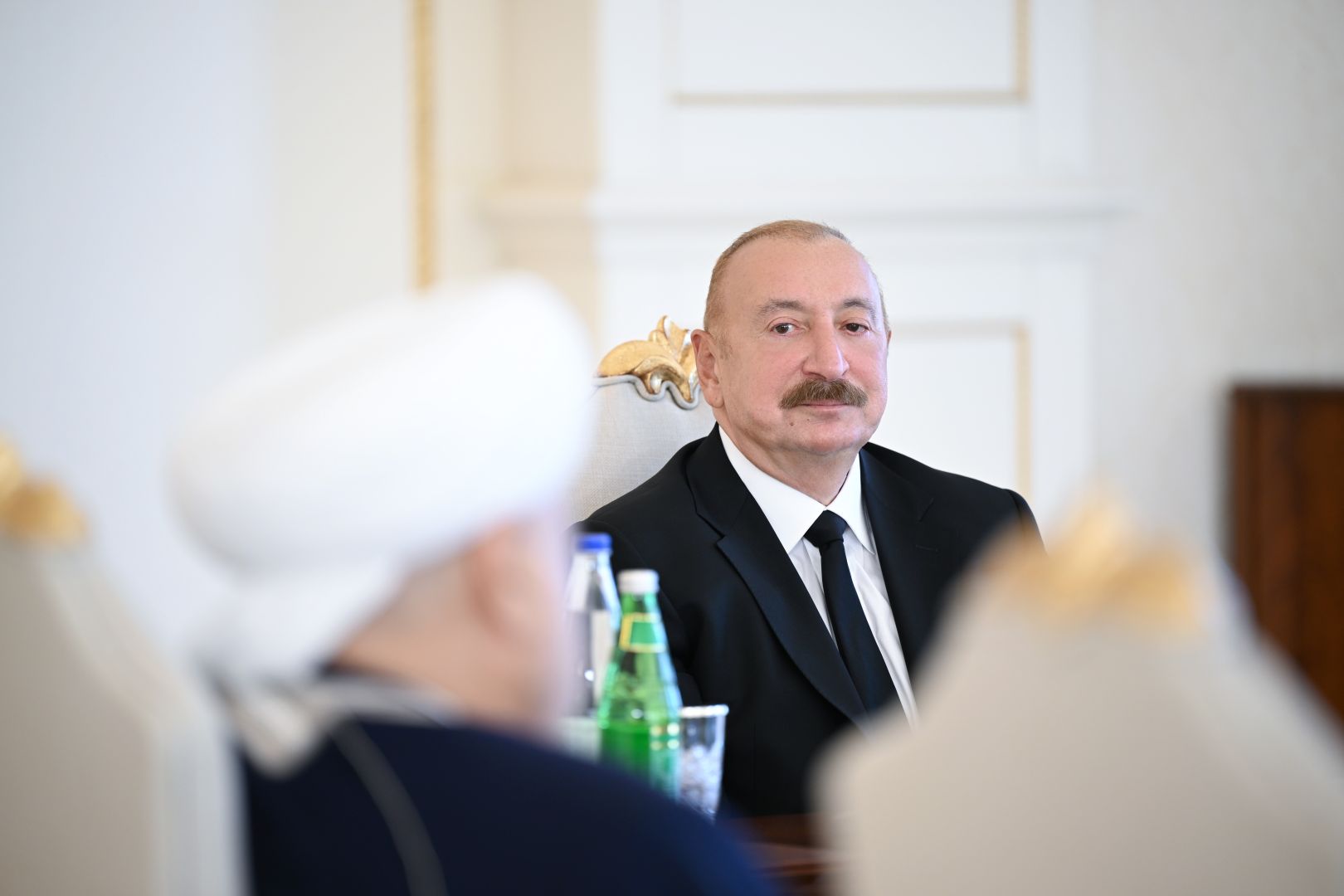
Azerbaijan is also positioning itself at the intersection of Turkic and Islamic cooperation. The seventh meeting of the OTS Council of Heads of Muslim Religious Boards in Baku, held in September 2026, brought together religious leaders and observers from across the Turkic world. The event adopted the Baku Declaration and discussed issues ranging from science and technology to family values.
President Ilham Aliyev has repeatedly framed Azerbaijan's role in broader terms, linking national cultural heritage with international engagement.
“The Azerbaijani people have given the world many brilliant personalities, poets, and thinkers who have made significant contributions to world culture. Simply listing their names is enough to demonstrate how rich our people and our land are in talent—Nizami Ganjavi and Khagani Shirvani in the 12th century, Imadaddin Nasimi in the 14th century, Yahya Bakuvi in the 15th century, and Shah Ismail Khatai and Muhammad Fuzuli in the 16th century,” the President said as he addressed the delegation comprising members and observers of the Council of Heads of Muslim Religious Boards of the Organization of Turkic States (OTS), co-organizers of the Yahya Bakuvi International Conference, and members of the Supreme Religious Council of Caucasian Peoples.
He also pointed to Azerbaijan's forthcoming role in hosting major international gatherings:
“Next year, the Summit of the Organisation of Islamic Cooperation will be held in Baku. Against the backdrop of developments around the world, I believe it is no coincidence that such an event is taking place specifically in Azerbaijan. True, this decision was taken some time ago, but it is, in fact, a very appropriate decision. I want to emphasise once again that Azerbaijan acts as a unifying, reconciling, and cooperation-oriented force in all organisations of which it is a member.”
That approach explains why Azerbaijan's OTS engagement is strategically relevant, while it is obviously known that Baku is not seeking to turn Turkic cooperation into an exclusive bloc. Instead, it is using the organisation to build bridges among Eurasian economies while strengthening the collective diplomatic capacity of its members, and most significantly, the growing number of OTS meetings in Baku illustrates that role.
In 2025, Azerbaijan hosted the organisation's senior officials and its Council of Elders, while in 2026 Baku has continued to host high-level meetings spanning government, security, religious and analytical institutions.
In a nutshell, the strategic opportunity of the OTS for Azerbaijan lies precisely in converting historical affinity into institutions, institutions into connectivity, and connectivity into geopolitical relevance. In an international system moving away from a single centre of power, the OTS gives Azerbaijan another platform from which to pursue its interests while contributing to the emergence of a more interconnected Turkic world.
Here we are to serve you with news right now. It does not cost much, but worth your attention.
Choose to support open, independent, quality journalism and subscribe on a monthly basis.
By subscribing to our online newspaper, you can have full digital access to all news, analysis, and much more.
You can also follow AzerNEWS on Twitter @AzerNewsAz or Facebook @AzerNewsNewspaper
Thank you!