
Karabakh’s economic revival moves from reconstruction to manufacturing
Qabil Ashirov
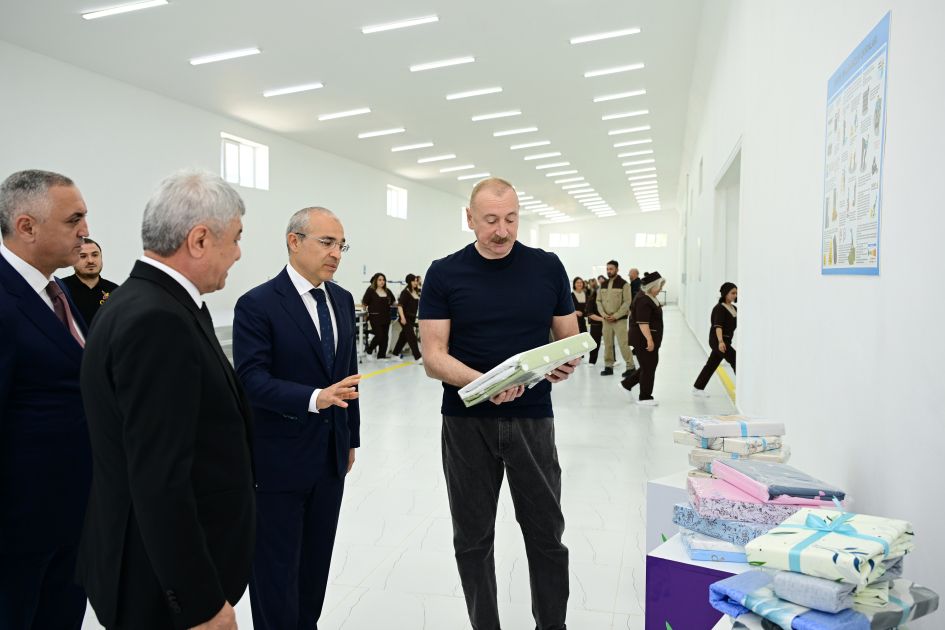
Read moreThe economic rebirth of Karabakh is shifting gears from historic reclamation to sustainable industrial vitality. For decades, the global conversation surrounding this region focused strictly on geopolitical lines and the immense tasks of physical demining and infrastructural rebuilding. Today, however, the landscape is defining itself through a new vocabulary of manufacturing, localized production, and regional employment. The quiet opening of textile and safety wear manufacturing units in towns like Khojaly and Khankendi reflects a profound transformation. These are case studies in how deliberate state strategy combined with private capital can breathe permanent, self-sustaining life into communities that once stood frozen in time.
At the heart of this industrial awakening is a calculated pivot toward light industry, backed by an aggregate initial investment of 7.7 million manats across two key facilities. The establishment of these enterprises marks a sophisticated understanding of market entry, focusing on essential, high-volume commodities. In Khojaly, a 4.2 million manat textile operation is scaling up to produce 1.4 million pieces of home textiles, beddings, and towels annually, drawing its raw materials from domestic sources as well as international hubs like Turkey, Uzbekistan, and China. Concurrently, in Khankendi, a 3.5 million manat facility has launched to produce 25 million pairs of industrial work gloves across four distinct varieties. When a single territory positions itself to project tens of millions of units of essential goods into the market, it ceases to be a post-conflict zone awaiting aid. Instead, it becomes a crucial gear in the national supply chain. The balance of targeting domestic consumption first, while systematically laying down logistical pipelines to penetrate European and broader regional foreign markets, showcases a mature economic vision that transitions Karabakh from an economic responsibility to a sovereign industrial asset.
This transition, however, is not a product of organic market forces alone; it is being aggressively catalyzed by a highly competitive business environment engineered by the state. The financial architecture enabling these modern enterprises reveals a blueprint for post-conflict economic integration. Out of the total capital poured into these projects, the state has provided critical financial backing through low-interest development loans. This includes a 3.2 million manat concessional loan for the textile operations and a 1 million manat credit line for the safety wear plant, significantly mitigating the traditional risks associated with investing in developing frontiers. Furthermore, fiscal incentives like investment promotion certificates—which waived 238,000 manats in value-added taxes on imported heavy machinery and high-tech equipment from leading industrial nations like Turkey and China—directly lowered the barrier to entry for entrepreneurs. By absorbing a significant portion of the initial capital expenditures, the government turns these towns into lucrative, tax-advantaged safe havens for manufacturing, proving that sustainable peace is best secured through robust economic profitability.
Crucially, the ripple effects of these capital investments are felt most acutely on the human level. An economy cannot truly recover until its displaced population finds a dignified reason to remain, and that reason is steady, dignified livelihood. The factories have already injected immediate stability into the region by creating 120 permanent jobs, with 85 individuals currently employed in textile production and another 35 starting in the safety wear sector. The workforce primarily comprises citizens returning to the liberated territories and residents from neighboring districts, with concrete operational plans to expand the textile workforce alone to 200 people as lines expand into garment manufacturing. What makes this model particularly brilliant is its intersection with targeted vocational training. By aligning state employment agencies with corporate manufacturing needs, the region is executing a dual-strategy of human capital development, drawing an additional 40 individuals from Khojaly and Agdam into intensive, two-month professional preparation courses with guaranteed subsequent employment. Displaced families are not just being handed jobs; they are being provided with specialized skills that upgrade their technical capabilities. This systematic transformation of raw labor into a highly skilled, certified industrial workforce guarantees long-term economic mobility for the local populace.
Ultimately, the steady hum of sewing machines in Khojaly and the automated precision of glove production lines in Khankendi represent the ultimate triumph of restoration. Every unit of textile produced, every commercial shipment prepared for export, and every citizen transitioning from a training seminar to a stable factory floor is a brick in the foundation of a permanent peace. The true measurement of Karabakh’s revitalization will not be found in political declarations, but in these quietly unfolding economic realities. Through the deliberate marriage of state-backed fiscal incentives, strategic private investments, and rigorous human capital development, the region is successfully rewriting its destiny from a symbol of past devastation to a modern powerhouse of industrial self-reliance.
Here we are to serve you with news right now. It does not cost much, but worth your attention.
Choose to support open, independent, quality journalism and subscribe on a monthly basis.
By subscribing to our online newspaper, you can have full digital access to all news, analysis, and much more.
You can also follow AzerNEWS on Twitter @AzerNewsAz or Facebook @AzerNewsNewspaper
Thank you!