
Azerbaijan’s non-oil surge offers hope for bigger economy
Akbar Novruz
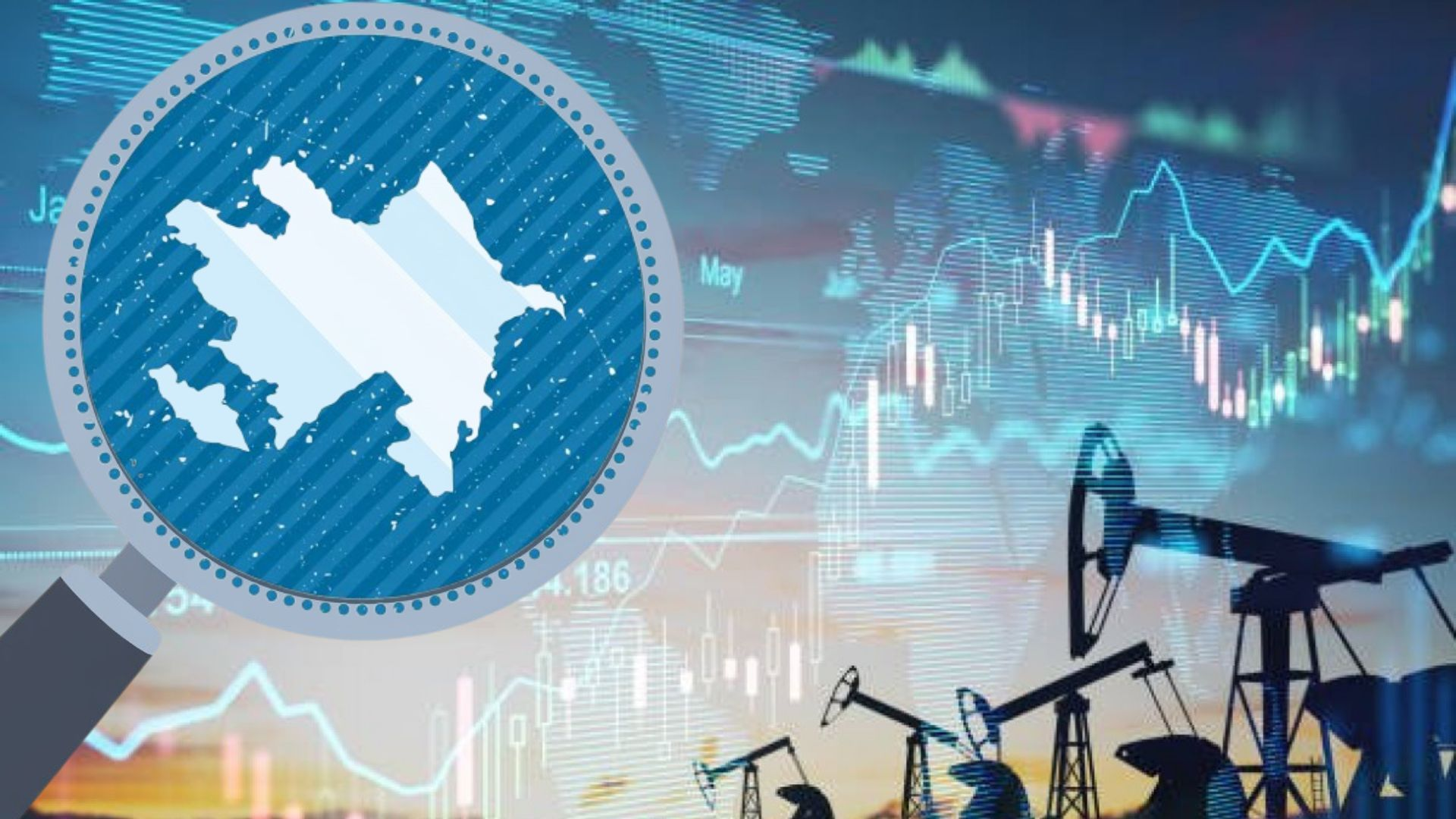
Read moreThe first step with regard to the Oliver Wyman projection is, of course, the math. Azerbaijan’s GDP in 2025 was estimated at around $75 billion. Growing it to $150 billion by 2035 implies growing twice as fast within ten years – i.e., achieving an annual average growth of about 7.2%. The most recent projection of the IMF for 2026 is 2.2%. The budget of the Azerbaijani state is based on the price assumption of $70 per barrel of oil. Oil production declined from 41.6 million tons in 2015 to 27.7 million tons in 2025; even worse, during the first quarter of 2025, Azerbaijan’s economy experienced negative GDP growth of 0.3%.
The report itself, "Azerbaijan 3.0: The Market Makers of Tomorrow," cannot be readily disregarded either. According to Oliver Wyman, there are four pivotal changes – specifically, the development of downstream petrochemicals, energy trading services, logistics orchestration, and experience-oriented tourism – that may potentially alter Azerbaijan’s growth story. What is particularly interesting here is that all four areas are quite realistic, both in terms of the foreign investments they require and their feasibility as a technological option.
Numbers as it stands out:
- $75 billion: GDP in 2025, which serves as the baseline to be doubled.
- 1.4%: Expected real GDP growth in 2025, down from 4.1% in 2024.
- $85 billion: Combined reserves of the Central Bank of Azerbaijan (CBA) and the State Oil Fund of Azerbaijan (SOFAZ), providing a substantial fiscal buffer.
- 52.7%: Share of non-oil GDP by the end of 2025, marking the first time it will be above 50%.
*Source: State Statistics Committee
Let's clarify the specific areas and directions where the process will take place:
Downstream Petrochemicals
Currently, 91.5% of Azerbaijan's exports consist of largely unprocessed mineral fuels. While Azerbaijan exports oil and gas, there is also potential to export fertilizers, plastics, and chemicals. By doing so, the country could capture the value-added processing margin that is currently sent abroad. Establishing advanced petrochemical complexes could generate between $8 to $12 billion annually by 2035.
*However, achieving this goal requires significant capital investment and better coordination of industrial policy, which are not yet in place.
Energy trading services
Currently, Azerbaijan is better known as a pipeline country than as a trading hub. In 2024, the Southern Gas Corridor delivered 22.8 billion cubic meters of gas. Establishing a regional energy trading platform that connects Caspian producers with European buyers would enable Baku to earn intermediation fees in addition to its transit revenue.
*However, this initiative faces a significant gap: it requires the development of financial market infrastructure and regulatory frameworks, which have not yet been established.
Logistics
The Middle Corridor transit is currently experiencing a growth rate of 36% annually. In 2025, container traffic reached 76,900 TEUs. Alat Port has set a target capacity of 25 million tonnes. The Baku-Tbilisi-Kars railway provides a connection to European rail systems. Additionally, the processing time for documents has been reduced from 9 hours to just 40 minutes as of 2025, indicating that the corridor is gaining momentum.
*However, there remains a challenge: the capacity of the Caspian ferry is a bottleneck for now
Tourism
Currently, the region receives 2.6 million visitors and generates $2 billion in revenue, which is the lowest figure in the South Caucasus. Oliver Wyman aims to increase visitor numbers to 10–12 million by 2035, which would raise tourism's contribution to GDP from $1.1 billion to between $8.8 billion and $10.2 billion. The natural and cultural assets necessary for this growth are present. The World Travel and Tourism Council (WTTC) projects that tourism could account for 11% of GDP by 2035 under an optimistic scenario.
*However, a gap remains, as tourism revenue per visitor is significantly lower than in Georgia. To address this issue, aviation liberalization is necessary. Borders are yet to be opened.
Out of the four strategic bets made by the country, tourism is undoubtedly the most visibly lagging compared to other countries. According to data from 2024, Azerbaijan had about 2.6 million tourists and earned around $1.56 billion in income from tourism. Georgia, which has an even smaller economy than Azerbaijan, saw 7.4 million foreign tourists coming into the country and earning about $4.6 billion in tourism income. Armenia, although having an economy three times smaller than Azerbaijan, was able to earn more from each tourist due to better spending from its tourists. This difference, according to analysts, can be attributed to lack of air routes to and from Azerbaijan, visa difficulties, and poor tourism infrastructure compared to its neighbors.
| Country | Visitors | Tourism revenue | GDP approx. |
| Azerbaijan | 2.57 million |
Revenues are between |
~$75bn |
| Georgia | 7.8mln (2025) | $4.7bn | ~$30bn |
| Armenia | 2.26mn (2025) | est. $2.5bn | ~$22bn |
With only 40% of the GDP compared to Azerbaijan's, Georgia generates almost three times more tourism revenue. Revenue per tourist is the key factor to look at, and Azerbaijan is lagging behind its neighbors by a large margin. Oliver Wyman's 10-12 million tourists goal by 2035 is technically possible – like what India did with its aviation liberalization and event-based tourism strategies, but it needs proper policies about airspace use, visa procedures, and hotel infrastructure quality, all of which have been under discussion for years and are yet to materialize.
The only believable piece of the $150 billion story is its non-oil segment, and the proof is already evident. The share of the non-oil GDP exceeded 52.7% of total production, rising at an impressive 8.6% rate when the oil industry fell 7.3% in 2025. In January-November 2025, non-oil exports grew 7.3%, reaching $3.3 billion. Agricultural exports showed a tremendous surge in the form of sugar exports +54.4%, chemical products +39%, fruits & vegetables +24.3%. The merger of KOBIA and AZPROMO into one SME & export development body took place in early 2026. These figures are factual.
The logistics and transit performance are also quite real. As of 2025, Azerbaijan Railways moved over 390 block trains with containers along the China-Europe route, seeing a yearly increase of 40.8% in container throughput at Alat Port. The Iran war, oddly enough, serves to accelerate this trend, as transit via Iran is being rerouted to the north, with Azerbaijan located at the only existing 190 km route that circumvents both Russia and Iran. It is hard to reproduce such an advantage in structure.
As per Oliver Wyman Group, there is nothing speculative about reaching $150 billion GDP by 2035 – it is a well-thought-out transformation based on Azerbaijan's inherent advantages.
So what needs to change?
The IMF Article IV consultation mission in February 2026, while broadly supportive of Azerbaijan's diversification efforts, noted four structural shortcomings that stand between current trends and the Oliver Wyman scenario: informality in the labor market, reducing efficiency and taxes; an extensive role for the state, where a handful of public holding companies monopolize key industries; shallow capital markets that restrict access to funding; and poor quality governance, including corruption, rule of law, and judicial transparency, which according to the 2024 U.S. State Department investment climate report, remains behind peer nations in the region. None of this is impossible to overcome. But all of this represents context that no amount of consulting enthusiasm can replace. The success stories referenced by Oliver Wyman, Ireland, and Singapore, for example, have succeeded in part through the implementation of radical institutional reform.
The math behind achieving double-digit growth in GDP within a decade: It will require an average annual GDP growth rate of 7.2% in real terms to achieve GDP of $150 billion from the current level of $75 billion in a decade. Over the past decade, Azerbaijan has managed to achieve an average GDP growth rate of 1.5%. This means that the non-oil sector must achieve a growth rate of about 10–12% per year while expanding to become a larger component of the economy.
These four elements together amount to a formidable basis for success – $85 billion worth of sovereign assets, a geographical position that is getting more strategically important every day as Middle Eastern transport links become unreliable, a peace deal with Armenia that will open up new transport routes, and an economy outside oil that is actually growing faster than the country’s economic growth rate overall. A goal of $150 billion is indeed ambitious, and could even be counted as optimistic per se, but it is not out of the blue. If Azerbaijan is going to reach this number by either 2035 or 2040, it will not be through choosing which industries to focus on – Oliver Wyman has already made its suggestions. It will require carrying out the institutional reforms that have been flagged as necessary by the IMF, the EBRD, and others.
Here we are to serve you with news right now. It does not cost much, but worth your attention.
Choose to support open, independent, quality journalism and subscribe on a monthly basis.
By subscribing to our online newspaper, you can have full digital access to all news, analysis, and much more.
You can also follow AzerNEWS on Twitter @AzerNewsAz or Facebook @AzerNewsNewspaper
Thank you!