
Ankara pushes alternative trade routes amid Gulf tensions
By News Centre
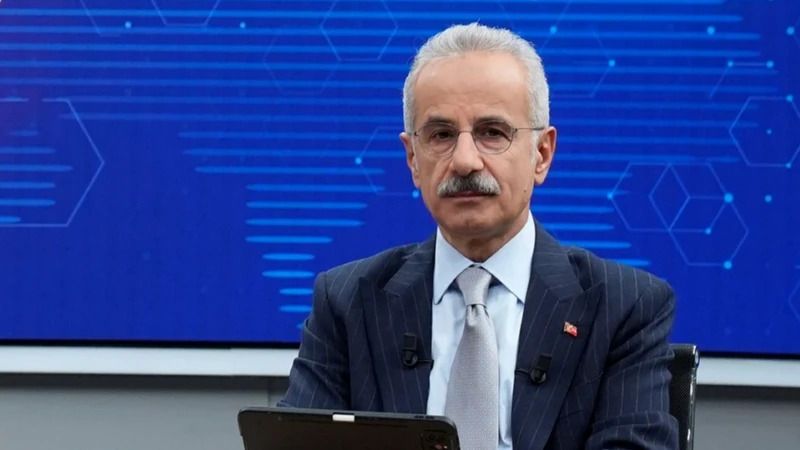
Turkish Transport and Infrastructure Minister Abdulkadir Uraloğlu said that Turkiye is closely monitoring maritime and aviation developments in the Strait of Hormuz amid rising regional tensions, while also accelerating major strategic transport infrastructure projects aimed at creating alternative global trade routes.
Speaking on the situation in the Gulf, Uraloğlu stated that there are currently nine Turkish-owned vessels in the Strait of Hormuz, including one flying the Turkish flag. He added that seven of these vessels have requested to leave the area and that Turkish authorities are tracking their movements closely.
“We are closely following the Iran and Strait of Hormuz crisis,” he said, noting that Turkiye has already repatriated three of its aircraft from the region. “There are currently no Turkish aircraft in the Middle East or the Gulf.”
He also confirmed that air traffic remains open to all Gulf countries except Iran.
Uraloğlu outlined Ankara’s broader vision of reducing dependence on chokepoints such as the Strait of Hormuz by developing alternative land and rail corridors.
One of the flagship initiatives is the modernization of the historic Hejaz Railway. The project aims to combine tourism with modern freight and passenger transport, potentially extending connectivity from Turkiye through Syria, Jordan, and Saudi Arabia, and ultimately to Oman.
“We will first connect Turkiye to Aleppo, then extend toward Damascus and Jordan,” he said. “Our final goal is to reach Oman and connect to the ocean, creating an alternative route to the Strait of Hormuz.”
He added that discussions with Saudi Arabia are ongoing and emphasized the strategic importance of reviving the Damascus–Amman segment of the old railway.
The minister also confirmed that planning has been completed for the 1,200-kilometer Development Road project, which will connect Iraq’s Grand Faw Port on the Persian Gulf to the Turkish border.
The project, jointly pursued by the United Arab Emirates, Qatar, Iraq, and Turkiye, is expected to be financed through international funding mechanisms.
“This corridor is not only a highway and railway project; it includes energy and communication lines as well,” Uraloğlu said. “If these projects had been completed today, the world would not be discussing the Strait of Hormuz as much.”
He added that implementation will continue once regional tensions ease.
Turning to the Middle Corridor strategy, Uraloğlu highlighted progress on the Zangezur Corridor, a key link connecting Turkiye with Azerbaijan and Central Asia.
He said that Turkiye has launched construction of the 224-kilometer Kars–Iğdır–Aralık–Dilucu railway line. Work on the Azerbaijani side is nearing completion, while efforts continue to facilitate the section passing through Armenian territory.
“Once this route becomes operational, we will have a much shorter connection to the Turkic world and Central Asia,” he noted.
Uraloğlu also announced progress on Istanbul’s rail infrastructure, including a major freight rail project over the Yavuz Sultan Selim Bridge.
He said the bridge, designed with a 59-meter width, was built with rail capacity in mind and will now be integrated into the network through international financing led by the World Bank and six other institutions.
The project, valued at approximately $6.75 billion, is expected to begin construction before the end of the year.
“When completed, it will fully resolve the rail capacity bottleneck between the Asian and European sides of Istanbul,” he said.
The minister also announced the reconstruction of the Etimesgut military airport in Ankara into a modern civilian terminal, scheduled for inauguration on June 15 with the participation of President Recep Tayyip Erdoğan.
He noted that Turkiye’s mobile communication infrastructure has expanded significantly, with nearly 100 million GSM subscribers and over 30 million users already connected to 5G services.
“All 81 provinces and most districts are now covered by operators,” he said.
On rail expansion, Uraloğlu stated that Turkiye is currently building 4,164 kilometers of new railway lines, with a target of reaching 17,000 kilometers by 2028.
He also confirmed the launch of a 276-kilometer highway project between Akyazı and Ankara, complementing the planned super high-speed rail corridor between Ankara and Istanbul.
Here we are to serve you with news right now. It does not cost much, but worth your attention.
Choose to support open, independent, quality journalism and subscribe on a monthly basis.
By subscribing to our online newspaper, you can have full digital access to all news, analysis, and much more.
You can also follow AzerNEWS on Twitter @AzerNewsAz or Facebook @AzerNewsNewspaper
Thank you!