
Azerbaijan, UAE forge new energy axis from Caspian to Gulf

Qabil Ashirov
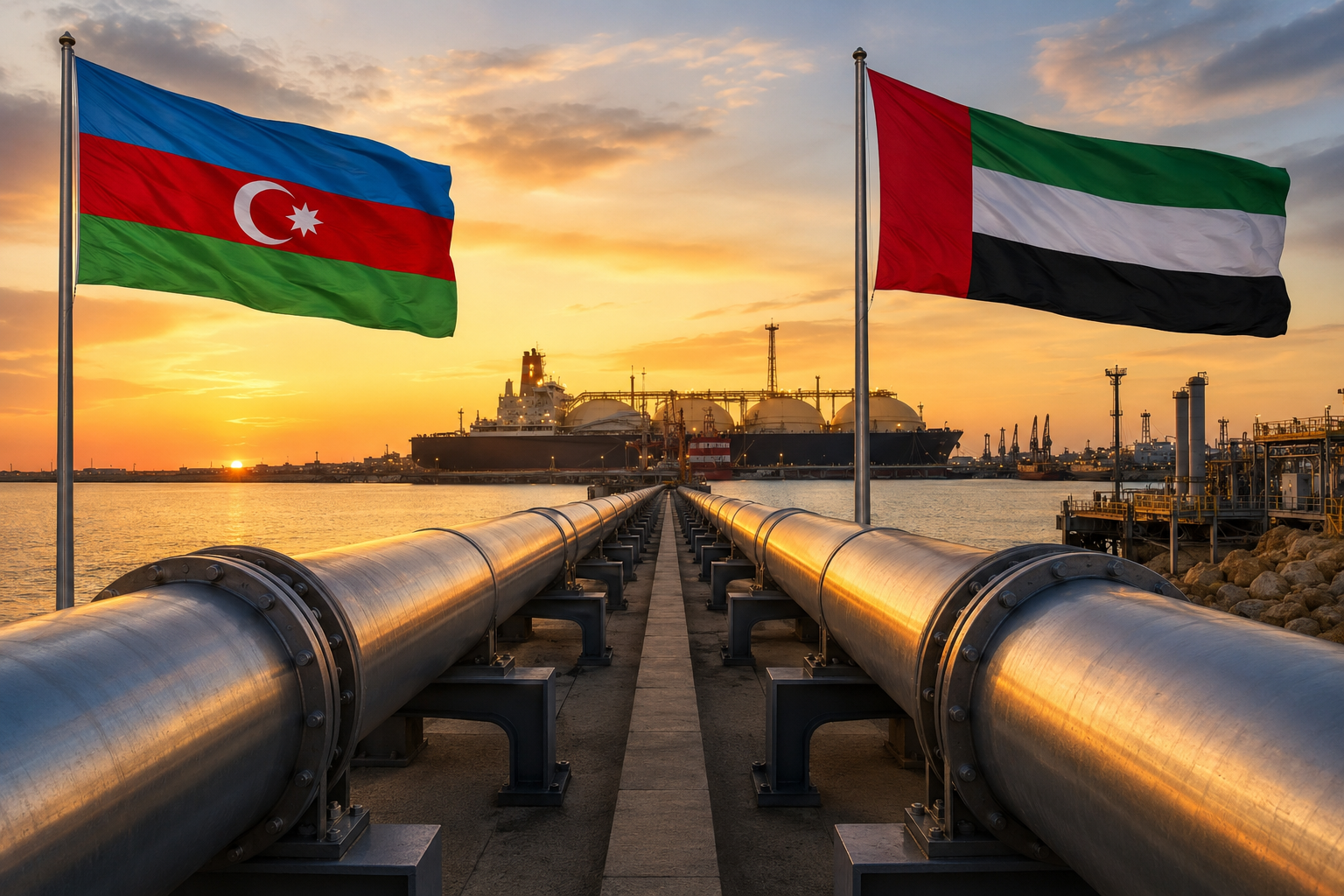
Read moreThe global energy architecture is undergoing a profound paradigm shift, driven not only by the imperative of transition but by the equally critical necessity of secure, highly integrated supply corridors. At the heart of this evolving landscape lies Azerbaijan, a nation that has consistently leveraged its geostrategic position to act as a bridge between volatile resource markets and demand centers in Europe. The recent confirmation that XRG, the international energy investment arm of the United Arab Emirates’ Abu Dhabi National Oil Company (ADNOC), expects to finalize its acquisition of a minority stake in the Southern Gas Corridor (SGC) CJSC by September 2026 marks a watershed moment in this trajectory. This transaction transcends a conventional cross-border corporate acquisition; it represents a deeply calculated symbiotic alignment between two pivotal energy hubs—the South Caucasus and the Arabian Gulf—that will reverberate across regional geopolitics and global commodity networks.
For Azerbaijan, the integration of Emirati institutional capital into its crowning infrastructure achievement is a resounding validation of its long-term sovereign economic strategy. The Southern Gas Corridor, a magnificent 3,500-kilometer marvel of engineering with the capacity to transit up to 26 billion cubic meters of natural gas annually, has already proven its worth as an indispensable artery for Southern and Central Europe. By attracting a sovereign-backed titan like ADNOC into this framework, Baku is effectively diversifying its institutional ownership structure without relinquishing strategic control. This injection of capital and prestige enhances the financial resilience of the corridor, facilitating potential future expansions to meet Europe's growing, insatiable appetite for alternative gas supplies. Furthermore, the partnership cements Azerbaijan’s reputation as an exceptionally stable, predictable, and premium jurisdiction for foreign direct investment, signaling to global capital markets that the country remains a safe harbor for multi-billion-dollar infrastructure undertakings.
Concurrently, this transaction serves as a magnificent catalyst for the institutional evolution of SOCAR, Azerbaijan’s national energy champion. The agreement is structurally designed as an sophisticated asset-swapping mechanism, moving away from archaic mercantilist vendor relationships. In exchange for welcoming ADNOC into the SGC and granting a twelve and a half percent stake in the highly productive Absheron gas-condensat field, SOCAR secures direct, revenue-generating equity in the offshore SARB and Umm Lulu fields in Abu Dhabi. This represents an unprecedented breakthrough. For decades, SOCAR has successfully projected its influence across the South Caucasus, established a formidable downstream and industrial footprint in Turkey, and managed high-volume trading operations across North Africa and the Mediterranean. Now, by entering the Arabian Gulf—the absolute gravity center of global hydrocarbon production—SOCAR enters the premier league of transnational energy enterprises. Operating alongside ADNOC in low-cost, ultra-high-reserve environments allows SOCAR to absorb cutting-edge offshore extraction methodologies, diversify its revenue streams co-operatively, and significantly enhance its international corporate governance standards.
From a broader regional perspective, this deepening alliance between Baku and Abu Dhabi creates a powerful cross-continental axis of stability. The South Caucasus and the Middle East have historically been viewed through the lens of fragmentation and geopolitical friction. However, when the state-backed entities of these two regions interlock their financial and physical infrastructure assets, they create a mutual vested interest in continental security. The engagement of the United Arab Emirates in the Caspian energy basin introduces a powerful, modernizing diplomatic weight that reinforces the sovereignty and economic independence of the region. This partnership demonstrates that regional energy security is no longer a localized concern, but an interconnected global endeavor where Gulf capital can seamlessly underwrite European energy security through Caucasian transit infrastructure.
Ultimately, the impending finalization of the XRG-SGC transaction in late 2026 should be viewed as a masterstroke of economic diplomacy. It illustrates how visionary statecraft can transform traditional hydrocarbon assets into enduring instruments of international cooperation, technical modernization, and geopolitical leverage. As Azerbaijan continues to spearhead its ambitious socio-economic development and transition strategies, having a partner with the financial muscle and strategic foresight of the United Arab Emirates ensures that the nation’s infrastructure will remain resilient, well-capitalized, and globally competitive for decades to come. The expansion of SOCAR into the Gulf, mirrored by the UAE's anchoring in the Caspian, is a testament to an emerging world order where proactive energy powers do not merely react to shifting dynamics, but actively collaborate to engineer them.
Here we are to serve you with news right now. It does not cost much, but worth your attention.
Choose to support open, independent, quality journalism and subscribe on a monthly basis.
By subscribing to our online newspaper, you can have full digital access to all news, analysis, and much more.
You can also follow AzerNEWS on Twitter @AzerNewsAz or Facebook @AzerNewsNewspaper
Thank you!