
India’s oil calculus and reality behind Trump’s claims

Akbar Novruz
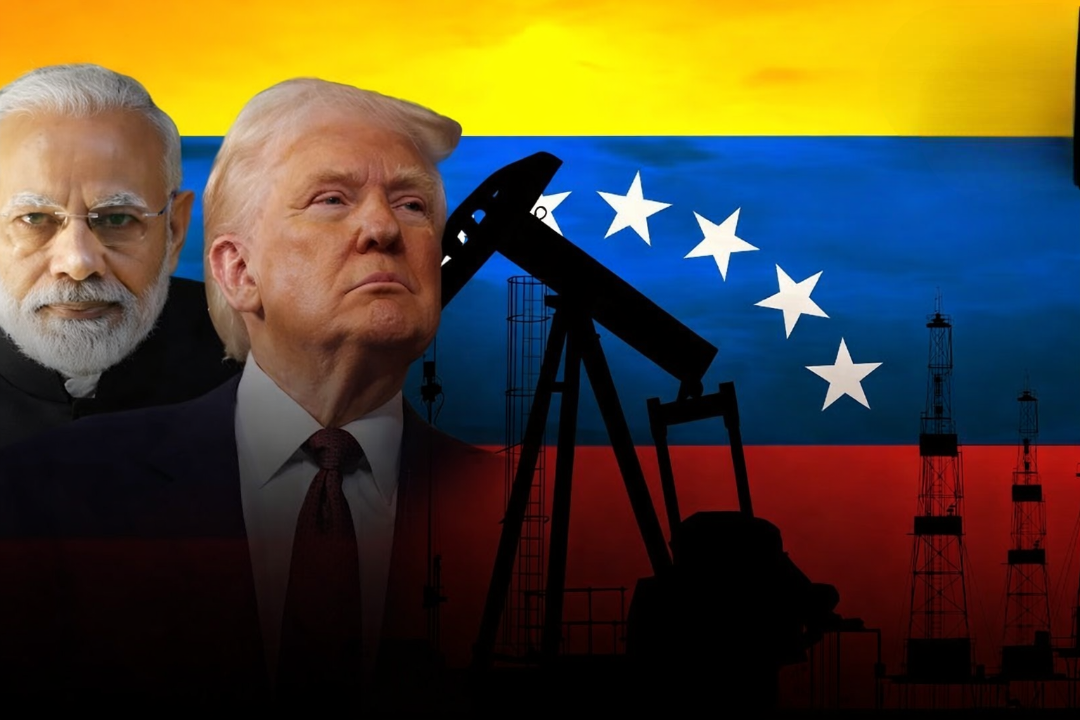
Read moreThe conclusion of a long-anticipated trade agreement between India and the United States has reignited debate over New Delhi’s energy strategy and its geopolitical positioning between Washington and Moscow. The controversy was triggered not by the agreement itself, but by a public claim from US President Donald Trump that Indian Prime Minister Narendra Modi had agreed to stop purchasing Russian oil and instead shift toward buying large volumes of American, and potentially Venezuelan, energy supplies as part of a broader commercial realignment.
The claim immediately fueled speculation that India was preparing to downgrade its energy ties with Russia under US pressure, raising questions about the future of Russian–Indian relations and the durability of New Delhi’s strategic autonomy. Indian authorities reiterated a long-standing policy position: India will continue diversifying its energy suppliers based on market conditions, pricing, and logistical feasibility.
According to Reuters, India has begun purchasing oil from Venezuela. Reliance Industries of India has acquired 2 million barrels of oil from Venezuela, according to traders.
This clarification matters. Over the past several years, India has emerged as one of the largest buyers of discounted Russian crude, a shift driven by favorable pricing and refinery compatibility rather than political alignment. At the same time, New Delhi has steadily expanded imports from other producers, including recent purchases of Venezuelan oil, underscoring a pattern of opportunistic diversification rather than wholesale substitution.
Now the question is, can the US really pull India away from Russian oil?
Speaking to Azernews, Moscow-based political analyst Andrew Korybko stresses that this point is often misunderstood, especially in Western political narratives.
“India’s oil imports have always been driven by market conditions, never ideology,” he says, adding that “neither American nor Venezuelan oil is likely to replace Russian oil at scale anytime soon.”
According to Korybko, Trump’s most controversial assertion, that Modi agreed to stop buying Russian oil was never actually endorsed by the Indian side.
“Modi confirmed that a deal had indeed been reached, but he didn’t confirm the details,” Korybko notes. “His trade minister only reaffirmed India’s long-standing policy that it’ll continue diversifying its suppliers.”
This, he argues, undermines the broader claim that India’s purchases of discounted Russian oil were intended to support Moscow politically or militarily.
“Its large-scale import of Russian oil was always driven by market conditions, never ideology,” he says. “Business is business, no matter how it makes either side feel.”
That reality also complicates the rationale behind Washington’s now-rescinded punitive tariffs, which were justified on the grounds that Indian imports were “fueling Russia’s war machine.”
“That was misleading,” Korybko argues, “since that was never India’s intent.”
To be sure, the United States would like India to cut back on Russian oil, primarily to reduce the Kremlin’s budgetary revenue. But even if New Delhi were willing to accommodate that demand, Korybko cautions that the structural constraints are substantial.
“That’s easier said than done,” he says, pointing to a combination of volume, cost, and refinery limitations.
Citing Bloomberg data, Korybko notes that Russian oil flows to India have remained robust.
“Daily flows were still around 1.2 million barrels in January,” he says, adding that Indian refiners have suggested volumes might fall below one million barrels a day, “a level that was seen as achievable for India and acceptable to the US.”
Even so, replacing the entire shortfall would be difficult.
Logistics alone tilt the balance in Russia’s favor. As Korybko points out, US oil faces both distance and cost disadvantages.
“It takes longer to ferry oil from the US to India than from Russia,” he says, noting that transit from the US Gulf Coast can take around 54 days, compared to roughly 36 days from Russia. “Buying from the US is also more expensive.”
Refinery design further complicates the picture.
“Refineries in India are more used to refining heavy, sour crudes,” Korybko explains. “That’s the type of oil found in Russia and Venezuela, but not the light, sweet crude produced in the US.”
Venezuela, often floated as an alternative, is not a simple solution either. While India has already begun buying limited volumes, such as Reliance Industries’ recent purchase, Korybko warns that capacity and competition remain serious constraints.
“With Venezuela’s oil output still hovering around 900,000 barrels a day, it will take years, stable politics, and huge investments to ramp up supplies,” he says, especially as India’s consumption continues to grow.
There is also a geopolitical price dimension.
“India will have to compete with China for Venezuelan oil,” Korybko notes, “and the price might soon become higher than Russia’s oil.”
The most likely outcome, in his assessment, is gradualism rather than rupture.
“India’s import of Russian oil will likely only slowly decline,” he says, a trend already hinted at by India’s oil minister earlier this year. “This will prevent any shocks to both the Indian and Russian economies.”
In the end, the gap between political declarations and energy-market realities remains wide. Trump’s claims may have captured headlines, but they collide with a far more stubborn truth.
“Just like with India’s import of Russian oil,” Korybko concludes, “its import of others’ is also driven by market conditions, not ideology.”
For New Delhi, alignment may shift, rhetoric may change, but oil, as ever, follows the price.
Here we are to serve you with news right now. It does not cost much, but worth your attention.
Choose to support open, independent, quality journalism and subscribe on a monthly basis.
By subscribing to our online newspaper, you can have full digital access to all news, analysis, and much more.
You can also follow AzerNEWS on Twitter @AzerNewsAz or Facebook @AzerNewsNewspaper
Thank you!