
Energy, green power and trade routes: Why Europe needs Azerbaijan more than ever
Elnur Enveroglu
Read moreRelations between Azerbaijan and the European Union are developing on a positive and increasingly strategic trajectory. In a world marked by geopolitical turbulence and shifting alliances, Baku has steadily strengthened its reputation as a reliable partner, a capable regional power and an essential bridge between Europe and Asia.
The development of relations at this level and their rise to such a level is certainly a clear example of the robust contacts and ties established between the countries of the South Caucasus and Europe, as well as the unchanging and stable policy. Let’s point out that, for many years, Azerbaijan has pursued a balanced foreign policy built on cooperation with major global actors. These relations have been formed not only through words, but also through a series of agreements, adding extra value to the country's image and economic values. For instance, strategic agreements with countries such as the United States, China, Turkiye and Uzbekistan demonstrate the country’s growing weight in international affairs. Within this wider network of partnerships, relations with the European Union occupy a particularly significant place.
Certainly, at the centre of this relationship lies energy security.
Europe has spent the past several years rethinking the foundations of its energy supply. The West's search for prospects for solid and sustainable cooperation has steadily increased, particularly due to energy constraints arising from the ongoing conflict between Ukraine and Russia. In that process, Azerbaijan has emerged as one of the European Union’s most dependable partners. Azerbaijani natural gas currently reaches fourteen European countries, a figure that continues to grow as infrastructure expands and demand rises. Two additional European states are expected to join the list this year, further reinforcing Azerbaijan’s role in the continent’s energy architecture.
The backbone of this partnership is the Southern Gas Corridor, one of the most significant energy infrastructure projects linking the Caspian region to European markets. Stretching thousands of kilometres from the Caspian Sea to Southern Europe, the corridor has transformed Azerbaijan from a regional energy exporter into a strategic supplier for the European Union.
The project includes pipelines such as the Trans Adriatic Pipeline and the Trans Anatolian Natural Gas Pipeline, which together deliver Caspian gas directly into European markets. Since its launch, the corridor has steadily increased its supply volumes, providing Europe with a stable alternative source of natural gas at a time when diversification has become a central policy priority.
Energy cooperation, however, is no longer limited to hydrocarbons.
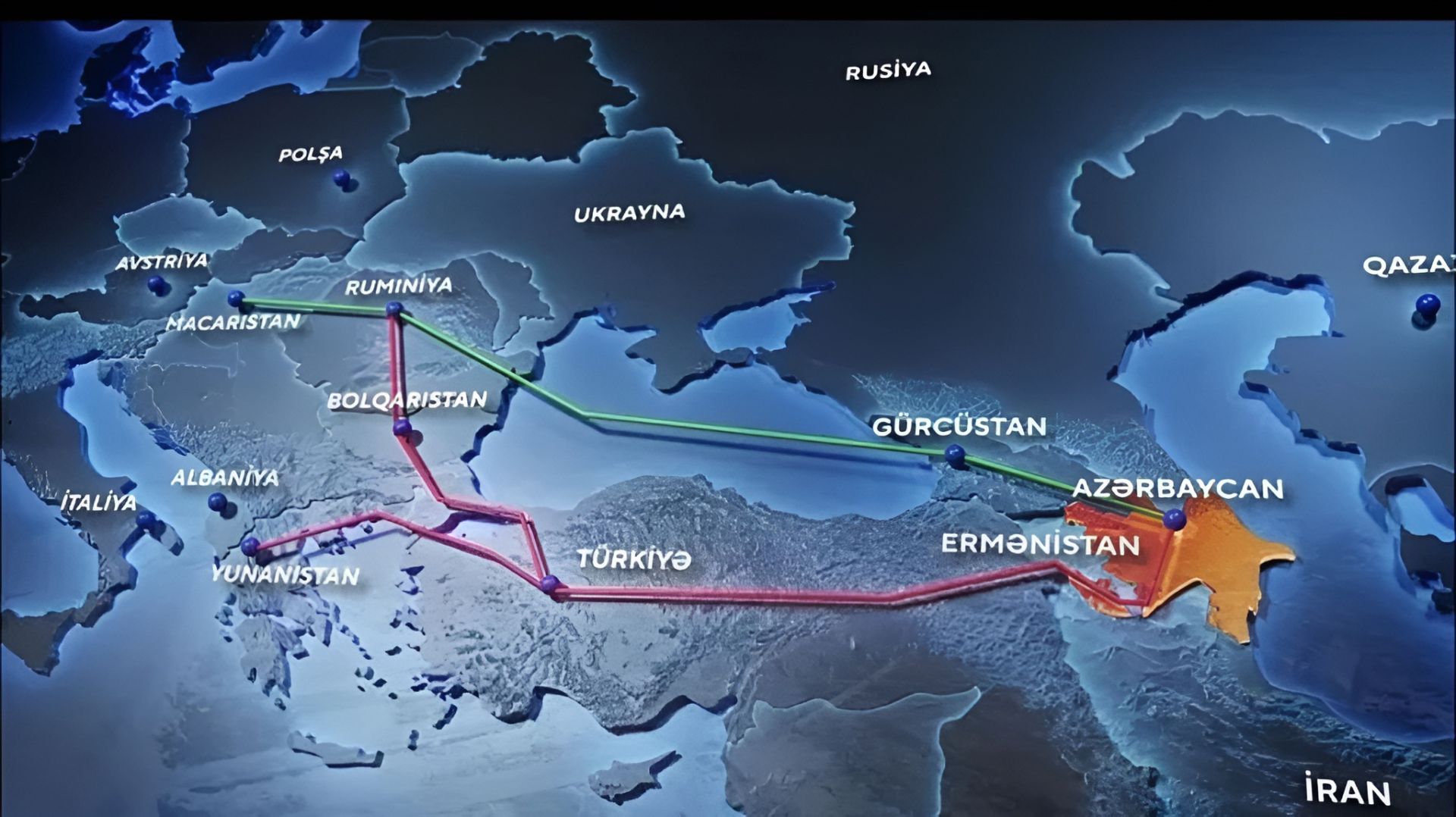
In recent years, Azerbaijan has also begun developing a new dimension of partnership with European states in the field of renewable energy. One of the most notable initiatives involves an agreement between Azerbaijan, Georgia, Romania and Hungary to deliver green electricity from the South Caucasus to Europe through a submarine power cable under the Black Sea.
This project represents a major step toward integrating the energy systems of the Caspian region and Europe while accelerating the transition toward cleaner energy sources. Azerbaijan’s vast renewable potential, particularly in solar and wind power, positions the country as an emerging green energy exporter.
Another important development emerged during COP29, where Azerbaijan, Kazakhstan and Uzbekistan reached an agreement that could reshape regional energy flows. The initiative envisions green electricity generated in Central Asia being transmitted across the Caspian Sea and through Azerbaijan before reaching European markets.
This plan would effectively add a green energy component to the rapidly expanding Middle Corridor, strengthening the corridor’s role not only as a trade route but also as a clean energy bridge between continents.
Indeed, Azerbaijan’s importance for Europe extends far beyond energy supplies.
Geographically positioned at the crossroads of Eurasia, the country has become a crucial transport and logistics hub linking European and Asian markets. The Middle Corridor, which runs through Azerbaijan, offers a faster and increasingly reliable route for goods travelling between Asia and Europe.
The strategic value of this route has grown significantly in the context of the war in Ukraine and rising instability in the Middle East, including tensions involving Iran. These developments have pushed governments and companies to seek alternative trade pathways that avoid traditional transit routes.
In this changing geopolitical environment, Azerbaijan stands out as both a stabilising force and a connector of regions.
Energy, transport and green infrastructure projects are gradually weaving together a new Eurasian economic landscape. As Europe looks for reliable partners and diversified supply routes, Azerbaijan’s role is becoming increasingly difficult to overlook.
For the European Union, cooperation with Azerbaijan is no longer merely an option. It is becoming an essential pillar of the continent’s long-term energy security and economic connectivity.
Here we are to serve you with news right now. It does not cost much, but worth your attention.
Choose to support open, independent, quality journalism and subscribe on a monthly basis.
By subscribing to our online newspaper, you can have full digital access to all news, analysis, and much more.
You can also follow AzerNEWS on Twitter @AzerNewsAz or Facebook @AzerNewsNewspaper
Thank you!