
Missiles crossing borders push Iran war closer to NATO

Elnur Enveroglu
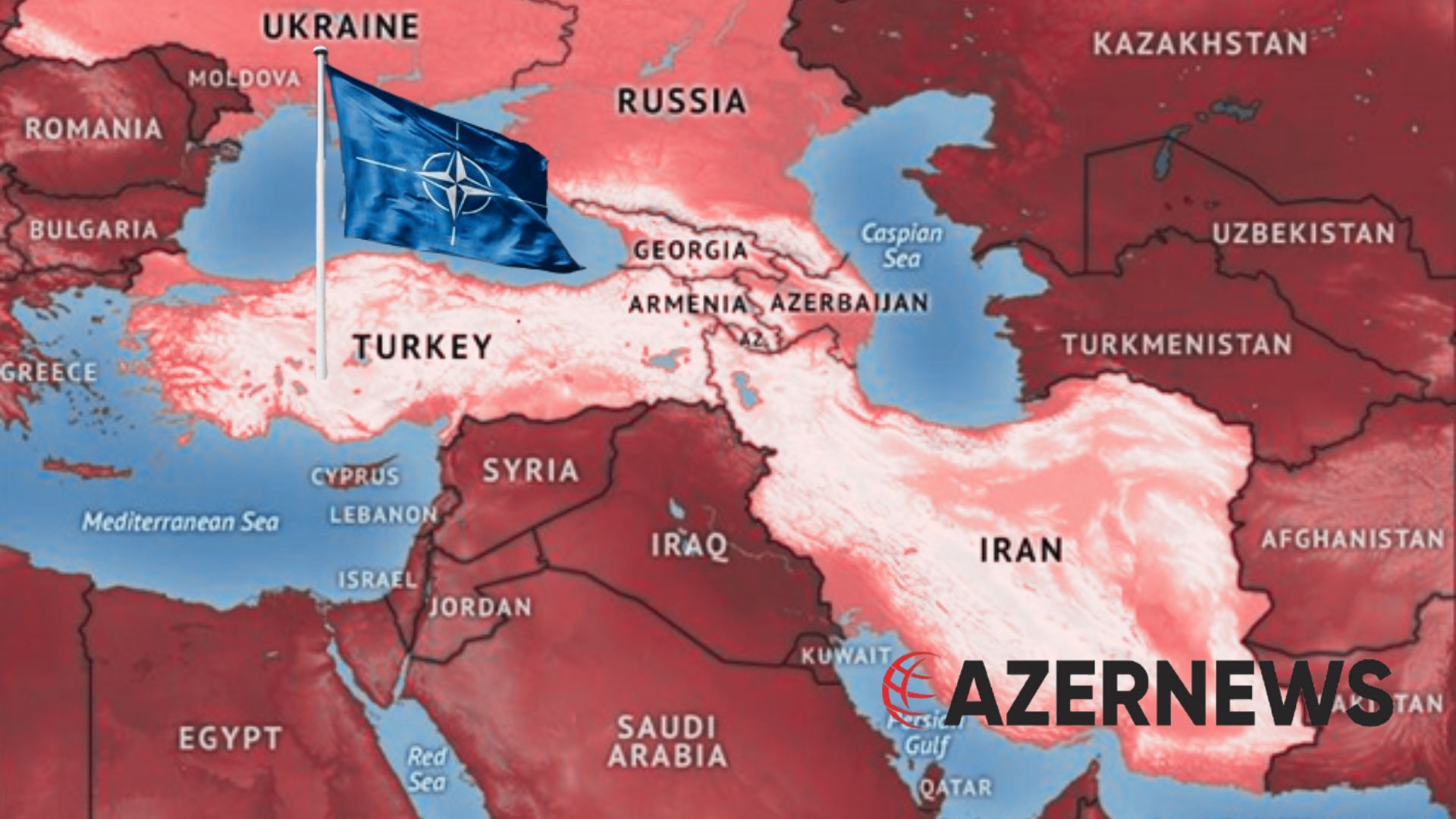
Read moreThe conflict between the United States and Iran is no longer confined to a limited theatre of confrontation. As American strikes against Iranian targets continue, the scope of escalation across the Middle East appears to be widening, raising concerns that the war’s effects could extend beyond the immediate battlefield and into neighbouring states, including members of NATO.
The first signs of this widening confrontation emerged in the Gulf. In response to Washington’s growing military presence in the region, Iran targeted several facilities linked to the United States military. Iranian officials warned that any country hosting American military bases could become a potential target, regardless of whether those states were directly involved in the conflict. Such statements suggested that Tehran was prepared to operate across multiple fronts, even at the risk of provoking broader regional tensions.
The consequences of this strategy soon became visible. On 5 March Iranian drones fell on the Azerbaijani territory of Nakhchivan, injuring four civilians. Although Tehran did not officially confirm responsibility, the incident was widely interpreted by analysts as a signal from the Islamic Revolutionary Guard Corps. Only days earlier, reports had indicated that Iranian strikes had targeted United States military facilities located in Turkiye.
In that context Turkiye’s position is particularly sensitive. As a member of NATO and a country hosting American military assets, it represents a strategic location within the Western security architecture. From Tehran’s perspective, any state that provides logistical or military support to Washington’s regional presence may be considered a legitimate target. Yet the implications of the incident involving Azerbaijan raise additional questions. Azerbaijan does not host American bases in the same manner as several Gulf states, making the drone strike on its territory a troubling development.
Iran’s broader strategic perception appears to extend beyond the presence of US forces alone. Tehran increasingly views countries maintaining close relations with the United States or Israel as part of a hostile strategic environment. This outlook briefly raised tensions between Baku and Tehran after the drone incident. Nevertheless Azerbaijan, consistent with its long standing foreign policy principles, chose to emphasise neighbourly relations and restraint.
The latest development, however, has shifted attention to Turkiye. A missile launched from Iranian territory was reportedly directed towards the Turkish city of Gaziantep, marking what is believed to be the second such attack. Although no casualties were reported, the incident carries serious implications for regional security.
For Ankara the episode reflects a dangerous spillover of the conflict. Turkish officials interpret the attack not simply as a military incident but as evidence that the broader war environment is beginning to disregard the sovereignty and security of neighbouring states. At a time when tensions between Iran, Israel and the United States are already at a high level, a missile crossing into Turkish airspace perhaps portrays how rapidly the conflict could affect the wider region.
Some analysts argue that Iran’s actions signal a fundamental shift in its relations with neighbouring countries. Yet there is little indication that the situation will escalate into a direct confrontation between Iran and regional states. Turkiye’s reaction to the latest incident suggests that Ankara is not seeking an open conflict with Tehran.
Instead Turkiye may opt for a more cautious response. One likely step is deeper coordination with NATO, particularly in the areas of air defence and ballistic missile protection. Strengthening defensive capabilities would allow Turkiye to respond more effectively to potential future threats without dramatically escalating the situation.
The episode also highlights Ankara’s continued reliance on NATO’s defensive infrastructure in countering regional ballistic threats. Should a direct and confirmed attack on Turkish territory occur, the alliance’s collective defence mechanism could theoretically be invoked. For now, however, the interception of the missile in the air has kept the matter largely within the political and diplomatic sphere.
Another important question concerns the attribution of the strike itself. Turkish authorities have not yet issued a definitive confirmation that the missile was launched by Iran. If such confirmation emerges, Ankara will face a difficult diplomatic choice: whether to apply pressure on Tehran or to contain the issue in order to avoid a wider confrontation.
Historically Turkiye has preferred to avoid open conflict with Iran. The two countries maintain significant trade and energy ties, and despite their rivalry in places such as Syria they have often managed to sustain a delicate balance in their relationship. For this reason Turkiye’s most probable course of action will be to strengthen its defensive posture while maintaining diplomatic channels with Tehran, even if bilateral tensions temporarily rise.
Ultimately these developments reveal a broader strategic problem. The American military campaign against Iran does not appear to align with the collective interests of many regional states, particularly those concerned about instability spreading across the Middle East. Even during the early stages of the conflict several Gulf countries expressed reservations about the consequences of escalation.
Although the White House signalled that it would consider these concerns, the current trajectory suggests that Washington proceeded despite regional unease. The result is a conflict whose early ripple effects are already being felt beyond the initial battlefield. Incidents in Azerbaijan and Turkiye illustrate how quickly the war could draw neighbouring states into its strategic orbit, even if none of them seek direct involvement.
For now the region stands at a delicate crossroads. The war between the United States and Iran has not yet expanded into a broader regional conflict. Yet each missile that crosses a border brings that possibility a little closer.
Here we are to serve you with news right now. It does not cost much, but worth your attention.
Choose to support open, independent, quality journalism and subscribe on a monthly basis.
By subscribing to our online newspaper, you can have full digital access to all news, analysis, and much more.
You can also follow AzerNEWS on Twitter @AzerNewsAz or Facebook @AzerNewsNewspaper
Thank you!