
Baku steps into spotlight as tourism shifts away from the Gulf

AzerNEWS Staff
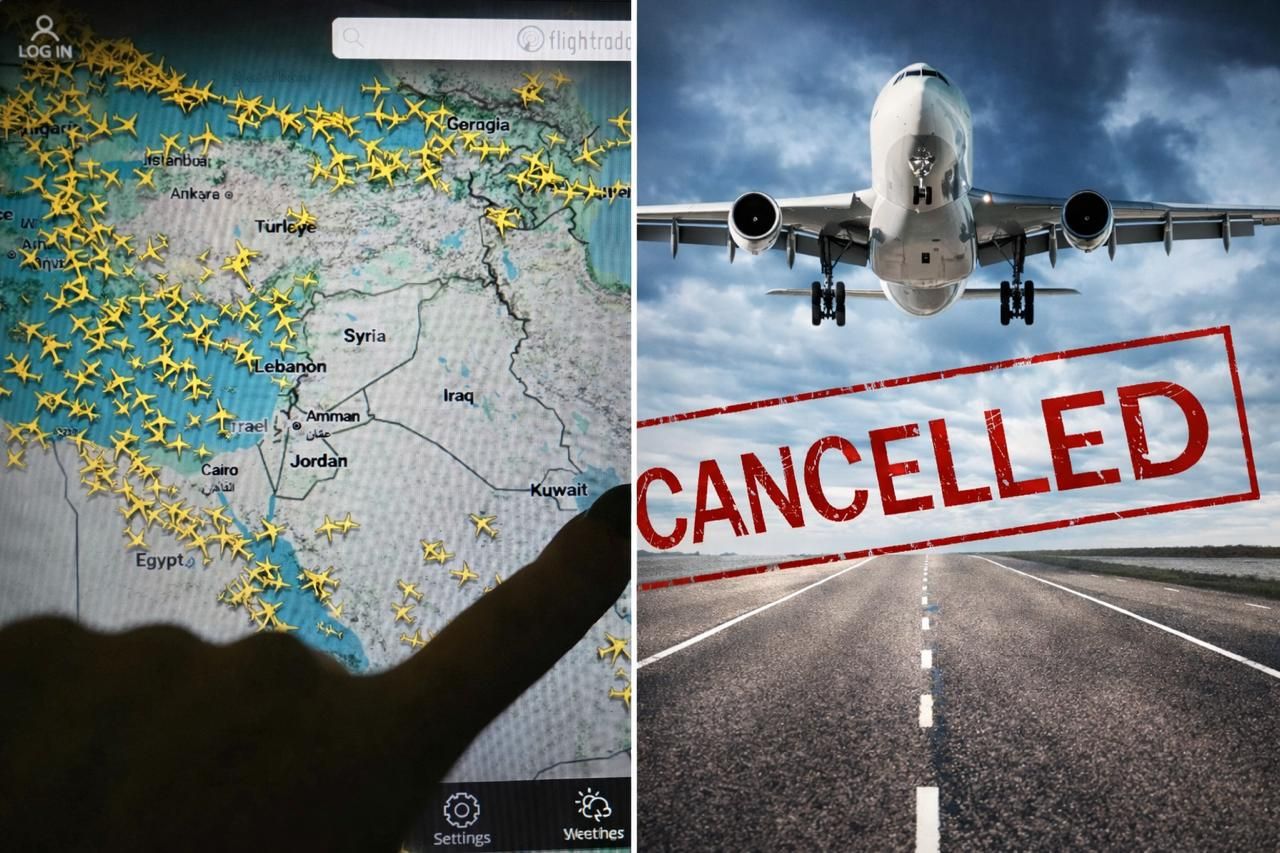
Read moreThe recent tensions in the Middle East have exposed several myths about “safe” transit hubs. In Dubai, long touted as one of the world’s most secure cities, civilian casualties have already been reported, while regional air transport has been disrupted by both soaring demand and Iranian drone attacks. For travelers seeking alternatives between Europe and Asia, the South Caucasus has emerged as a crucial bypass.
Historically, the South Caucasus has been a strategic bridge for energy, trade, and infrastructure. Now, this role could extend into the airspace domain. If cargo transportation via the Middle Corridor, stretching from China to Europe, has gained momentum, it raises the question: why shouldn’t the South Caucasus, with Azerbaijan at its center, develop into a full-fledged air hub?
Satellite and air traffic tracking, as seen in recent FlyRadar maps, show severe congestion along traditional routes, while corridors through Azerbaijan remain relatively open. Experts argue this is no longer just a geographic observation, the South Caucasus is actively shaping regional connectivity. It should be noted that between February 28 and March 10, 2026, the number of daily transit flights in the Baku Flight Information Region (Baku FIR) increased significantly, reaching up to 815 transit flights on some days.
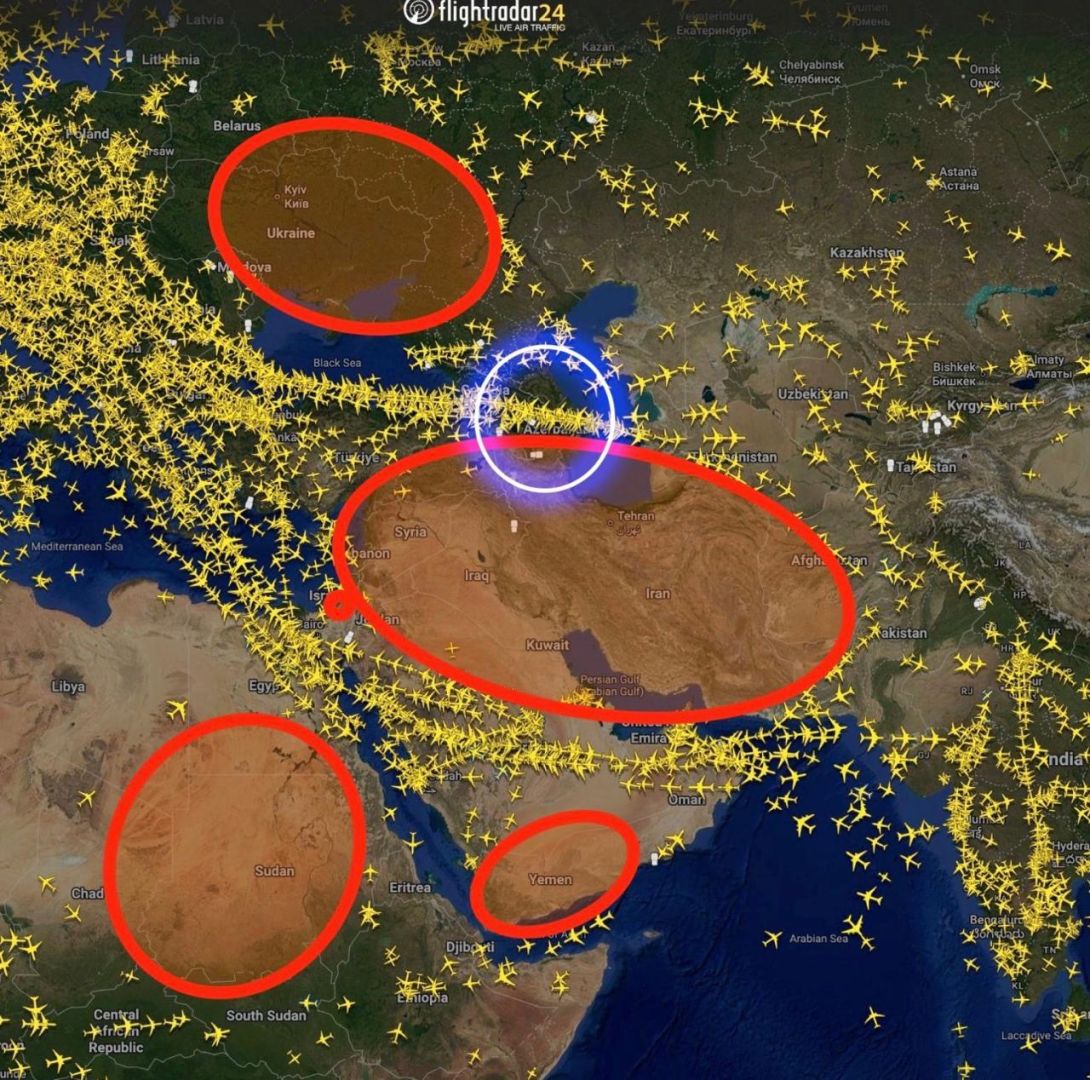
Azerbaijan’s role in the global air corridor is becoming increasingly critical. With Russian and Iranian airspaces largely restricted for many international carriers, Baku has emerged as one of the few viable bridges connecting Europe and Asia.
The recent conflict in Iran, however, did not bypass Azerbaijan and its airspace. On March 5, Iran carried out drone attacks on Nakhchivan airport, resulting in several injuries. Iranian authorities stated that Azerbaijan was not the intended target and issued an apology. Since there are no American military bases in Azerbaijan, the incident did not escalate into a prolonged confrontation.
Azerbaijan’s friendly relations with its neighbors and its policy of neutrality do not prevent the country from leveraging its advantageous geographical location, on the contrary, they create new opportunities. The country has kept its airspace free from offensive operations, positioning itself as a stabilizing force in a highly volatile region. At the same time, Azerbaijan has demonstrated a notable degree of strategic autonomy, carefully balancing relationships with Western powers and Israel while managing pressures from its southern neighbor, Iran.
Today, Azerbaijan is no longer just an energy supplier. It has become a vital link in the broader network of global connectivity. The ongoing turbulence in the Middle East highlights how the South Caucasus, with Azerbaijan at the helm, could influence the flow of goods, passengers, and strategic influence across continents for decades to come. As regional analysts warn, a destabilized Caucasus would be disastrous for Europe, potentially paralyzing communication and resource delivery. This makes Azerbaijan a critical actor, both regionally and globally.
Yet, despite these advantages, the country has not yet fully established itself as a major aviation hub. Several factors hold it back. Currently, Azerbaijan has only one major airline operating internationally, which limits competition and slows the development of new routes. At the same time, while Baku’s Heydar Aliyev International Airport is modern, regional airports and supporting infrastructure are still underdeveloped, constraining the country’s capacity to handle large volumes of traffic.
In addition, airspace management, customs procedures, and regional regulatory frameworks are still in the process of aligning with international standards, which can affect the pace of growth. The region’s proximity to areas of tension also requires airlines to carefully consider factors such as safety, insurance, and passenger confidence when planning new routes.
The potential is undeniable, but realizing it will require investment, policy reform, and a vision that matches Azerbaijan’s strategic importance. The South Caucasus, and Azerbaijan in particular, sits at a natural crossroads for East-West air traffic. If Baku can invest in expanding airport infrastructure, liberalize airspace policy, and encourage multiple carriers to operate, the country could transform into a resilient, high-demand hub.
Analysts suggest that the ongoing Middle East crisis may serve as a wake-up call for global aviation planners. Both Europe and Asia have a vested interest in diversifying air corridors, and Azerbaijan could capitalize on this geopolitical opportunity, much as it has in energy and transit.
Long story, short, Azerbaijan has the location, political stability, and strategic leverage to become a key air transit hub, but realizing this potential requires structural reforms, investment, and competitive aviation policies. Without these, the country may remain a promising bypass rather than a fully-fledged Middle Corridor of the skies.
Here we are to serve you with news right now. It does not cost much, but worth your attention.
Choose to support open, independent, quality journalism and subscribe on a monthly basis.
By subscribing to our online newspaper, you can have full digital access to all news, analysis, and much more.
You can also follow AzerNEWS on Twitter @AzerNewsAz or Facebook @AzerNewsNewspaper
Thank you!