
Azerbaijan and EU: Energy, peace and partnership shaping future
Elnur Enveroglu
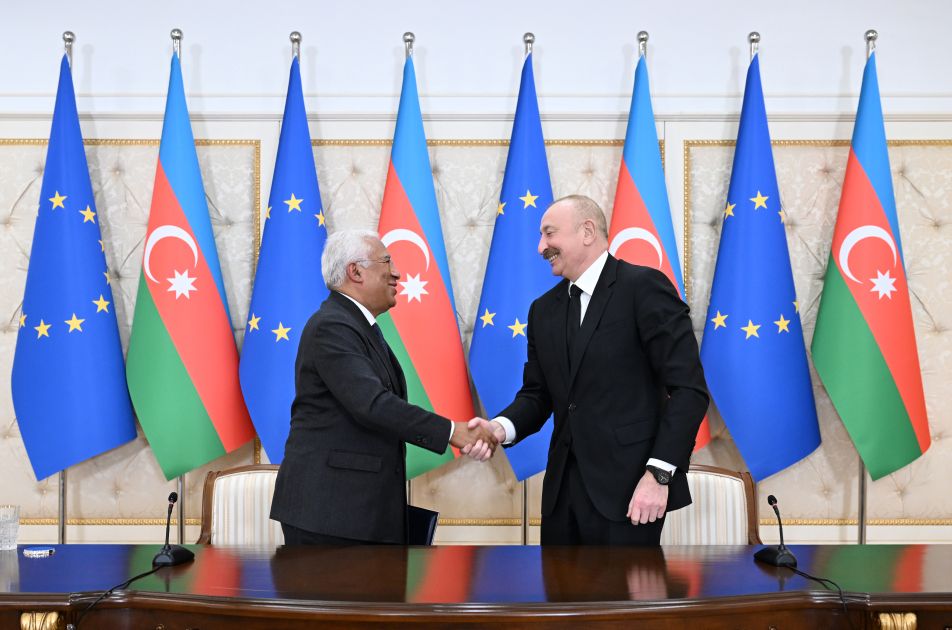
Read moreThe recent meeting in Baku between President Ilham Aliyev of Azerbaijan and President Antonio Costa of the European Council offered more than a ceremonial reaffirmation of diplomatic ties. It revealed a partnership increasingly defined by energy security, geopolitical stability and the strategic connectivity linking Europe with Asia.
It is quite attractive that the dialogue between Azerbaijan and the European Union reflected a broader recalibration in Europe’s external partnerships, in particular, at a time when global tensions are strongly affecting alliances and supply chains. This once again shows that for Brussels, Azerbaijan remains an essential energy partner and a stabilising actor in the South Caucasus. Wherein for Baku, cooperation with Europe represents both an economic opportunity and a platform to reinforce its regional relevance.
Energy security at the core
Reading throughout the conversation, it appears that a central theme of the discussions was energy cooperation, which remains the backbone of the Azerbaijan–EU relationship. So the past four years have yielded its fruits, in which since the signing of the strategic energy partnership agreement with the European Commission in 2022, Azerbaijan has significantly expanded gas exports to Europe.
President Aliyev highlighted a remarkable statistic: Today, 10 members of the European Union receive gas from Azerbaijan, and the total number of countries is 16. And by this number, we are number one in the world in supplying gas by pipelines. Sixteen countries today are receiving Azerbaijani gas, so our role in the energy security of many countries is growing.
For Europe, still grappling with the long-term consequences of the disruption caused by the war in Ukraine, diversification of energy supplies remains a strategic priority. As President Costa emphasised, Azerbaijan has been central to this effort through the development of the Southern Gas Corridor. The corridor has evolved from a regional infrastructure project into a critical component of Europe’s energy security architecture.
Azerbaijan's Aliyev also signalled that the partnership may deepen further. According to him, Azerbaijan plans to increase gas production with the launch of new fields, potentially adding around 10 billion cubic metres annually within the next few years. This is a certain element of a partnership, which was in the emphasis of the Azerbaijani leader. Alternatively, if realised, this expansion would further cement Azerbaijan’s role as a reliable supplier at a time when energy markets remain volatile.
Moreover, the energy partnership is no longer limited to fossil fuels. Both leaders emphasised the growing importance of renewable energy cooperation.
Azerbaijan’s determined plan to generate between six and eight gigawatts of renewable capacity within five to six years is attracting increasing European interest. With abundant solar radiation and strong wind conditions, particularly along the Caspian coast, the country has significant potential to develop green energy for domestic use and export.
European Council leader noted that the EU is ready to mobilise investment and encourage European clean-technology companies to participate in Azerbaijan’s energy transition. Projects involving subsea electricity cables and transmission infrastructure could eventually connect renewable power generated in the Caspian region with European energy networks.
This shift from traditional hydrocarbons toward diversified energy cooperation illustrates how the Azerbaijan–EU relationship is evolving into a long-term strategic partnership.
Connectivity and the Middle Corridor
Beyond energy, the talks also highlighted the growing geopolitical importance of connectivity across Eurasia. The development of the Middle Corridor, linking in the long-term perspective Europe to Asia via the South Caucasus and Central Asia, has become increasingly relevant as traditional transit routes face disruption for several reasons, of course.
Both leaders stressed that improved transport infrastructure could strengthen economic resilience and facilitate trade flows between Europe and Asia. The proposed Baku–Nakhchivan railway link, mentioned by Costa, is, in particular, seen as a crucial element of this emerging transport network.
Again, if fully realised, such projects could transform Azerbaijan from an energy supplier into a broader logistical hub connecting continents.
Besides, the statements of the leaders went on with focus on peace as a strategic asset. Without peace no prospect of any long-term and robust economic cooperation seems to be real. So the part of a significant theme of the meeting was the evolving political landscape of the South Caucasus. President Aliyev noted that Azerbaijan has recently experienced a rare period of peace following decades of conflict with Armenia.
He argued that reconciliation, supported by practical steps such as trade and transit cooperation, offers tangible benefits for regional stability. In his turn, President Costa echoed this sentiment, describing the progress in the peace process as historic and stressing the importance of economic interdependence in sustaining long-term stability.
"The European Union shares Azerbaijan's objective for a peaceful, stable, interconnected, and prosperous South Caucasus. The progress made in the peace process with Armenia is historic," the EU Council leader said.
The meeting in Baku underscored how Azerbaijan and the European Union are managing an increasingly complex geopolitical environment together. With conflicts reshaping global energy markets and transport networks, the strategic value of stable partnerships has become more evident.
Taking all these together, we can come to a resolution that for Europe, Azerbaijan represents a reliable energy supplier and an emerging connectivity hub. And for Azerbaijan, cooperation with the EU strengthens its economic diversification and international standing.
As both leaders suggested, the relationship is moving beyond transactional energy trade toward a more comprehensive partnership encompassing energy transition, infrastructure development and regional stability.
Here we are to serve you with news right now. It does not cost much, but worth your attention.
Choose to support open, independent, quality journalism and subscribe on a monthly basis.
By subscribing to our online newspaper, you can have full digital access to all news, analysis, and much more.
You can also follow AzerNEWS on Twitter @AzerNewsAz or Facebook @AzerNewsNewspaper
Thank you!