
Azerbaijan’s unlikely new export: why Europe is buying its snails

Akbar Novruz
Read moreFor years, they were crushed underfoot, sprayed away from gardens or dismissed as a nuisance of rural life. Now, snails are becoming part of Azerbaijan’s export story. As Europe’s appetite for escargot and snail-based cosmetics continues to grow, Azerbaijan has secured a small but symbolically important foothold in a market far removed from oil rigs and gas pipelines. The move says less about snails themselves than about a country quietly testing how far it can diversify its economy, and how unconventional that path might be.
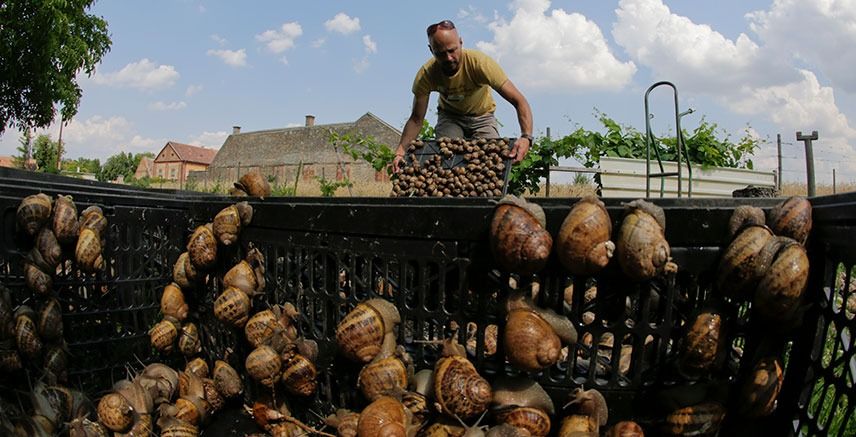
After years of negotiation and regulatory preparation, the Azerbaijan Food Safety Agency has certified a snail-production enterprise in Shorsulu village, Salyan district, enabling exports of snail products to the European Union. The move marks a notable diversification of Azerbaijan’s agricultural export portfolio and positions Baku as a new player in an industry long dominated by countries such as France, Spain and Morocco.
Snails are no gastronomic fad. They are deeply embedded in European culinary traditions, prized for their texture and mild flavour- particularly the grape snail (Helix pomatia), which accounted for 46.35 per cent of global snail trade in 2025. Beyond the kitchen, snail derivatives have made inroads into cosmetology worldwide, with snail mucus prized for its purported benefits in skin regeneration and anti-wrinkle formulations. Recognising this dual market, Azerbaijan’s certified export permission is designed to tap into both food and cosmetic supply chains.
The snail industry is small by agricultural standards, but its growth trajectory is striking. The global snail trade was worth nearly $800 million in 2025, with revenues estimated at $849.8 million and nearly 39.1 per cent of that total coming from the Asia-Pacific region. Analysts project robust future demand: by 2035, the global snail market could be worth $2.07 billion, growing at a compound annual growth rate (CAGR) of over 10.3 per cent from 2026 to 2035. These figures underscore the expanding role snails play in both culinary and cosmetic sectors.
Leading producers and exporters currently include Helicicultura (Spain), Snail Farm (Italy), Helix Aspersa and Escargots de France (France), Snail World (USA), Snail King (Poland) and Lumaca Madonita (Italy). Consumption is heavily concentrated in a handful of countries: Spain, Morocco, France and Italy together account for about 69 percent of global snail consumption. In Spain, for example, the average person consumes 358 grams of snails per year, far above the world average of 5.9 grams. France alone consumes more than 40,000 tons annually, with its market valued at $1.5 billion in 2024 and projected to reach $2.8 billion by 2033. The snail farming industry in France, worth approximately €30 million, also sustains over 1,000 farmers, illustrating the employment potential of the sector.
Azerbaijan’s snail exports did not happen overnight. Negotiations between the EU and the Azerbaijan Food Safety Agency (AQTA) began as early as 2019, sparked by producers seeking market access. It took six years of regulatory alignment before export certification was achieved in 2025, a delay that illustrates the stringent sanitary and phytosanitary requirements governing food imports into the EU.
This lengthy process contrasts with the experience of Azerbaijan’s neighbor Georgia, which began exporting snails to Europe years earlier. In 2024, Georgia exported 268 tons of snails worth $1.7 million, with France as its largest buyer. Turkiye and Namibia were also among Georgia’s export destinations. The success of Georgian exports demonstrates that demand exists and that smaller exporters can find niches within Europe’s complex supply chain.
Snail farming in Azerbaijan is itself a relatively recent phenomenon. The first commercial ventures began around 2017, when Azdelikates-Alfa LLC reportedly exported snails to European markets and Turkiye. That enterprise eventually folded amid regulatory challenges and an inability to secure formal EU export approval. Parallel efforts emerged from small-scale farmers; one anecdotal case involved a resident of Shamakhi who had been breeding snails and selling snail caviar since the 1990s. But without official export channels, these ventures remained largely informal and local.
Today’s export certification could change that dynamic. In Azerbaijan, snails are often treated as plant pests, particularly in humid coastal regions where garden owners spend considerable time eradicating them. The accession of an EU export stream may prompt a cultural shift: snails previously discarded might become a source of income as villagers collect and sell them to processing plants.
Snails sell not just on plates but in laboratories and beauty shops. The snail mucus industry has expanded rapidly, particularly in South Korea and East Asia, where snail-based skincare products are marketed for anti-ageing and regenerative benefits. Snail mucus contains components like collagen, elastin, allantoin, glycolic acid, chitosan and vitamins A, C, E and B6/B12, which are believed to promote skin repair and hydration. As a result, demand spans cosmetic firms in Europe, Asia and North America, creating potential secondary markets for Azerbaijan’s exports.
Given this diverse demand, Azerbaijan’s entry into snake and snail product exports could stimulate not just agricultural export revenue, but also ancillary processing and value-added industries.
Azerbaijan’s foray into the snail market fits a broader trend of agricultural diversification. While energy exports, oil and gas, dominate Azerbaijan’s export earnings, non-energy export sectors have been growing. Agriculture plays a vital role in rural livelihoods and provides a buffer against commodity volatility. Recent government statements emphasise support for high-value agricultural products, from hazelnuts and pomegranates to processed foods and niche items like snails and frog legs.
Looking ahead, success in the snail export market could prompt investment in snail husbandry, breeding facilities and quality control infrastructure, positioning Azerbaijan not just as an occasional exporter but as a competitive player in a global market where demand is rising, and supply is constrained.
Here we are to serve you with news right now. It does not cost much, but worth your attention.
Choose to support open, independent, quality journalism and subscribe on a monthly basis.
By subscribing to our online newspaper, you can have full digital access to all news, analysis, and much more.
You can also follow AzerNEWS on Twitter @AzerNewsAz or Facebook @AzerNewsNewspaper
Thank you!