
How Azerbaijan using post-war rebuilding to reduce oil dependence

AzerNEWS Staff
Read moreThe reconstruction of Azerbaijan’s liberated territories is unfolding at an unprecedented pace, underscoring a state-led model of post-conflict recovery anchored in strategic planning, institutional coordination, and political resolve. Areas once devastated by prolonged occupation are being transformed into economically viable, socially stable, and environmentally sustainable regions. What distinguishes this process is not merely the speed of reconstruction, but its integrated nature - combining infrastructure renewal, industrial revival, social reintegration, and green energy development into a single, coherent national strategy.
The scale of destruction inherited after decades of occupation posed formidable challenges: housing stock was ruined, utilities dismantled, industrial assets looted, and cultural and historical monuments damaged or neglected. Yet Azerbaijan’s response has moved beyond restoration toward modernization. Through targeted state programs, large-scale public investment, and incentives for private capital, reconstruction is being leveraged as a catalyst for long-term development and national resilience.
On January 13, President Ilham Aliyev conducted a comprehensive inspection of reconstruction and development efforts in the villages of Heyvali, Childiran, and Chapar, as well as key industrial and energy facilities in the Aghdara district. These visits highlighted the government’s hands-on governance model and reinforced the political importance of reintegrating liberated territories into Azerbaijan’s economic and social system.
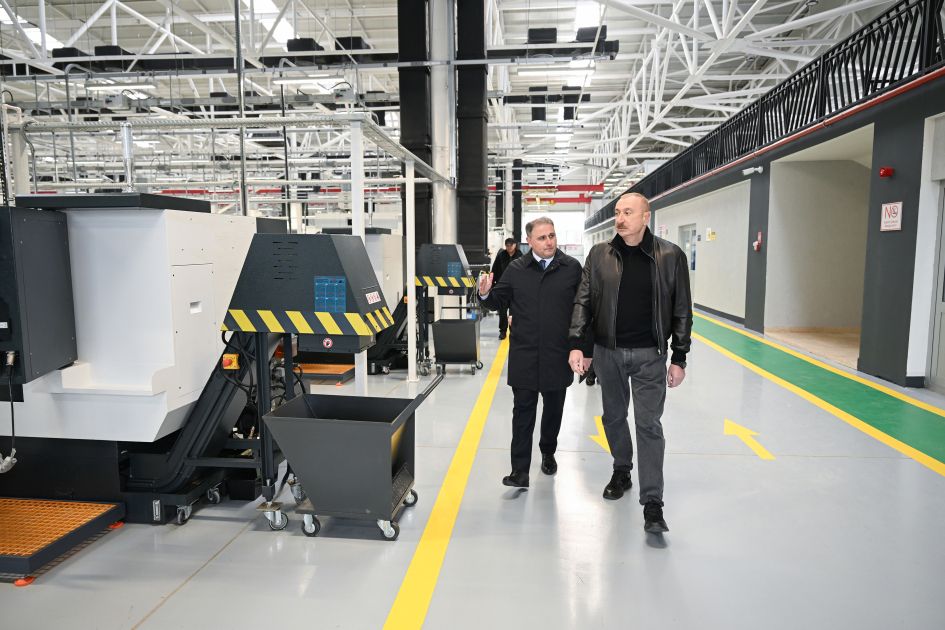
A central pillar of reconstruction is the revival of strategic industrial capacity. During the visit, President Aliyev inaugurated the fully reconstructed Tartar Electromechanical Plant. Originally established in 1976, the plant has now been modernized in line with contemporary defense industry standards and integrated into Azerbaijan’s growing military-industrial complex through cooperation with Azersilah Defense Industry Holding.
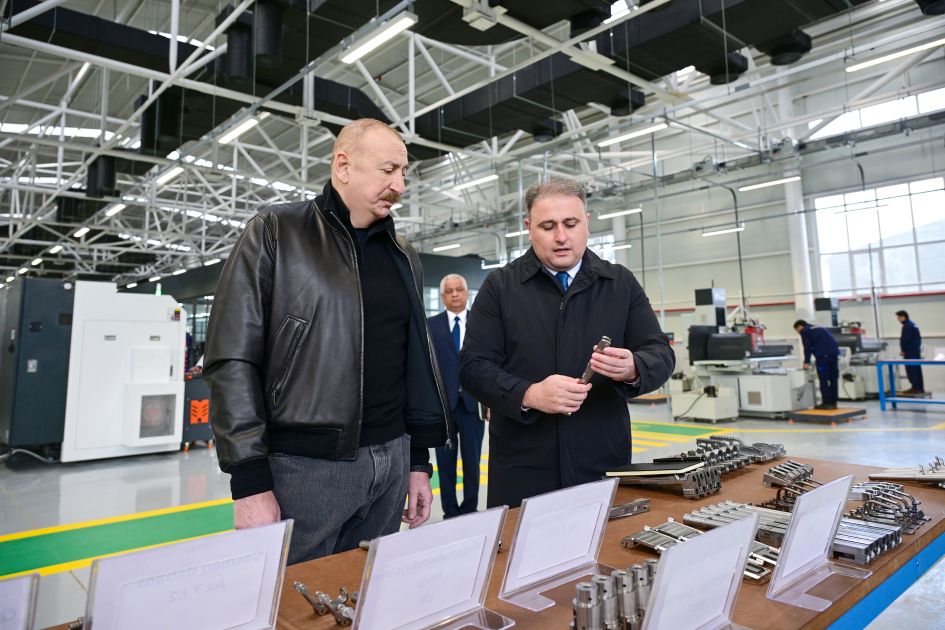
Analytically, this project represents more than post-war industrial recovery. It reflects a deliberate policy shift toward defense self-sufficiency, technological upgrading, and export-oriented manufacturing. In 2025 alone, Azerbaijan produced military products worth 1.4 billion manats, with exports reaching approximately 20 countries. The Tartar plant thus serves a dual strategic function: strengthening national security while contributing to economic diversification and technological diplomacy.
Mining sector development and private investment
The inspection of the “Damirli” Ore Processing Complex further demonstrated Azerbaijan’s approach to transforming liberated territories into engines of non-oil growth. As the first mining project launched in these areas, the complex symbolizes the transition from illegal exploitation under occupation to lawful, transparent, and environmentally regulated resource management.
Reconstructed using advanced Turkish and German technologies, and supported by private investments totaling 15.3 million manats, the complex will process up to 5.6 million tons of ore annually. Between 2025 and 2030, exports of copper concentrate - primarily to China - are projected to generate 1.6 billion manats in revenue. Importantly, the project creates nearly 1,000 permanent jobs at the initial stage, including significant employment for former internally displaced persons, reinforcing the social dimension of economic development.
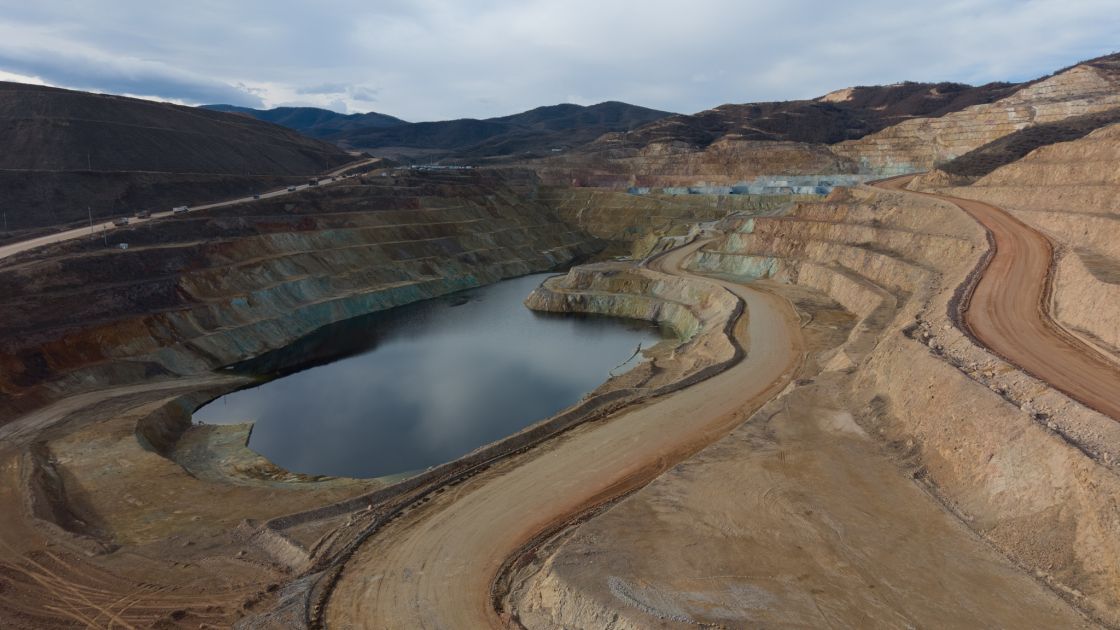
The legal and institutional framework underpinning the project - anchored in production-sharing agreements and environmental oversight by “AzerGold” CJSC - signals Azerbaijan’s commitment to international best practices. Comprehensive environmental monitoring, water recycling, and land reclamation measures ensure that industrial growth aligns with sustainability objectives.
Social reintegration and community-centered reconstruction
Parallel to industrial development, the restoration of villages such as Chapar, Childiran, and Heyvali illustrates the state’s emphasis on social stabilization as a foundation for territorial reintegration.
In Chapar village, where over 100 homes were damaged during occupation, housing reconstruction, infrastructure renewal, and public amenities are enabling the gradual return of displaced families. Investments in roads, utilities, and public spaces demonstrate a shift from emergency reconstruction to quality-of-life enhancement, essential for sustainable resettlement.
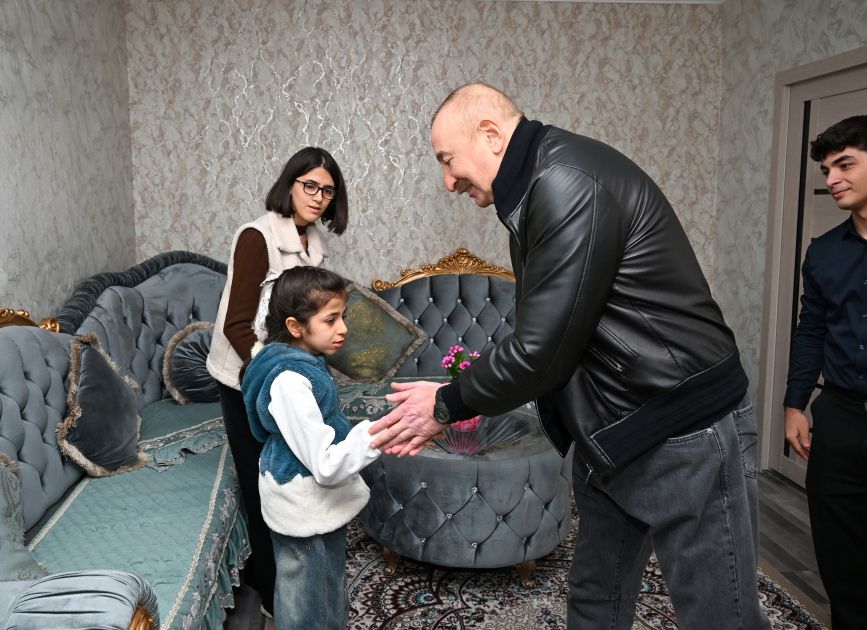
Childiran village presents a particularly illustrative case. Beyond housing restoration, reconstruction efforts have revived utilities, water systems, and internal road networks while preserving the area’s rich historical heritage, including medieval Albanian-era temples. The return of families to such culturally significant areas reinforces not only demographic recovery but also historical continuity and national identity.
Similarly, in Heyvali village, the restoration of housing, utilities, and recreational spaces reflects a comprehensive approach to rural redevelopment. By reestablishing economic livelihoods rooted in agriculture and animal husbandry, the state is ensuring that resettlement is economically viable, not merely symbolic.
Green energy and environmental transformation
A defining feature of Azerbaijan’s reconstruction strategy is the integration of green energy into post-conflict development. President Aliyev’s inauguration of the Gozlukorpu Hydroelectric Power Station exemplifies this approach. With a capacity of 14.7 MW and advanced ecological safeguards, the station contributes significantly to energy security while reducing carbon emissions and natural gas consumption.
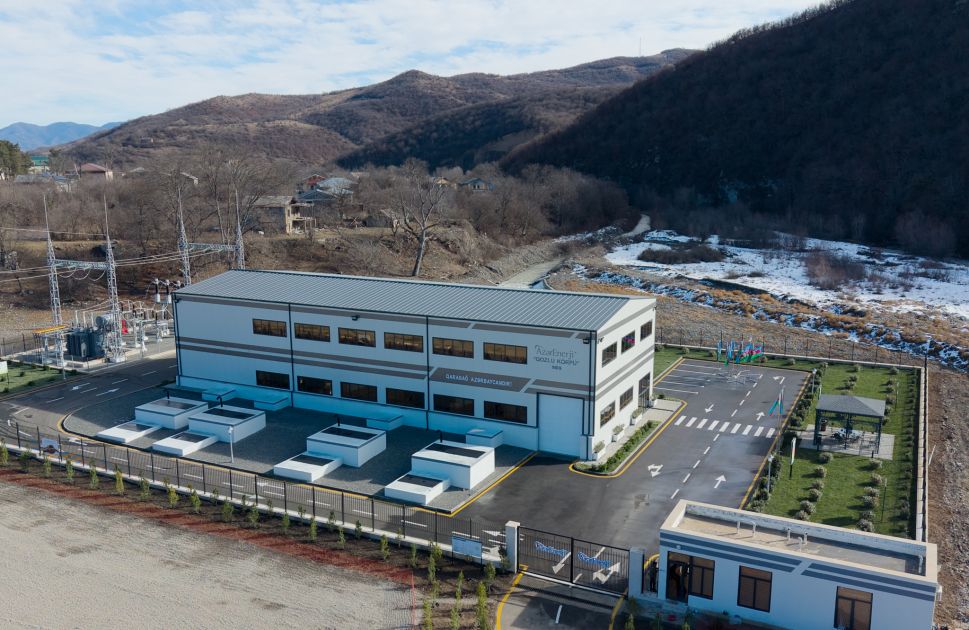
More broadly, the transformation of Garabagh and East Zangezur into green energy zones positions the liberated territories as future hubs of clean energy production. The operation of 22 hydroelectric plants, alongside ongoing and planned projects, demonstrates how reconstruction is being aligned with global climate commitments and sustainable development goals.
Taken together, these initiatives illustrate that reconstruction in Azerbaijan’s liberated territories is not a narrow post-war recovery effort, but a multidimensional state-building project. The revival of industry, attraction of private investment, resettlement of displaced populations, and deployment of green technologies collectively enhance economic diversification, national resilience, and geopolitical standing.
President Ilham Aliyev’s direct involvement underscores the symbolic and strategic significance of these efforts, signaling both domestically and internationally that the reintegration of liberated territories is irreversible and central to Azerbaijan’s national agenda. By combining strong governance, fiscal incentives, technological modernization, and community-focused planning, Azerbaijan is laying the groundwork for these regions to evolve into self-sustaining contributors to national prosperity and long-term stability.
Here we are to serve you with news right now. It does not cost much, but worth your attention.
Choose to support open, independent, quality journalism and subscribe on a monthly basis.
By subscribing to our online newspaper, you can have full digital access to all news, analysis, and much more.
You can also follow AzerNEWS on Twitter @AzerNewsAz or Facebook @AzerNewsNewspaper
Thank you!