
Iran’s protests no longer speak language of reform [OPINION]
![Iran’s protests no longer speak language of reform [OPINION]](https://www.azernews.az/media/2026/01/09/whatsapp_image_2026-01-09_at_111822_upscaled.jpg)
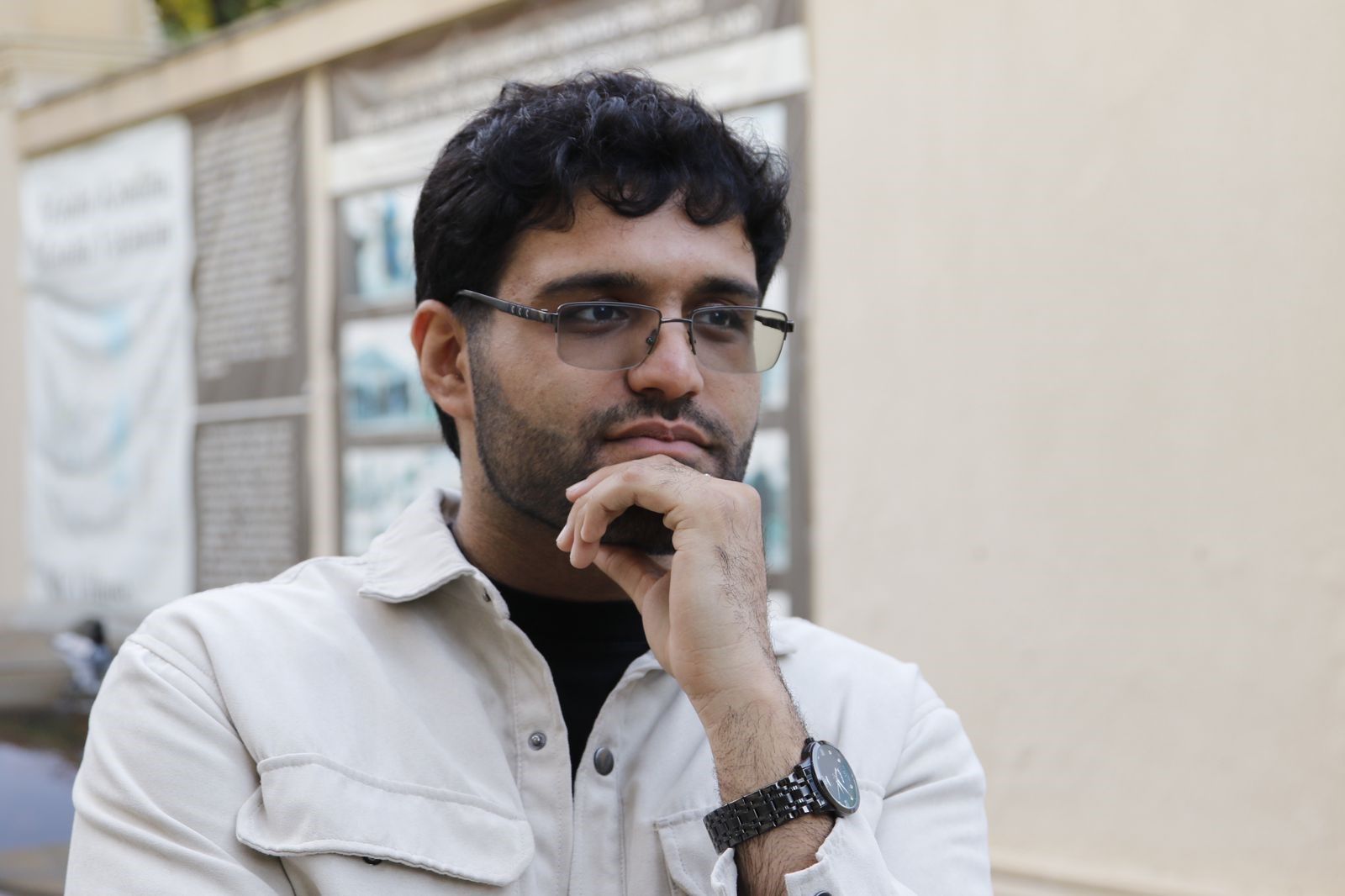
Akbar Novruz
Read moreIran’s streets have always spoken loudly, but the refrains they echo today tell a story far different from those heard in earlier years. Over the past decade and a half, the language of protest in Iran has not only shifted, but it has transformed the political imagination of a generation. What began in 2009 as religiously infused calls for reform has, by late 2025, increasingly given way to open invocations of Iran’s monarchist past and chants for the return of the Pahlavi dynasty. This evolution reflects a widening disillusionment with factional politics inside the Islamic Republic and a deeper search for alternatives to the status quo.
In the summer of 2009, amid the disputed presidential election that sparked the Green Movement, crowds chanted “Ya Hossein, Mir Hossein.” This slogan intertwined religious symbolism with political dissent and rallied behind Mir Hossein Mousavi, a former prime minister who challenged the election’s results. That language was not just poetic; it was a strategic appeal to Shiite legitimacy that sat within the framework of the Islamic Republic’s own ideological foundations.
According to Iranian columnist Amirhadi Anvari, the message then was not a rejection of the system itself but a plea for reform from within, a belief that change could be won by appealing to shared cultural and religious norms. Even when protests became emotionally charged with images like the death of Neda Agha-Soltan, the movement still sought legitimacy through familiar, religiously coded frames.
Over the years, however, that faith in factional politics has steadily eroded. Elections, once framed as opportunities for improvement, saw sharp declines in participation. In 2009, the state reported turnout near 85 per cent; by mid-2024, official figures placed participation at about 40 per cent of eligible voters, even as the population grew. Whether or not the precise figures are disputed, the trajectory is clear: abstention became a political signal, a sign that many Iranians no longer believed the ballot box could deliver meaningful change.
Reformist and moderate elements within the government tried to reset expectations after 2009. The presidency of Hassan Rouhani, beginning in 2013, offered a brief interlude of economic optimism. But structural problems, renewed sanctions, and unmet expectations undercut that promise. By 2018, the language on the streets had already begun to shift, increasingly rejecting both reformists and hardliners with slogans like “Reformist, principlist, the game is over,” and even invoking Reza Shah, founder of the Pahlavi dynasty, in chants that no longer tried to work within the system.
The 2025–2026 cycle of protests represents a qualitative shift in protest language. Videos and reports from cities across Iran show crowds chanting phrases such as “This is the final battle, Pahlavi will return,” “Javid Shah” (“Long live the King”), and explicitly naming Reza Pahlavi, the exiled Crown Prince, as a symbol of renewed hope. Furthermore, "Anti-regime protesters in Iran chant: Death to Khamenei" serves as the cherry on top.
These chants have appeared across regions and among diverse groups, from Tehran and Yazdanshahr to Mazandaran Province, and often alongside anti-regime slogans such as “Death to the dictator,” illustrating how some protesters are no longer clinging to religious or reformist frameworks but instead articulating a break with the revolution’s entire political inheritance.
The rise of the pro-Pahlavi language does not necessarily reflect a unified desire to restore the monarchy as a governing system. As analysts point out, the movement remains heterogeneous, with many protesters still seeking a secular democratic republic rather than a return to kingship. In fact, Crown Prince Reza Pahlavi has publicly framed his role not as a claimant to the throne but as an advocate for democratic transition, emphasising that any future system should be decided by referendum.
Instead, chants for a “return of Pahlavi” serve multiple symbolic functions:
-
They signal a deep rejection of the Islamic Republic’s ideological legitimacy and a desire for systemic change rather than incremental reform.
-
They reflect a longing for a perceived era of stability or secular governance, even if idealised and distant.
-
They express frustration not just at economic hardship but at a political order that many Iranians now view as irredeemably ossified.
This linguistic shift also mirrors broader legitimacy challenges facing Tehran’s leadership. Recent protests have surged nationwide, spreading across all provinces and encompassing economic, political, and cultural grievances. Calls against Supreme Leader Ayatollah Ali Khamenei have joined chants for alternative visions of governance, a marker of deep crisis within the system itself.
The actions and speeches planned by Azerbaijani Turks are also noteworthy. They have historically been at the forefront of all processes in Iran. The monarchists aim to capitalise on the success of these actions to position themselves as alternatives to the government, but this misguided approach hampers their effectiveness. This is one reason why Azerbaijani Turks remain in an observer role. Despite leading previous movements, their national demands have not been fulfilled, leading them to adopt a cautious stance in their participation. Recently, the South Azerbaijan Organisations Cooperation Council assessed the protests and announced a peaceful demonstration for January 10. They emphasised that the market workers of South Azerbaijan, instrumental to the local economy and society, are among the first victims of the crisis.
They affirmed that peaceful protests are a legal right of the South Azerbaijani community and defending this right is a social and political duty. For over a century, Azerbaijani Turks have fought for democratic reforms and their national rights in Iran, leading to initiatives like Azadistan and the National Government, though these efforts remain incomplete. Various organisations representing other non-Persian groups have also issued statements supporting the protests, increasing the likelihood that these demonstrations will evolve with new content and slogans.
The emergence of monarchist slogans does not erase or replace other protest identities. “Woman, Life, Freedom” remains alive in many contexts, particularly among women’s rights advocates and segments of youth who resist both clerical and monarchical authorities. Rather, the protest language of Iran in the mid-2020s reflects a hybrid movement: one that simultaneously rejects theocratic authority, questions revolutionary legitimacy, and experiments with diverse imaginaries of Iran’s future.
The evolution of Iran’s protest slogans, from the reverent “Ya Hossein, Mir Hossein” to the assertive “Pahlavi will return”, reflects more than just frustration with the Islamic Republic. It mirrors a population that has grown impatient with the limits of reform and the failures of internal factions to deliver meaningful change. Yet even as these chants evoke nostalgia, they risk oversimplifying the complexities of governance and history. Romanticising a return to monarchy ignores the very real lessons of authoritarianism, past inequalities, and the social upheavals that gave rise to the current system.
In that sense, the streets are experimenting with symbols and alternative imaginaries, but they are also flirting with solutions that may be as illusory as the promises they reject. Monarchist slogans may energise certain segments, yet they cannot substitute for coherent policy, inclusive governance, or social reform. The irony is clear: protesters, exhausted by one form of failed leadership, may be tempted to idealise another that is unlikely to address the structural issues they face.
Ultimately, the shift in protest language signals a society that refuses to remain silent, even if its new vocabulary is at times more symbolic than pragmatic. Iran’s population is speaking, demanding accountability and envisioning alternatives, but whether chants for a crown can ever deliver real change remains profoundly uncertain.
(image source: The "I" Paper)
Here we are to serve you with news right now. It does not cost much, but worth your attention.
Choose to support open, independent, quality journalism and subscribe on a monthly basis.
By subscribing to our online newspaper, you can have full digital access to all news, analysis, and much more.
You can also follow AzerNEWS on Twitter @AzerNewsAz or Facebook @AzerNewsNewspaper
Thank you!