
Babayan breaks silence as Garabagh Armenians’ fate becomes political weapon
Akbar Novruz
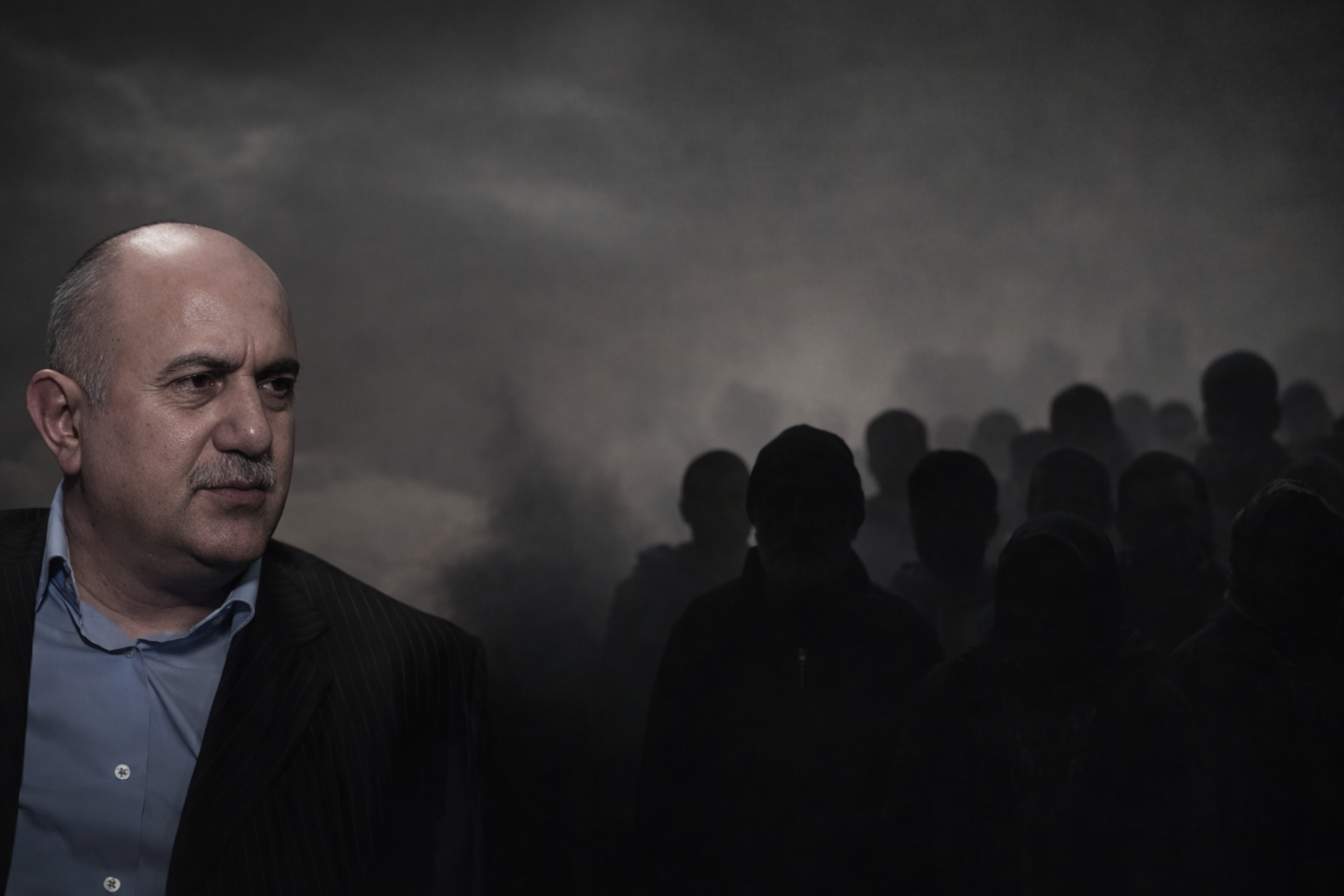
Read moreSamvel Babayan, once the “commander” of the so-called Artsakh Defense Army and ex-“secretary” of the self-proclaimed Artsakh National Security Council, has returned to the spotlight with a blunt and uncompromising critique of the Armenian authorities. His timing, right before the June parliamentary elections, raises eyebrows, but his words strike at the unresolved legacy of Garabagh and the failures of Armenian leadership.
In a recent Facebook post, Babayan directly challenged Prime Minister Nikol Pashinyan, accusing him of manipulating public perception. Pashinyan, he argued, falsely equates the right of return for displaced Garabagh Armenians with the broader Garabagh movement. “Those who talk about unresolved problems do not want war. War arises from problems that are ignored,” Babayan wrote. He warns that ignoring these issues only leaves a ticking time bomb for the future.
Babayan did not spare Pashinyan’s contradictions. From declaring “Artsakh is Armenia” to later disclaiming a mandate to negotiate for the Garabagh people, and finally limiting himself to social security guarantees, the Armenian leader, Babayan, asserts, left the Garabagh population exposed. The result: defeat, forced migration, and a community of de facto refugees stripped of citizenship, home, and meaningful opportunities for integration.
The former commander also reminded the public that the resolution of Garabagh is not solely in the hands of Pashinyan or Azerbaijani President Ilham Aliyev. The matter is inherently geopolitical, tied to broader international processes. Evading responsibility, Babayan warns, risks fueling a larger and potentially more destructive conflict.
Babayan’s own background makes his critique particularly striking.
Once a separatist, he had kept his distance from the Artsakh authorities before Azerbaijan’s 2023 anti-terrorist operation, even advocating coexistence with Garabagh Azerbaijanis. Yet, after Azerbaijan reasserted control, Babayan was allowed to live in Yerevan unharmed, a fate denied to other separatist leaders currently facing trial.
Now, he has aligned himself with anti-Pashinyan forces, a move that appears calculated. Whether driven by election politics, Moscow’s influence, or diaspora networks, his return illustrates how the “Garabagh Armenians” factor continues to serve as a potent political instrument in Armenia.
What is notably absent from Babayan’s rhetoric is Azerbaijan. His statements are not about Baku, borders, or negotiations. They are entirely inward-facing, aimed squarely at Armenia’s domestic audience. This is not a foreign policy intervention; it is an internal political marketing effort.
And therein lies the core issue. The concept of “Garabagh Armenians” is becoming increasingly abstract. Many of those who relocated to Armenia are not mobilizing politically; they are trying to survive, integrate, or leave altogether. Faced with social resentment and economic hardship, they seek normalcy, not slogans. Over time, this reality erodes the effectiveness of Garabagh as a mass political cause.
But abstraction has its advantages. Precisely because it is difficult to define or “resolve,” the Garabagh factor remains a convenient instrument. It can be invoked without clear policy proposals, without responsibility, and without accountability. As long as it exists as a floating symbol of injustice and loss, different political actors will attempt to monetize it, especially against Pashinyan.
Samvel Babayan did not speak out by chance. He was not merely invited into the debate; he was pushed into it. And he understands that silence may now carry its own risks. His return signals not a revival of Garabagh politics, but its final transformation: from a territorial dispute into a domestic pressure lever.
His outspokenness highlights a hard truth: the unresolved Garabagh issue is now as much a domestic Armenian political weapon as it is a geopolitical challenge. Elections, political maneuvering, and promises aside, the lives of those displaced from Garabagh remain at the center, and their voices, still largely unheard, continue to shape the contours of Armenia’s political battlefield.
As Armenia approaches elections, this lever will be pulled again and again. Not because it offers solutions, but because it still works, just enough.
Here we are to serve you with news right now. It does not cost much, but worth your attention.
Choose to support open, independent, quality journalism and subscribe on a monthly basis.
By subscribing to our online newspaper, you can have full digital access to all news, analysis, and much more.
You can also follow AzerNEWS on Twitter @AzerNewsAz or Facebook @AzerNewsNewspaper
Thank you!