
Myanmar holds second phase of military-run election amid war and international criticism
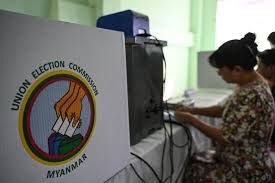
Voters across conflict-hit Myanmar returned to polling stations on Sunday as the military authorities pushed ahead with the second phase of a junta-organised election, despite widespread criticism and scepticism following weak participation in the first round.
The vote comes as Myanmar remains gripped by violence nearly four years after the 2021 military coup that toppled the elected civilian government and led to the detention of former leader Aung San Suu Kyi. The takeover triggered a nationwide uprising that has since evolved into a prolonged civil war affecting much of the country’s 51 million people.
The political landscape has been dramatically reshaped ahead of the polls. Suu Kyi’s National League for Democracy (NLD)—which won a landslide victory in the 2020 elections—has been dissolved, along with dozens of other opposition parties that refused or failed to register under new electoral rules. Armed resistance groups have also rejected participation, further narrowing the field.
International criticism has been swift and sustained. The United Nations, Western governments, and human rights organisations have dismissed the election process as neither free nor fair, arguing that it lacks credibility without genuine political competition.
Preliminary results from the first phase of voting, held on December 28, show the military-aligned Union Solidarity and Development Party (USDP) dominating the race, securing 90 of the 102 lower-house seats contested. Official figures put turnout at just over 52 percent, far below participation levels seen in elections held in 2015 and 2020.
“The outcome was effectively predetermined,” said Richard Horsey, Senior Myanmar Adviser at the International Crisis Group, noting that legal restrictions and the elimination of major rivals had tilted the process heavily in favour of the military-backed party.
A final round of voting is scheduled for January 25, with ballots planned in 265 of Myanmar’s 330 townships, including areas where the military does not exercise full territorial control.
The junta maintains that the elections will pave the way for political stability and national recovery, as the country faces one of Asia’s most severe humanitarian crises. However, analysts caution that any government emerging from the process is unlikely to achieve domestic legitimacy or international recognition while armed conflict continues.
Junta leader Min Aung Hlaing has publicly praised the election process, urging local authorities to increase participation and claiming that voter turnout reflects public support for a return to democratic governance.
Here we are to serve you with news right now. It does not cost much, but worth your attention.
Choose to support open, independent, quality journalism and subscribe on a monthly basis.
By subscribing to our online newspaper, you can have full digital access to all news, analysis, and much more.
You can also follow AzerNEWS on Twitter @AzerNewsAz or Facebook @AzerNewsNewspaper
Thank you!