
20 January in Baku: Memory, mourning and birth of independence
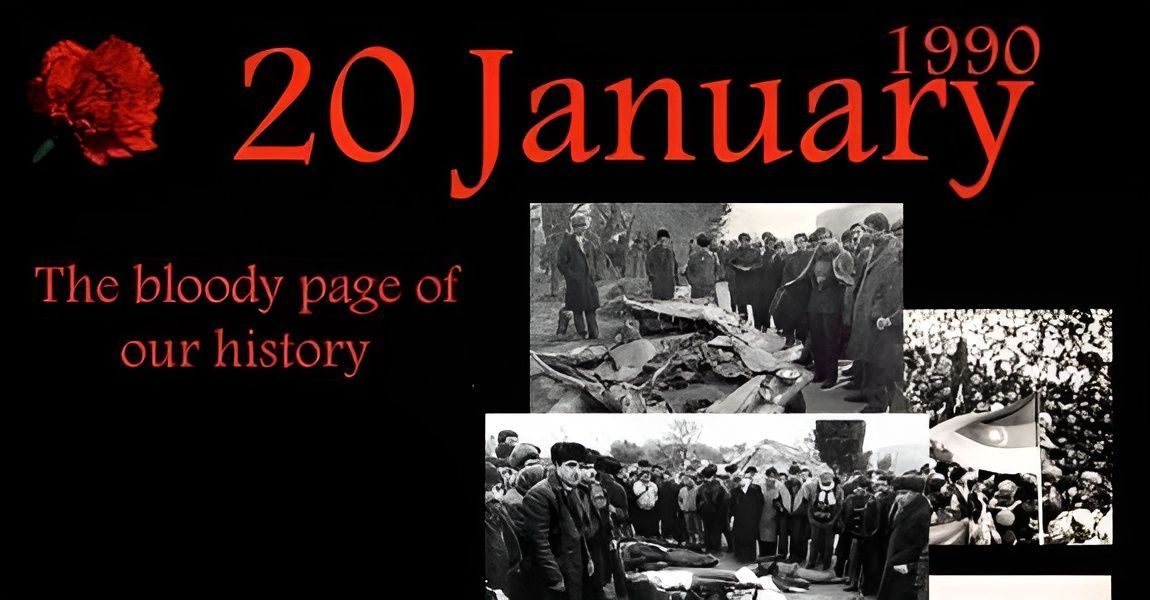
Night fell over Baku on 20 January 1990 not as a veil of rest, but as a shroud. The Caspian wind carried no calm that evening; it carried the metallic growl of tanks and the heavy silence of a people about to be tested by history. Streets that only hours earlier echoed with chants for dignity, sovereignty, and independence were suddenly transformed into corridors of fear and blood.
Without warning, Soviet troops rolled into the city. Russian tanks crushed asphalt and hope alike, advancing not against a foreign enemy, but against unarmed civilians—men and women who had stepped outside not to wage war, but to demand the right to decide their own future. They stood with flags, not weapons; with voices, not bullets. Yet the response they received was steel, fire, and death.
Bullets tore through the darkness. Ambulances were shot at. Doctors and journalists were targeted. Ordinary citizens—workers, students, fathers, mothers—fell where they stood, struck down in streets that had become killing fields. The city lights went out, as if even electricity recoiled from what was unfolding. Baku was cut off from the world, but the world’s conscience should never have been cut off from Baku.
This was not a clash. It was a massacre.
The Soviet leadership called it the restoration of order. History would name it differently: Black January. A night when an empire revealed its true nature, choosing violence over dialogue, tanks over truth. The very state that claimed to represent equality and brotherhood answered peaceful demands for independence with mass murder.
Blood stained the pavements of Neftchiler Avenue, 20 Yanvar Circle, and countless unnamed streets. Some died instantly; others bled out while help was deliberately delayed. Families searched hospitals through the night, clinging to hope, only to find silence where voices once lived. Mothers would never again hear their sons’ footsteps. Children would grow up with photographs instead of parents.
Yet even in that darkness, something unbreakable was born.
The people of Azerbaijan did not retreat into fear. The funeral procession that followed became one of the largest acts of collective mourning and defiance the city had ever seen. Hundreds of thousands walked together, not in chaos, but in dignity. Flowers replaced slogans. Tears replaced chants. And resolve replaced doubt.
The tanks had entered Baku to crush the independence movement. Instead, they sealed its fate.
20 January did not kill the dream of freedom—it sanctified it. The blood spilled that night became the moral foundation of Azerbaijan’s path to sovereignty. Each victim became a witness, each grave a reminder that independence is never granted freely by empires; it is paid for by people.
This tragedy was not an isolated act of violence. It was part of a broader pattern as the Soviet Union struggled to suppress national movements across its collapsing territory. But in Baku, the cruelty was unmistakable. The use of overwhelming military force against civilians demanding lawful political rights stands as a grave violation of human dignity and fundamental principles that the modern world claims to uphold.
And yet, accountability never truly came.
No international tribunal convened for the victims of 20 January. No perpetrators stood before a court of justice. The silence of the global community added another layer of injustice to an already open wound. But memory itself became a form of resistance. Every year, Azerbaijan remembers. Every year, flowers line the graves at the Alley of Martyrs. Every year, the city pauses—not out of weakness, but out of respect.
An elegy is not only a lament. It is a promise.
A promise that those who died will not be reduced to numbers. A promise that tanks will never again define the destiny of Baku’s streets. A promise that independence, once paid for in blood, will be guarded with memory and responsibility.
On 20 January, Azerbaijan lost lives—but it gained an irreversible truth: freedom demands courage, and courage often demands sacrifice. The city that bled that night still stands, not as a victim, but as a testament.
The tanks are gone. The empire is gone.
But the memory remains—and so does the independence it helped
forge.
Here we are to serve you with news right now. It does not cost much, but worth your attention.
Choose to support open, independent, quality journalism and subscribe on a monthly basis.
By subscribing to our online newspaper, you can have full digital access to all news, analysis, and much more.
You can also follow AzerNEWS on Twitter @AzerNewsAz or Facebook @AzerNewsNewspaper
Thank you!