
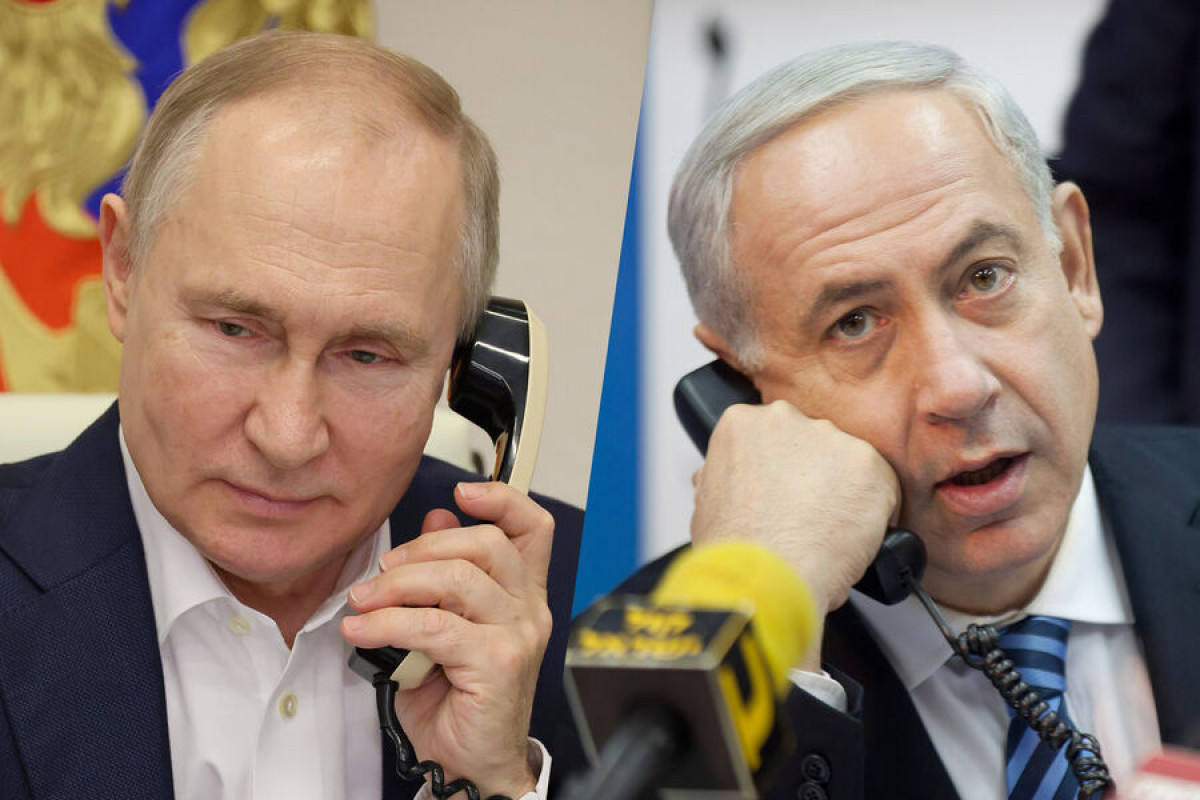
Putin offers to mediate Iran tensions in phone calls with Netanyahu
Akbar Novruz
Read morePrime Minister Benjamin Netanyahu and Russian President Vladimir Putin discussed the escalating situation in the Middle East and Iran in a phone call today, the Kremlin said, underscoring growing international concern over Tehran’s internal crisis and its broader regional implications. Putin offered Russia’s help in mediating on Iran and emphasized the need to intensify political and diplomatic efforts to ensure “stability and security in the region”, Azernews reports.
According to the Kremlin, Putin also spoke by phone with Iranian President Masoud Pezeshkian on Friday, reiterating Moscow’s intent to de‑escalate regional tensions. Kremlin spokesperson Dmitry Peskov told reporters that Putin will continue diplomatic efforts amid turmoil.
The renewed diplomatic push comes as widespread protests grip Iran, one of the largest waves of unrest in decades. Demonstrations that began in late December amid economic grievances—soaring inflation, devaluation of the rial and rising living costs—have expanded into broader anti‑government mobilization, occurring despite a sweeping internet blackout imposed in early January that has severely limited communication and reporting inside the country.
Iran’s authorities have responded with a harsh crackdown, and activists say security forces have killed thousands of demonstrators while arresting tens of thousands. In recent days, Tehran has also detained around 3,000 people purportedly linked to “terrorist groups” who allegedly took part in the protests, according to Iranian state‑aligned media cited by Azernews. Critics argue that many detainees are ordinary protesters.
The unrest has drawn international reactions. Until recently, the United States threatened military action against Iran if executions of detained protesters took place, with Washington’s envoy to the United Nations warning that all options remain “on the table.” The US has since signaled a possible de‑escalation after reports that killings may have eased, but diplomatic pressure continues.
Iranian‑American journalist Masih Alinejad addressed the UN Security Council at Washington’s invitation, saying “all Iranians are united” against the clerical system and criticizing the Iranian government for prioritizing support to external militant groups at the expense of citizens’ welfare.
The broader regional backdrop includes tensions between Tehran, Washington and Tel Aviv, which have been exacerbated by conflicts involving Iran‑aligned proxy forces and hostilities in neighboring theaters. Independent live coverage describes ongoing anti‑government demonstrations nationwide despite government efforts to suppress them.
Russia’s mediation offer comes amid scrutiny of Moscow’s role: Kremlin ties to Tehran are rooted in strategic cooperation, yet Russia has been cautious in publicly engaging with Iran’s internal unrest. Observers note that Moscow has avoided direct criticism of Tehran while offering diplomatic support to reduce escalation risk.
Here we are to serve you with news right now. It does not cost much, but worth your attention.
Choose to support open, independent, quality journalism and subscribe on a monthly basis.
By subscribing to our online newspaper, you can have full digital access to all news, analysis, and much more.
You can also follow AzerNEWS on Twitter @AzerNewsAz or Facebook @AzerNewsNewspaper
Thank you!