
Washington Post flags risk of ethnic spillover as US weighs Iran intervention

Akbar Novruz
Read moreAs tensions escalate between Iran and the United States, fresh analysis suggests that Washington must consider regional ethnic dynamics before contemplating military intervention, particularly regarding Iran’s Turkic population and neighboring Azerbaijan, according to analysis in The Washington Post, Azernews reports.
The Post argued that U.S. policymakers, including President Donald Trump, should take into account the complex ethnic landscape inside Iran, where Iranian Turks represent a significant community, before “destroying” the Islamic Republic, warning any violent internal upheaval could have broader regional consequences. Azerbaijan, the article noted, was once peripheral to Iranian politics following its independence while still weakened from war with Armenia, but it has since become a rising regional power with a modern NATO‑standard army, deep ties to Türkiye, and a close security partnership with Israel. In the event of a violent internal conflict in Iran, some analysts argue that Azerbaijan might feel compelled to intervene to protect ethnic kin, potentially with Turkish support. (Washington Post analysis)
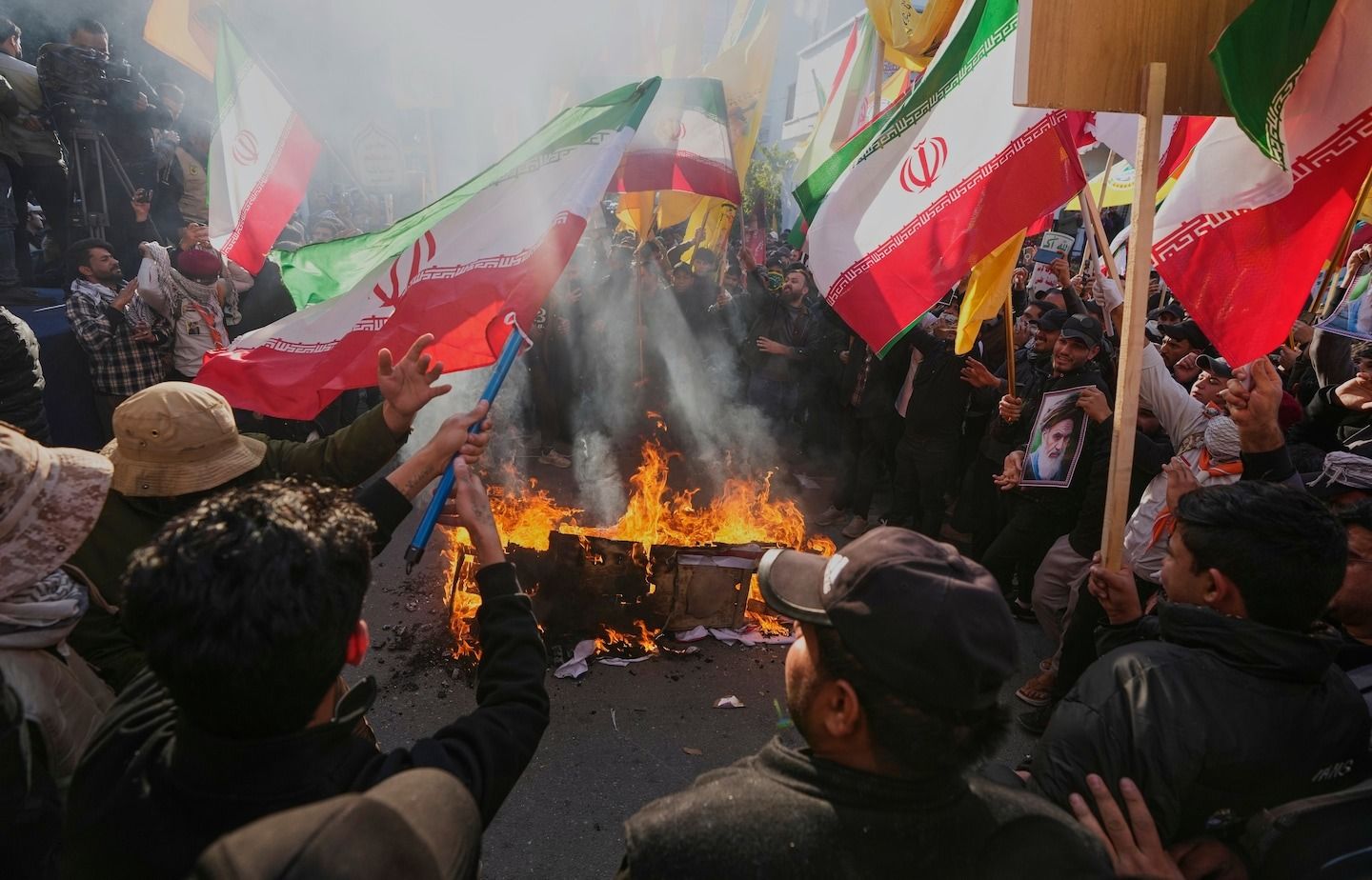
This debate comes amid mounting domestic unrest inside Iran. Nationwide protests triggered by economic hardship and political grievances have continued into early 2026. According to human rights monitoring groups, the death toll has now surpassed 5,100 people, with thousands more injured amid reports of internet shutdowns and clashes between security forces and demonstrators, figures that contrast with lower official counts.
At the same time, U.S.–Iran tensions have intensified on the military front. President Trump has stated that a U.S. naval “armada”, including the USS Abraham Lincoln aircraft carrier strike group, is moving toward the Gulf region, a deployment he described as precautionary but linked to Washington’s concerns over Iran’s violent crackdown on protesters. Iranian authorities, in turn, have issued strong warnings against external intervention, with Revolutionary Guard commanders declaring they are “more ready than ever, finger on the trigger.”
Iran’s leadership has also sought to signal resistance and deterrence: a dramatic mural warning against U.S. military action was unveiled in Tehran’s Enghelab Square; and Yemen’s Iranian‑aligned Houthi rebels have threatened renewed attacks on Red Sea shipping as part of the broader regional escalation.
Analysts note that the domestic crisis in Tehran has already inflamed geopolitical fault lines. The possibility of U.S. military intervention — even as diplomatic options remain on the table — is being weighed amid fears that internal unrest could merge with external conflict, drawing in regional actors with vested interests. Some experts caution that intervention risks legitimizing Tehran’s narrative of external threat and could further destabilize not only Iran but the wider Middle East.
Here we are to serve you with news right now. It does not cost much, but worth your attention.
Choose to support open, independent, quality journalism and subscribe on a monthly basis.
By subscribing to our online newspaper, you can have full digital access to all news, analysis, and much more.
You can also follow AzerNEWS on Twitter @AzerNewsAz or Facebook @AzerNewsNewspaper
Thank you!