
Natural wonder that never ceases to fascinate travelers [PHOTOS]
![Natural wonder that never ceases to fascinate travelers [PHOTOS]](https://www.azernews.az/media/2026/09/02/yanardag.jpg)

Laman Ismayilova
Read moreA wall of fire rising from the side of a hillside is not something most travellers expect to find in the middle of a landscape. Yet on the Absheron Peninsula, this extraordinary sight has been burning for generations.
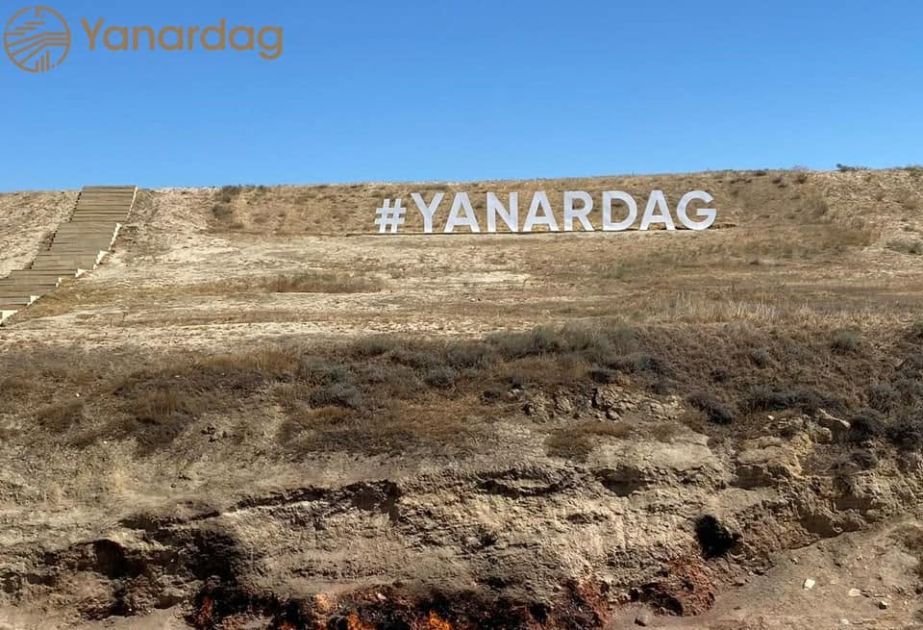
The Yanardag State Historical, Cultural and Natural Reserve, located in Mammadli village, about 27 kilometres from Baku, is one of the region's most distinctive natural and cultural landmarks. Its name literally means 'burning mountain', and its fame comes from the natural flames that emerge from the earth and continue to burn as underground gas reaches the surface.
The fire is not the result of a man-made source. Geological processes beneath Absheron allow natural gas to escape through cracks in the ground, where it catches fire and produces the flames that have become Yanardag's defining feature. The peninsula was once known for many naturally burning sites, although a number of them disappeared as underground gas flows changed over time. The reserve notes that another nearby hill once burned for thousands of years before its flames eventually went out.
Natural fires have been part of the history of the Absheron Peninsula for centuries. Medieval sources recorded permanently burning fires around Baku and its surroundings, while the phenomenon became closely connected with fire-worshipping traditions.
Yanardag is particularly associated with Zoroastrianism and the ancient reverence for natural flames. The fire became part of the cultural image of the region and contributed to the long-standing association of Absheron with the 'Land of Fire'. The reserve's museum explores this history, including the relationship between natural fires, places of worship, Zoroastrianism and pyrolatry.
The flames have also attracted the attention of travellers over the centuries. The official history of the reserve notes that Marco Polo mentioned the burning fires during his travels around Baku and its surroundings.
What makes Yanardag particularly fascinating is that the fire is not an isolated attraction. It sits within a wider landscape containing traces of both natural forces and human history.
The reserve includes the Qirmaki Valley, an active mud volcano, sulfur springs, Ottoman trenches and a kurgan burial mound. Its territory also contains the 'Wolf's Den' cave, ancient cemeteries and the Alidashi sacred site. Several of these locations can be visited with a guide.
The Qirmaki Valley provides a different view of Absheron's landscape, while the mud volcano and sulfur springs reveal the geological activity beneath the peninsula. Together, these sites show why Yanardag is classified not simply as a historical monument but as a historical, cultural and natural reserve.
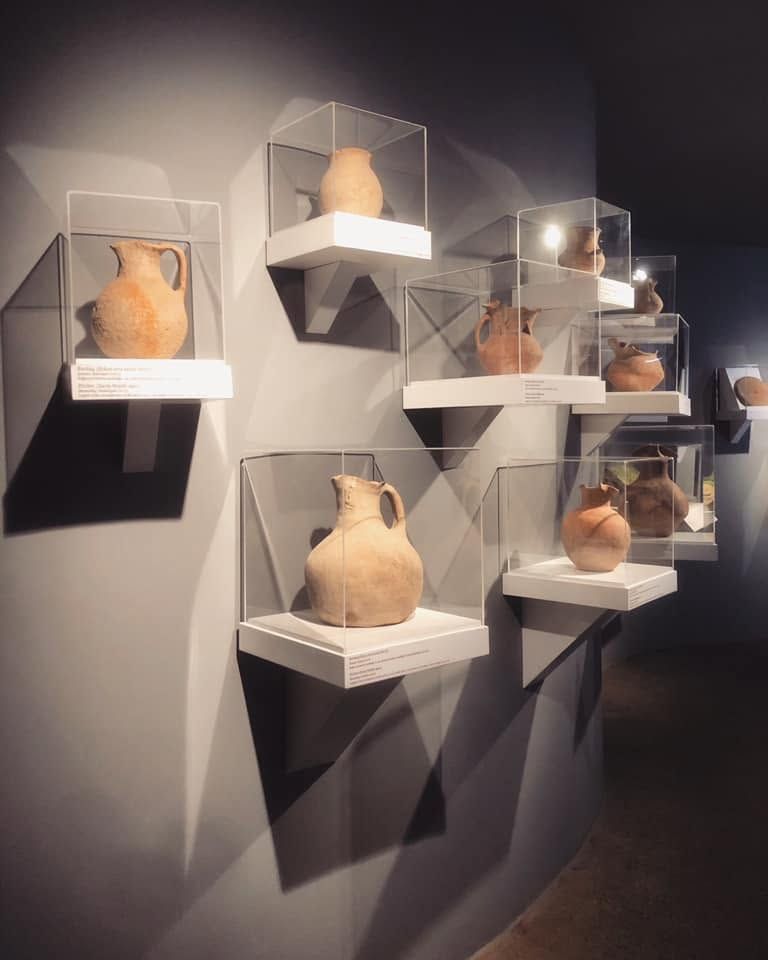
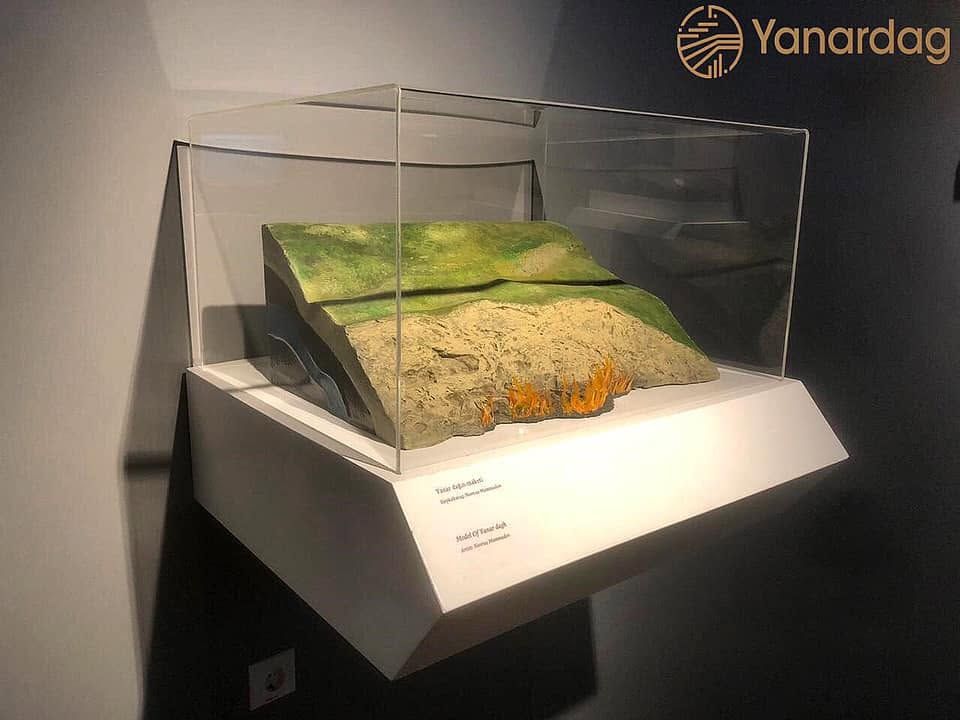
There is also a modern museum on the site. Opened in 2019, it presents the story of natural fires and places of worship in Azerbaijan, along with material related to Zoroastrianism and fire worship. The museum also uses video installations and three-dimensional models to make the subject more accessible to visitors.
Outside the museum, visitors can see the Cromlech stone collection, which includes stone objects of different shapes that were used in everyday life. The reserve also has an amphitheatre, café, workshop, children's playground and visitor facilities.
Yanardag's popularity is reflected in its visitor numbers. A total of 104,929 tourists visited the reserve during the first seven months of 2026. Foreign visitors made up the overwhelming majority, with 92,784 international visitors, while 12,145 Azerbaijani citizens visited during the same period. Tourists from India, Russia, Saudi Arabia, Pakistan, Turkiye, Israel, China, Kazakhstan, Germany and Algeria were among the largest groups of foreign visitors.
The reserve recorded 8,241 free admissions during January-July 2026.
The growing international interest is easy to understand. Yanardag offers something unusual even by the standards of Azerbaijan's rich collection of natural attractions: visitors can stand directly before a natural fire while also exploring the history and landscape that surround it.
For travellers interested in the region's heritage, Yanardag can also be combined with a visit to the Ateshgah reserve. Combined tickets covering Yanardag and Ateshgah are available, while another option also includes the Mud Volcanoes Tourism Complex.
Yanardag was declared a State Historical, Cultural and Natural Reserve in 2007. Following a major reconstruction programme, the site reopened with new tourism infrastructure in 2019 and has since developed into an established visitor destination on the Absheron Peninsula.
It is easy to understand why visitors stop in front of it and simply watch. The flames move constantly, sometimes appearing almost still and at other moments rising and dancing across the dark rock. There is no stage, no special effect and no machinery behind the spectacle. The mountain itself is the source.
That is what gives Yanardag its lasting appeal. The landscape tells several stories at once of underground gas and geological change, of ancient beliefs and travellers from distant lands, of archaeological traces and a modern tourism destination.
And while much of the Absheron Peninsula has changed dramatically over the centuries, the fire at Yanardag continues to burn.
Here we are to serve you with news right now. It does not cost much, but worth your attention.
Choose to support open, independent, quality journalism and subscribe on a monthly basis.
By subscribing to our online newspaper, you can have full digital access to all news, analysis, and much more.
You can also follow AzerNEWS on Twitter @AzerNewsAz or Facebook @AzerNewsNewspaper
Thank you!