
Armenia votes at crossroads: embrace regional trade or revive losing conflict

Ulviyya Poladova
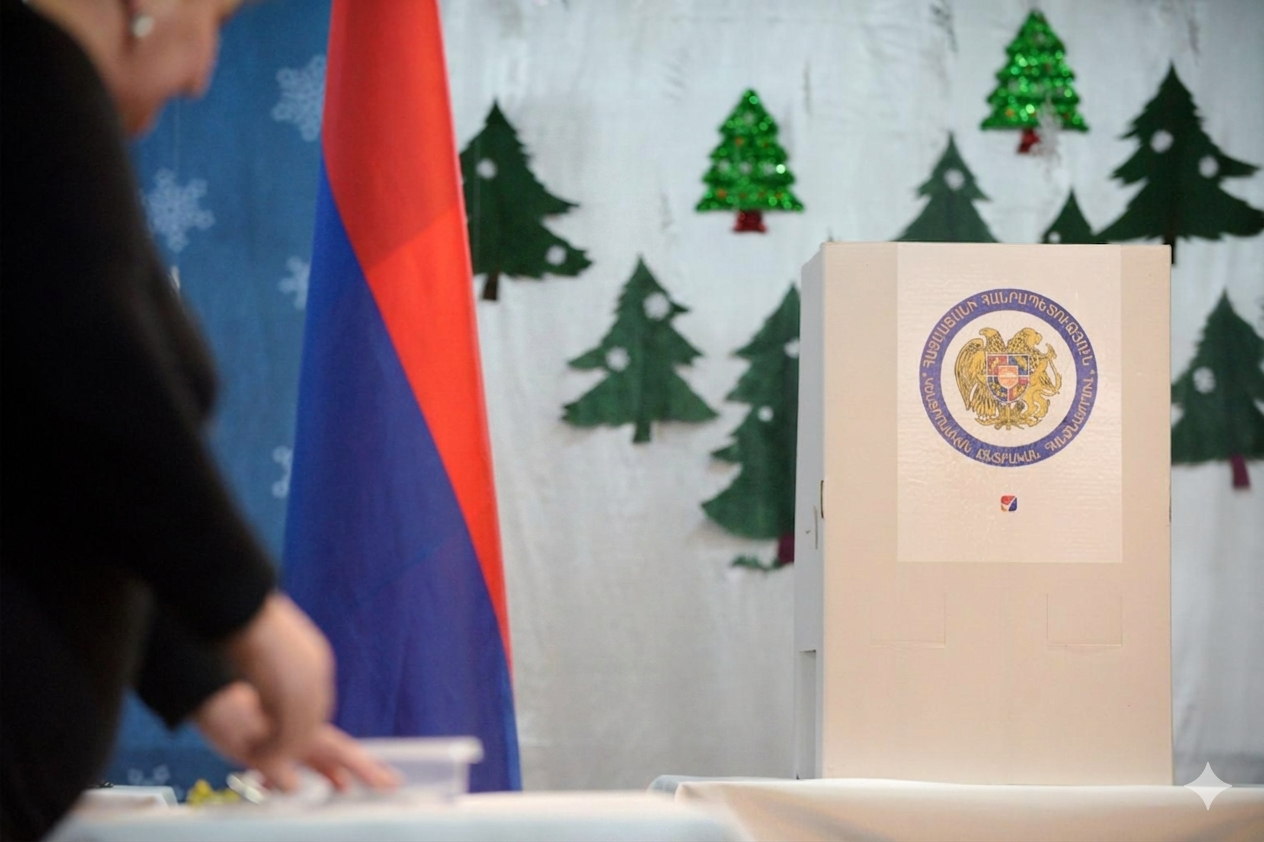
Read moreArmenia’s upcoming parliamentary elections, scheduled for June 7, have drawn significant attention both domestically and across the South Caucasus. A total of 19 political forces - 17 parties and 2 alliances - are set to compete, reflecting a fragmented political landscape shaped by recent conflicts, internal debates, and shifting geopolitical realities.
At the centre of Armenia’s political scene remains Prime Minister Nikol Pashinyan and his Civil Contract Party, which has dominated politics since the 2018 Velvet Revolution. His vision goes beyond routine reforms and includes the idea of establishing a so-called Fourth Republic. This concept implies not just constitutional or legal adjustments, but a deeper reconfiguration of Armenia’s political identity, governance model and ideological foundations. In essence, Pashinyan is seeking to move the country away from entrenched post-Soviet structures toward a more modernised and adaptive state framework.
Pashinyan’s platform is generally associated with pragmatic governance, economic stabilisation, and a cautious approach toward regional normalisation, particularly with Azerbaijan and Türkiye. His government has signalled a willingness to engage in peace negotiations and to accept new regional realities following the second Karabakh war. That stance marks perhaps the clearest dividing line in Armenian politics today.
While the incumbent government appears to accept that a durable settlement with Azerbaijan is necessary for economic recovery and strategic breathing space, much of the opposition rejects this course outright. Former president Robert Kocharyan has described Pashinyan’s diplomacy as cowardice and a form of capitulation. For his allies and other hardline factions, compromise is framed not as realism but as surrender.
A key pillar of Pashinyan’s campaign is closer integration with the European Union. However, this vision has produced mixed reactions among voters. While some segments of society see European alignment as a path to institutional reform and economic development, many Armenians remain sceptical. There is a widespread understanding that even under the most optimistic scenario, full integration into European structures would take decades, limiting its immediate appeal in an election shaped by urgent economic and security concerns.
Opposing him are a range of political groups, often labelled nationalist or revanchist by critics. These include factions tied to former elites and hardline positions on territorial issues and relations with Azerbaijan. Some advocate a more confrontational foreign policy, despite Armenia’s limited military capacity and persistent economic vulnerabilities. Critics argue that parts of the opposition offer rhetoric without a viable state strategy.
Pashinyan’s main rivals come from Armenia’s established opposition, represented by three influential figures: Samvel Karapetyan, Robert Kocharyan, and Gagik Tsarukyan.
Another notable figure often discussed in Armenian politics is Russian-linked businessman Samvel Karapetyan. While not always directly involved in frontline electoral politics, Karapetyan remains influential through investments and connections. Figures such as him can shape political discourse indirectly through financial leverage, media networks, or support for aligned movements.
It must be noted that The Country to Live party, linked to former Karabakh regime figure Ruben Vardanyan, has signed a memorandum of cooperation with the Strong Armenia Alliance of Parties, founded by Russian-Armenian billionaire Samvel Karapetyan.
Pressure is also mounting on the incumbent government from two organised currents running strong anti-Azerbaijan narratives before the elections. One consists of diaspora organisations based in the United States, France and elsewhere, many of which continue to promote maximalist positions detached from realities on the ground. The other is the pro-Russian opposition bloc, which attacks Pashinyan chiefly for pursuing diplomacy rather than perpetual confrontation.
Some of these forces, whether driven by ideology, nostalgia, or external patronage, appear more interested in reviving conflict than in securing Armenia’s future. Their vision often resembles a return to the politics of Miatsum - emotional nationalism without credible guarantees for development, security, or sovereignty. For instance, former Armenian president and now a fierce opponent of the Armenian PM Pashinyan, Robert Kocharyan, calls his opponent's move cowardly, as he thinks the recent peace talks between Armenia and Azerbaijan in Washington are an act of capitulation by Armenia. Today, some opposition factions, mainly supported by external powers or old clans, want the conflict back in the South Caucasus, no matter what it may cost for either Armenia or the region, but at least to fulfil their patron's guidelines.
Now, all that has been done so far makes no sense for the opposition groups in the country, despite the elections unfolding against the backdrop of increasing international engagement. Recall that in February, US Vice President JD Vance visited Yerevan and publicly expressed support for Pashinyan and among the most notable initiatives discussed is the proposed Trump Route for International Peace and Prosperity (TRIPP), a large-scale infrastructure project intended to link Europe and Asia via Armenian territory as part of a broader peace arrangement with Azerbaijan. So, taking all these together, what may be the most important thing for Armenia's future other than this?
Given all this, the elections take place during a sensitive phase in Armenia’s relations with Azerbaijan. Following years of conflict, both sides have engaged in a gradual normalisation process.
For instance, Azerbaijan has supplied fuel to Armenia and lifted restrictions on transit routes. As of today, Azerbaijan has exported 6,312 tons of diesel fuel to Armenia, along with 979 tons of AI-92 gasoline and 2,955 tons of AI-95 gasoline.
Such cooperation is closely tied to broader policy decisions. On October 21, 2025, President Ilham Aliyev, speaking alongside Kassym-Jomart Tokayev, confirmed that Azerbaijan had lifted all restrictions on cargo transit to Armenia that had been in place since the years of conflict.
Whoever comes to power in Armenia will influence the trajectory of the South Caucasus. Azerbaijan has consistently emphasised its commitment to long-term peace and regional stability, regardless of Armenia’s internal political changes.
Despite differing political visions within Armenia, the broader regional trend appears to favour cooperation over confrontation. Whether Armenian voters endorse that direction - or choose those seeking to reopen old battles - may shape not only their country’s future, but the stability of the wider region.
Here we are to serve you with news right now. It does not cost much, but worth your attention.
Choose to support open, independent, quality journalism and subscribe on a monthly basis.
By subscribing to our online newspaper, you can have full digital access to all news, analysis, and much more.
You can also follow AzerNEWS on Twitter @AzerNewsAz or Facebook @AzerNewsNewspaper
Thank you!