
Azerbaijan’s short war in a long-war era: strategy, restraint and politics of winning
Akbar Novruz
Read moreThe world has grown accustomed to wars that do not end. The ongoing war in Ukraine, four years since Russia’s annexation, has cost hundreds of thousands of lives, created an icy frontline across eastern Europe, and yielded no result that can be described by either side as a victory. The ongoing war between the US and Israel on one side and Iran on the other, begun on 28 February following years of brinkmanship surrounding Iran’s nuclear program, has lasted for forty days (and is lasting for now, per se) and interrupted about twenty percent of global oil production. It continues to this day to yield ceasefire negotiations which have been rejected outright by both parties.
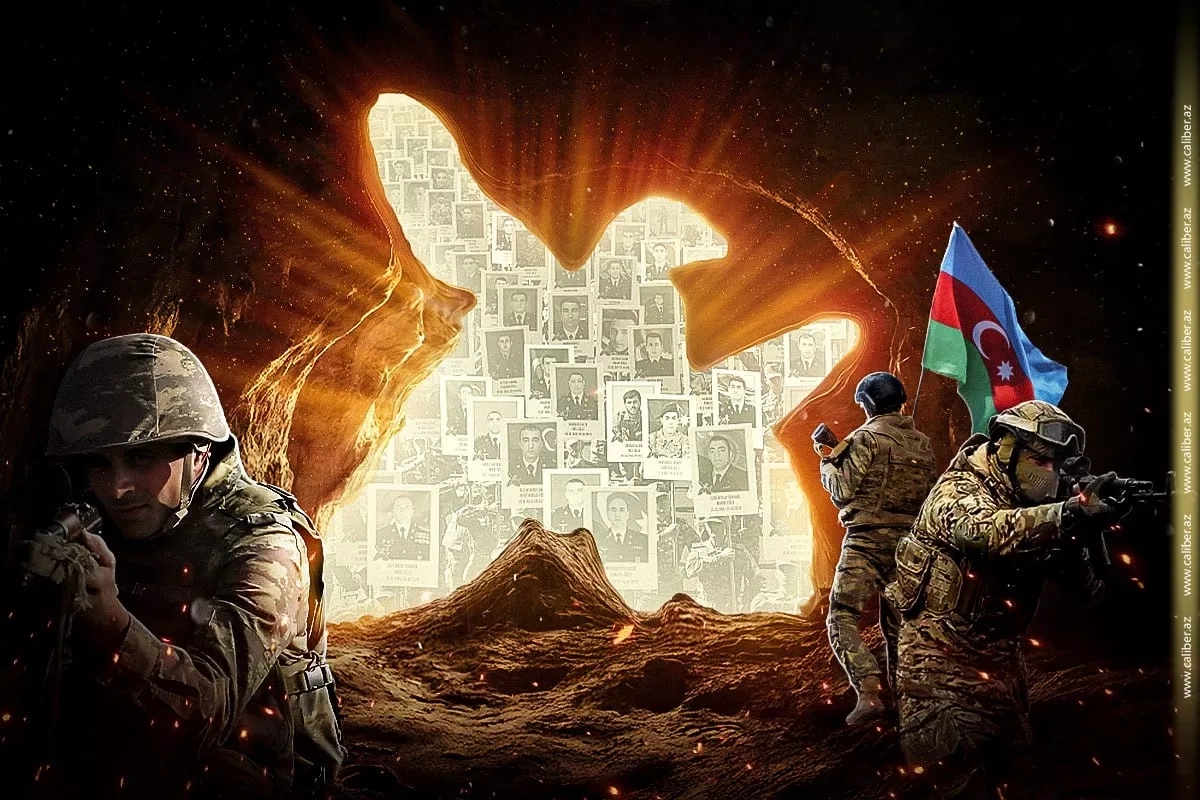
In light of all the above, there is one war in which military tacticians and historians alike have turned their attention towards, ending as it did after a mere 44 days, with such a decisive victory as the modern battlefield hardly delivers. In autumn 2020, Azerbaijan began its military campaign against Karabakh, a region held under occupation by Armenians for almost three decades. Azerbaijan achieved its objective. Furthermore, it took just one day, in September 2023, for it to achieve total control over the area in question. Finally, in August 2025, when both presidents signed the peace accord at the White House, it formally legitimized the outcome achieved in battle. But then what remains is the question of how they did it.
The long preparation
The first and foremost fact regarding Azerbaijan’s military triumph in 2020 is that this victory was not secured in forty-four days; it was secured over the previous seventeen years. As Ilham Aliyev was elected as President in 2003, the defense budget of Azerbaijan was $135m, less than what many Western cities spent on their police force. In ten years, using funds generated from the Baku-Tbilisi-Ceyhan pipeline, it was increased to $2.15 billion.
The expenditure was also planned intelligently in sequence. Over the course of a few years, Baku has established strategic partnerships and expanded bilateral relations, which it struggled to develop since gaining independence. This was achieved by taking advantage of the fact that the operation came after Armenia had not fulfilled four UNSC resolutions, which required it to withdraw from the occupied territories, thus giving legitimacy. In the same way, when the assault started on September 27, 2020, it targeted an opponent that had not modernized its air defence since the end of the Four-Day War in 2016.
Azerbaijan's victory was the result of a strategic clarity that sustained over two decades, knowing what was wanted, building the means to achieve it, and choosing the moment carefully.
It's important to clarify what makes this case analytically valuable and what aspects do not apply to other situations. The 44-day war was a limited territorial conflict with a specific military objective: the recapture of occupied land.
That which is successfully transferred is the strategic framework. The Azerbaijani success lies in setting realistic goals and refusing to stretch them. They built their armed forces through a process of decades rather than rushing into action. They were able to manage the geopolitical context skillfully such that no major power would have enough incentive to get involved on behalf of the other side. They timed their attack at the height of their opponent’s vulnerability. And they stopped once they reached their goal without overreaching. This is what turns military strength into military success, and this is notably absent from today’s headlines.
Perhaps the most telling validation of Azerbaijan’s strategy is that which happened after the 44-day war. In just three years, the Azerbaijanis had managed to restore the rest of their territories without having another full-scale war by concluding a peace deal with Yerevan at the White House. At present, Azerbaijani oil pipelines transit through Armenia’s territory, plans for a rail line passage are being drafted, and borders have been recognized on both sides. There has been no frozen conflict left behind in 2020.
It could have gone differently, but it took another round of political decisions, involving patience, diplomacy, and ultimately even American mediation, which went beyond the realm of military considerations. The key is this: Azerbaijani military strategy was built around a political solution from day one. This is the very opposite of what Russia’s military efforts in Ukraine have produced in the last four years. It is also the antithesis of what the U.S. and Israel have achieved with their bombing campaigns in Iran over the last 40 days. “What does success look like when the bombs stop?” The answer to this question was already known before the first missile struck the ground.
Here we are to serve you with news right now. It does not cost much, but worth your attention.
Choose to support open, independent, quality journalism and subscribe on a monthly basis.
By subscribing to our online newspaper, you can have full digital access to all news, analysis, and much more.
You can also follow AzerNEWS on Twitter @AzerNewsAz or Facebook @AzerNewsNewspaper
Thank you!