
Oil artery at risk: US-Iran clash turns Strait of Hormuz into global energy flashpoint

Akbar Novruz
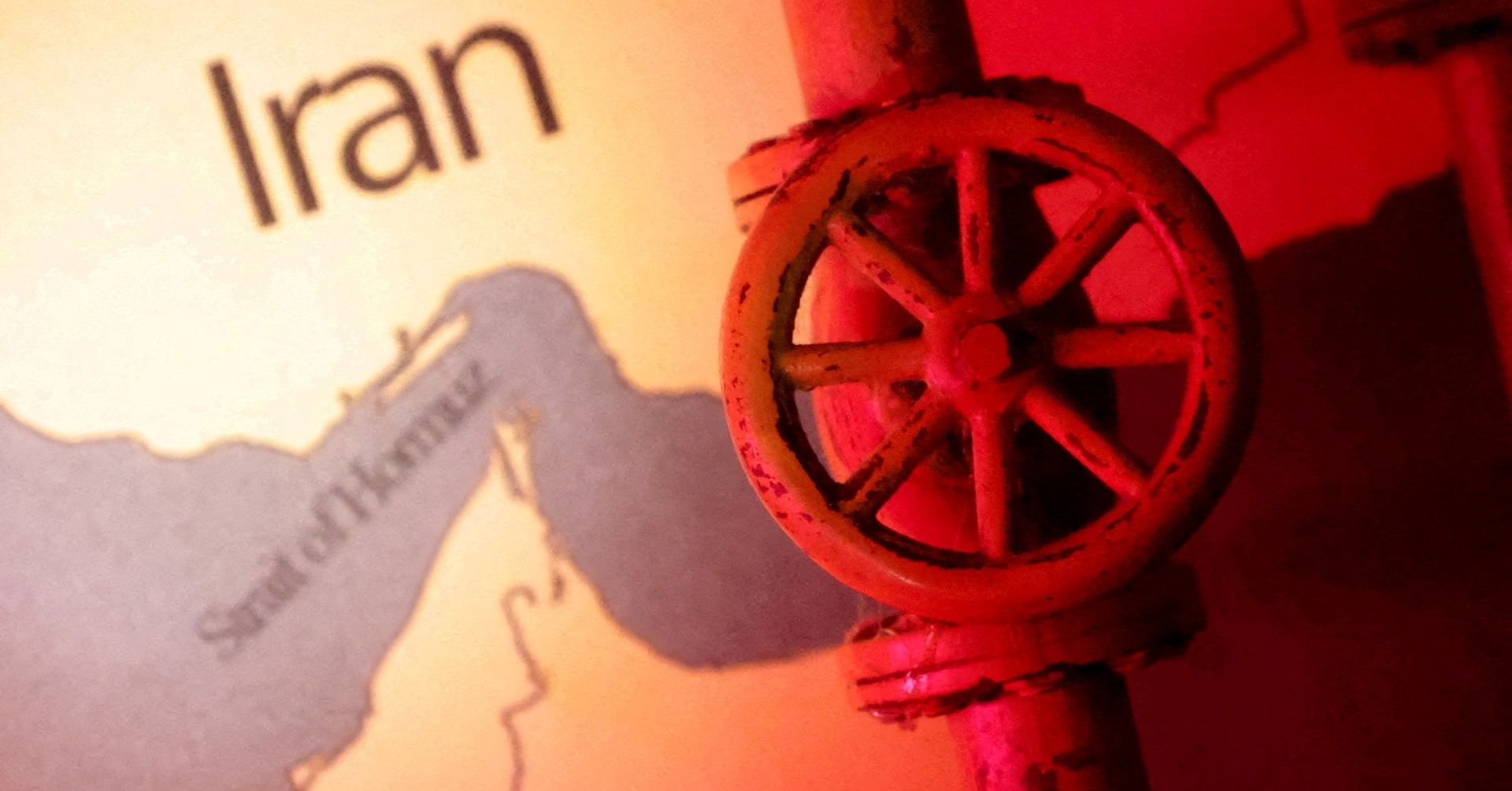
Read moreSince late February 2026, the Strait of Hormuz has become the central theatre of the US–Iran confrontation. Following joint US–Israeli strikes on Iranian military infrastructure, Iran retaliated with missile and drone attacks across the Gulf and issued warnings to vessels attempting to pass through the strait. The consequences have been very 'dramatic':
- Tanker movements through the strait have fallen by roughly 70%, with some periods approaching a near-complete halt.
- More than 150 tankers have anchored outside the Gulf, unwilling to risk transit.
- Several commercial vessels have been struck by projectiles or drones in the area.
- Under normal conditions, around 20% of the world's oil supply passes through this chokepoint daily.
Insurance coverage has been cancelled. Shipping companies have suspended voyages. Oil markets have reacted sharply. What was once a regional flashpoint has become a global energy emergency, and understanding Washington's strategic calculus requires looking beyond the immediate military exchange.
So what could the United States be trying to achieve?
The starting point for any analysis of US objectives is the relationship between geography and geopolitical power. Energy-producing states derive leverage not only from what they produce but from their ability to threaten disruption. So the short answer is the neutralization of energy levers in any way possible.
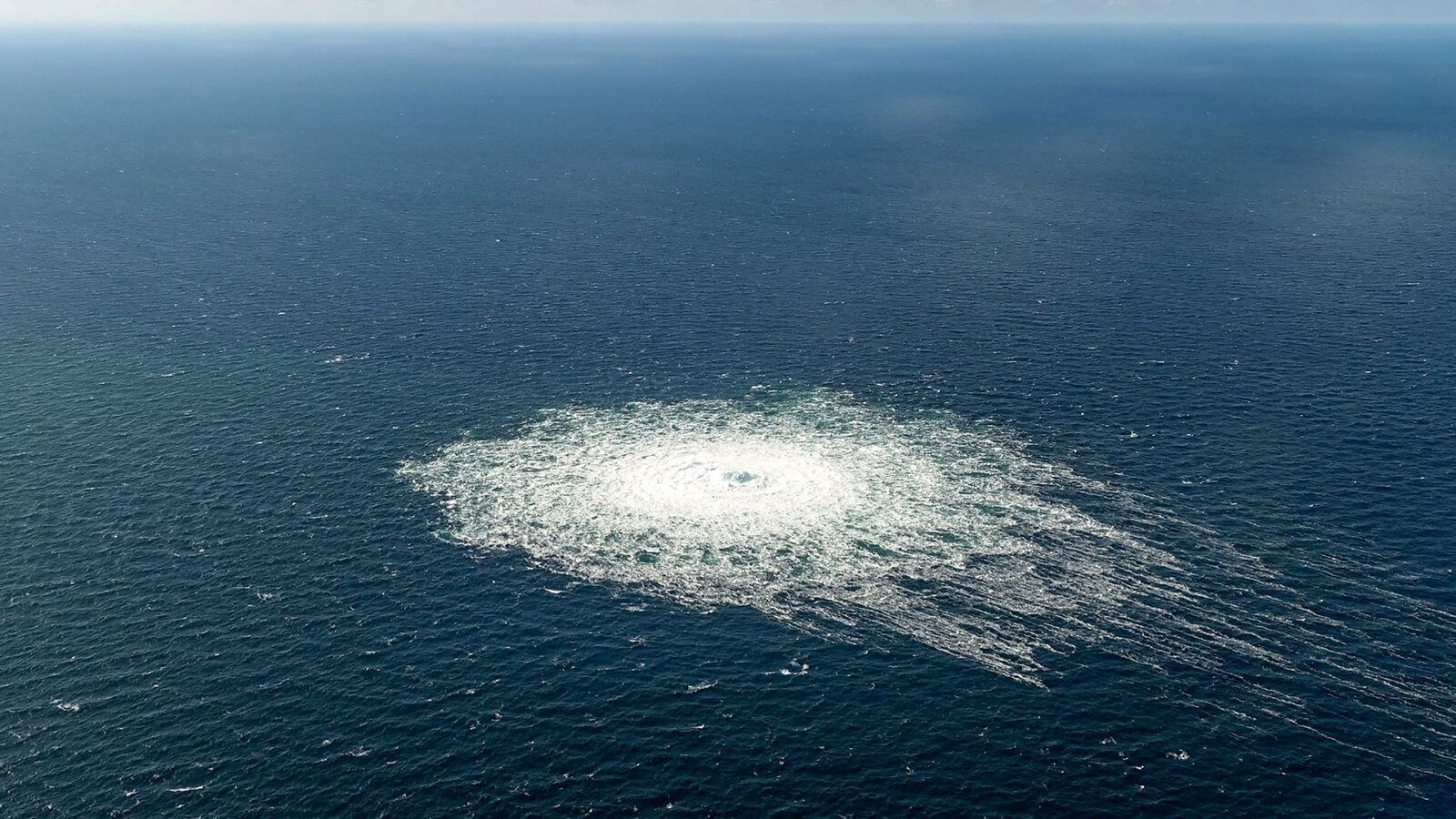
We observed an event that has not yet been proven to have occurred against Russia's strategic leverage, Nord Stream, back in 2022. Moscow's leverage over Europe was built on pipeline dependence, Nord Stream being the most visible expression of that structural hold. When that infrastructure was destroyed, one of Moscow's most powerful pressure tools over the continent was removed overnight. Prior to the explosion, US President Donald Trump had said in 2019 that Nord Stream 2 could make Europe a "hostage of Russia" and imposed sanctions on any company assisting Russia in completing the pipeline. Keep in mind, Russia supplied roughly 45% of the natural gas imported by European Union states, according to the last data released a year before the incident.
Now, down under, we have kind of a similar 'chokepoint' - Hormuz. However, Iran's leverage operates through a different mechanism, and one that is fundamentally harder to neutralise. Its ability to threaten the closure of Hormuz has long functioned as a strategic deterrent, a card Tehran holds precisely because it cannot be destroyed, only contested. The US objective in the current confrontation is therefore not to eliminate the chokepoint, but to deny Iran the ability to weaponise it. That means restoring freedom of navigation, by force if necessary, and demonstrating that any attempt to close the strait will be met with immediate and coordinated response.
From Washington's perspective, the Strait of Hormuz is not a regional sea lane. It is a global economic artery, and its disruption carries consequences that extend far beyond the Gulf. A sustained closure would drive oil prices sharply higher, trigger inflationary pressure across import-dependent economies, and destabilise supply chains already operating under strain. As we have already seen over the last few days, the US Energy Department has managed to sustain the numbers below the $100 mark, for now.
This explains why a key US objective, irrespective of the broader geopolitical contest with Iran, is ensuring the strait remains open to commercial traffic. The instrument of choice would normally be naval escort missions coordinated with allied navies. However, current assessments within the US Navy suggest that escort operations under present threat conditions carry exceptional risk. Large-scale convoy protection has not yet begun, and the gap between strategic necessity and operational feasibility remains a defining tension in Washington's posture.
A third objective, operating alongside the first two, is the management of Iranian decision-making. The strait is, for Tehran, a double-edged instrument. Its threatened closure damages global markets, but it also undermines Iran's own export revenues and its relationships with major buyers, China chief among them. The economic cost of weaponising Hormuz falls on Iran as well as on its adversaries.
US strategy appears designed to make this calculation explicit. The implicit message is that any move to close the strait will trigger a sequence of consequences, military retaliation, international naval deployments, accelerated economic isolation, whose cumulative weight Iran cannot absorb. In this framing, the Strait becomes less a card to be played and more a line whose crossing would be strategically self-defeating for Tehran.
Beyond the immediate crisis, there is a structural dimension that warrants attention. Energy disruptions of sufficient duration do not merely raise prices. For instance, Europe's response to the loss of Russian gas after 2022 is instructive: LNG imports expanded rapidly, alternative pipeline corridors gained strategic importance, and the continent's energy map was redrawn within the space of two years. But perhaps it can be argued that the EU has been contemplating the reduction of this sustained dependency for some time (European Green Deal, 2020), nevertheless, it reacted more swiftly following the incident.
A prolonged Hormuz crisis could produce analogous structural shifts at the global level, accelerating the buildout of LNG infrastructure, elevating the strategic value of alternative maritime corridors, and reducing the long-term centrality of Gulf oil to the global energy system. Whether Washington has deliberately factored this into its calculus is difficult to establish; but policymakers pursuing medium-term energy security objectives would find such an outcome broadly consistent with their interests.
The main bottom line is that the U.S. administration may have underestimated Iran's response to the war.
Trump Administration has underestimated the risk that a conflict with Iran could significantly disrupt global oil markets and threaten shipping through the Strait of Hormuz, which carries approximately 25% of the world's oil.
Since the war began, Tehran has threatened to attack oil tankers, leading to the shutdown of some shipping routes and causing oil prices to soar. As a result, the Trump administration has been compelled to take urgent measures to stabilize the market and lower gasoline prices. However, the U.S. Congress has reported that the White House still lacks a clear plan for restoring shipping through the Strait of Hormuz. This kind of abrupt and seemingly unplanned action could trigger a crisis that becomes unavoidable.
The contrast with Nord Stream illuminates something important about the nature of strategic leverage in the energy domain. Nord Stream was an infrastructure, physical, and therefore destructible. Its removal from the strategic equation, however it occurred, was permanent and irreversible.
The Strait of Hormuz is a geographical feature. It cannot be sabotaged, decommissioned, or rerouted. It will remain where it is, connecting the Persian Gulf to the Gulf of Oman, for as long as states depend on the energy resources that transit it. This permanence is precisely what makes it one of the most durable pressure points in contemporary geopolitics, and why the contest over its control is unlikely to be resolved by any single military campaign.
Pipelines can disappear overnight. Chokepoints endure and remain like that for a long period. That asymmetry shapes everything about how the current confrontation is likely to develop, and why, whatever the outcome of the immediate US–Iran exchange, the Strait of Hormuz will remain a structuring feature of global energy politics for decades to come.
Here we are to serve you with news right now. It does not cost much, but worth your attention.
Choose to support open, independent, quality journalism and subscribe on a monthly basis.
By subscribing to our online newspaper, you can have full digital access to all news, analysis, and much more.
You can also follow AzerNEWS on Twitter @AzerNewsAz or Facebook @AzerNewsNewspaper
Thank you!