
Iran–US–Israel war: possible scenarios

Qabil Ashirov
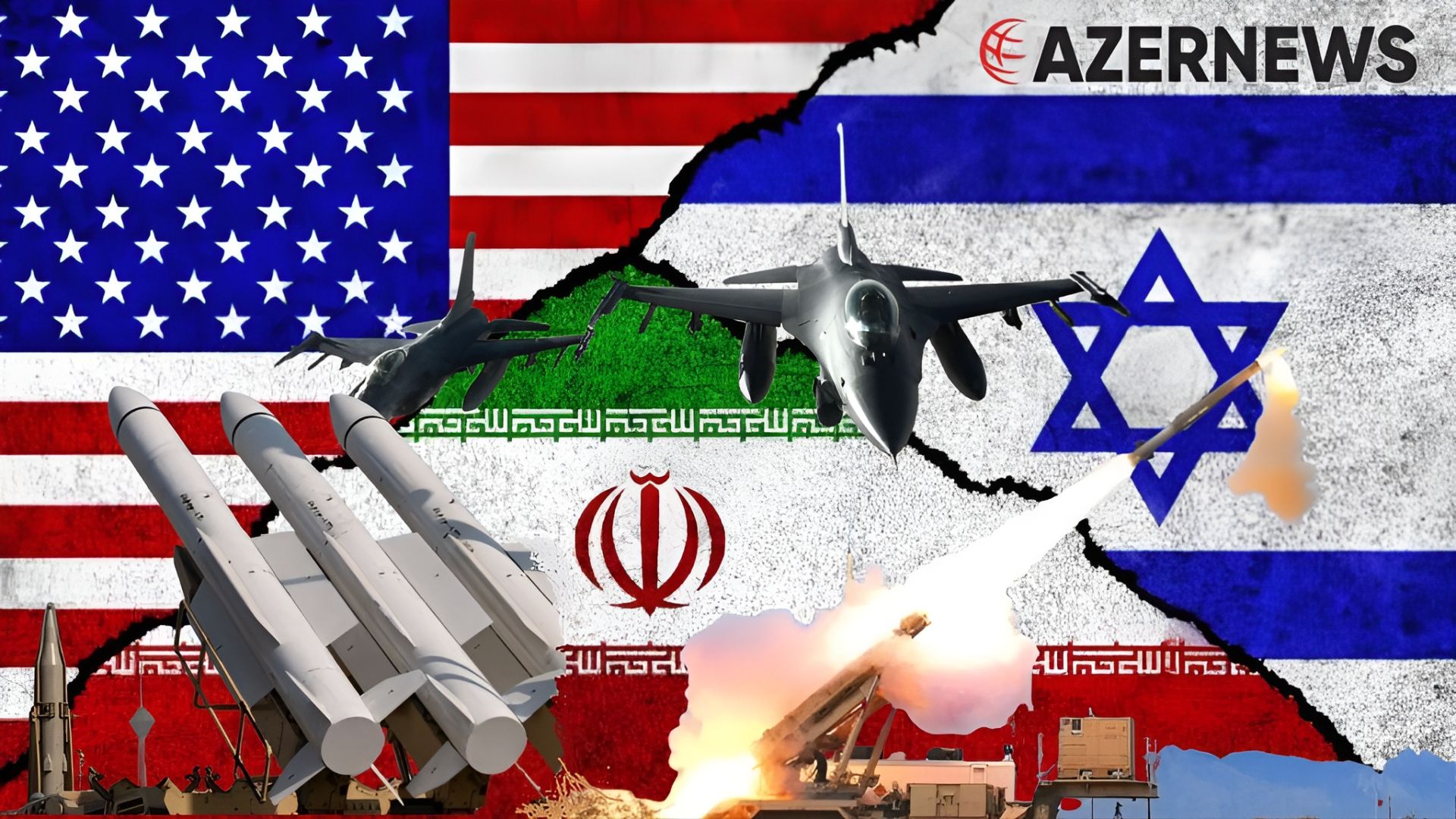
Read moreThe war between Iran and the U.S.–Israel alliance is troubling the entire world. This conflict is critical for the global economy and could trigger tectonic shifts both in the region and globally. Yet developments on the ground raise many questions. The U.S. and Israel claim they seek regime change, bombing Iran and assassinating key officials. However, as seen in Venezuela, even the arrest of the president did not lead to the expected collapse of power. The undeniable truth is that without American boots on the ground, achieving any strategic objective in Iran is inconceivable. Yet there is no sign of preparations for such a deployment. So how will this confrontation end?
There are three possible scenarios for the Iran–U.S.–Israel war:
Scenario 1: A Short-Lived War Ending in Mutual Claims of Victory
Current reports from the field suggest this scenario is the most likely. In the early days, Washington and Tel Aviv fostered expectations that Iranians would quickly rise up and overthrow the regime. The government’s brutal suppression of recent protests seemed to reinforce this belief. Yet by the second day of the war, evidence indicated that Iran’s leadership had overcome the initial shock and was gradually regaining initiative. International media report that by March 8, government institutions and banks will slowly resume operations.
Although both sides insist they have sufficient resources to continue fighting, in practice this is unsustainable. If this scenario unfolds, the war will eventually be halted, with each side declaring victory. The U.S. and Israel will point to the assassination of Iran’s supreme leader and senior officials, while Tehran will claim triumph simply by surviving.
In reality, however, this would amount to defeat for Washington and Tel Aviv. Iran could reassert its influence in the region for years to come.
Scenario 2: The “Syrianization” of Iran
Another possibility is that the U.S. and Israel will weaken Iran through sustained airstrikes, eventually fostering armed groups to fight against Tehran. These could be jihadist factions or ethnic groups within Iran itself. Recent reports of clashes between Kurdish forces and the Revolutionary Guard lend weight to this scenario.
Yet Iran’s demographics differ sharply from Syria’s. With a population several times larger, chaos in Iran would provoke strong reactions from Gulf states, the South Caucasus, Turkiye, Europe, and Russia. The world is still struggling to absorb refugee waves from Syria and Ukraine; a crisis in Iran, with its vast population, would unleash far greater social upheaval across the region and Europe. Moreover, Iran already absorbs significant migration flows from Afghanistan and Central Asia. Any collapse in Iran would compound these pressures.
While some reports fuel speculation about this scenario, its realization would likely meet fierce resistance from many states.
Scenario 3: The “Iraqization” of Iran
The third scenario resembles Iraq’s trajectory. Before the First Gulf War, Iraq possessed one of the region’s strongest armies. Following the invasion of Kuwait, coalition forces intervened. Although the war forced Iraq out of Kuwait, it did not extend into Iraqi territory, allowing Saddam Hussein to remain in power for over a decade.
During the First Gulf War, Iraq fielded over a million troops against 900,000 U.S. soldiers. Washington adopted a peculiar strategy: from 1990 to 2003, Iraq endured harsh sanctions, repeated bombings, and no-fly zones restricting its air force. By the Second Gulf War in 2003, Iraq’s military had weakened dramatically, with only 300,000–350,000 troops and outdated equipment. The war lasted barely two weeks, ending Saddam’s regime.
A similar path could be pursued against Iran. Unlike Iraq, however, Tehran commands numerous proxy forces across the region. These were targeted first, followed by bombings nine months ago that killed several senior generals, and another wave of strikes more recently.
If Washington and Tel Aviv choose this scenario, the war may pause after initial clashes, with both sides again claiming victory. But unlike the first scenario, Iran would be denied the chance to regain regional initiative. Periodic bombings and intensified sanctions would steadily weaken the country. Ultimately, as in Iraq, Iran could face invasion within 10–15 years.
Taking a broad view, the war between Iran and the U.S.–Israel alliance is not only a regional conflict but a global concern. Each of the three scenarios carries profound implications: a short-lived war with symbolic victories, a drawn-out Syrian-style destabilization, or a long-term Iraq-style weakening leading to eventual collapse. Whatever path unfolds, the consequences will reverberate far beyond the Middle East, shaping the future of global security and economic stability.
Here we are to serve you with news right now. It does not cost much, but worth your attention.
Choose to support open, independent, quality journalism and subscribe on a monthly basis.
By subscribing to our online newspaper, you can have full digital access to all news, analysis, and much more.
You can also follow AzerNEWS on Twitter @AzerNewsAz or Facebook @AzerNewsNewspaper
Thank you!