
Kurdish card: Is CIA preparing new front on Iran’s western border?
Akbar Novruz
Read moreThe conflict in Iran shows no signs of de-escalation, engulfing the Arabian Peninsula in a tense atmosphere of war. As the situation stands, it certainly appears that there will be further bloodshed and destruction throughout the Middle East. The situation is increasingly tense, with recent developments highlighting a potential shift in the war's dynamics.
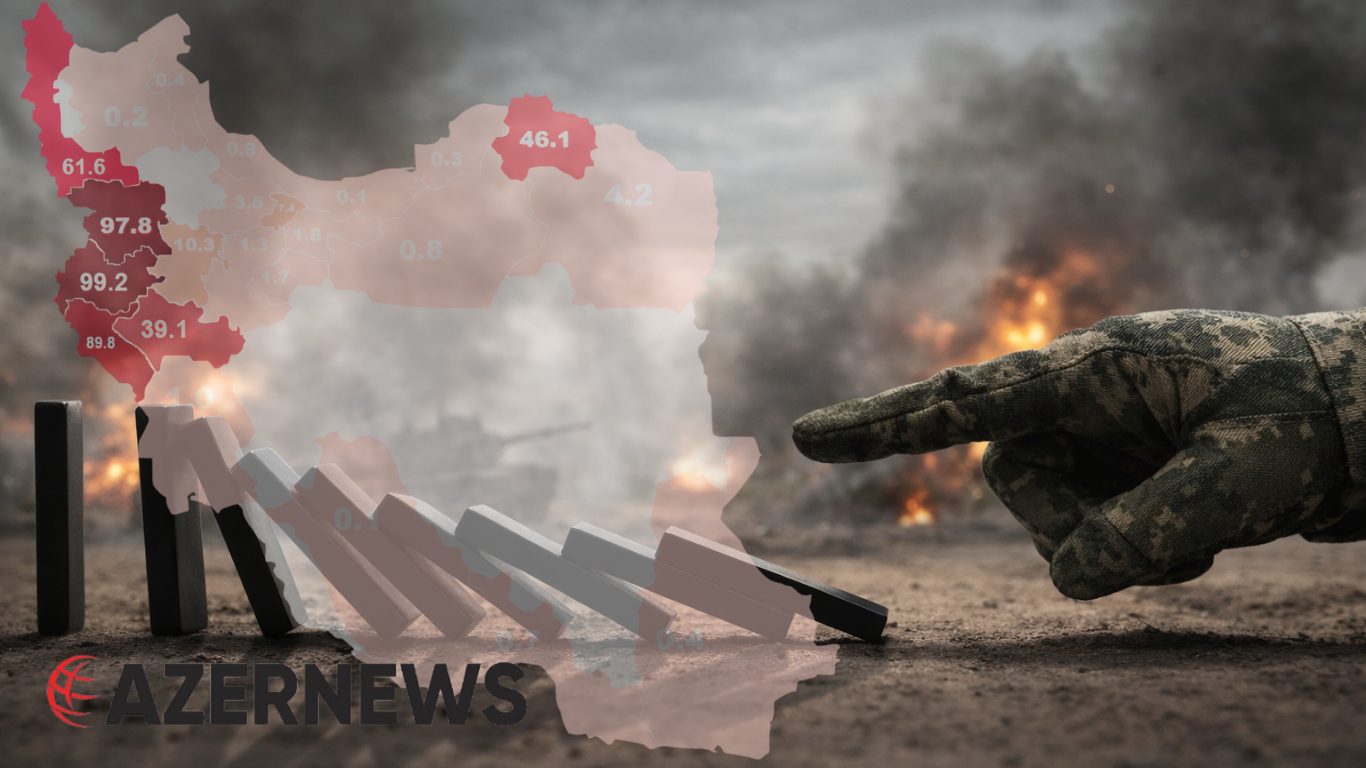
One of the most striking recent reports involves the Islamic Revolutionary Guard Corps (IRGC), which announced that its ground forces are now engaged along the Iraq-Iran border, confronting Kurdish armed groups who have resisted the Iranian army for decades. This development comes amid reports of contacts between American officials and Kurdish leaders in the region, fueling speculation about a broader strategy to destabilize Iran from within.
According to CNN, the CIA is actively working to arm Kurdish forces with the apparent aim of triggering an uprising inside Iran. As CNN correspondent Clarissa Ward reported, “They will be going into Western Iran as part of some kind of a ground operation over the course, or at some point during the next few days…” This disclosure underscores why Tehran is now taking unprecedented measures to secure its borders and prevent both the arming of minorities and the outbreak of internal rebellion.
The strategic significance of this development is clear. Until now, Iran’s involvement in the conflict has largely relied on the IRGC’s air forces, responsible for missile strikes and other long-range operations. However, the deployment of ground forces to the border suggests a growing concern among Iranian leadership: if the country’s air power is gradually degraded, the United States could exploit that weakness to destabilize border regions and embolden ethnic and religious minorities to rise against Tehran.
In such a scenario, suppressing internal rebellion would become far more difficult, particularly if the Iranian Air Forces were unable to respond effectively.
"While their ability to independently sustain a country-wide rebellion is limited, a more 'realistic' threat exists in Western Iran", argues former military attaché and retired general Yücel Karauz in his comment to AzerNEWS.
"A more realistic scenario involves an escalation of armed raids and guerrilla-style operations within restricted zones of Western Iran (the border and mountainous belts). These actions could support local protests via armed corridors, effectively wearing down the regime’s forces," he said.
According to Karauz, five factors define this capability:
Increased Coordination: The declaration of an alliance/coalition by Iranian Kurdish opposition groups on February 22, 2026, significantly enhances their organizational capacity.
Reliance on External Support: As highlighted in international reports, operations in Western Iran are unlikely to succeed without U.S. military and intelligence support, indicating that current indigenous capabilities are insufficient for independent success.
The PJAK Factor: Regional monitoring identifies PJAK as the most militarily capable faction. However, their strength translates more to high-intensity border clashes and guerrilla warfare than a full-scale "revolutionary uprising."
Depth of Internal Organization: A true rebellion requires more than weaponry; it necessitates urban cells, logistics, secure communication, and mass mobilization. The penetration of Iranian security apparatuses (Intelligence, Police, and IRGC) creates significant barriers to this.
The "Window of Opportunity": While current regional crises create openings, they simultaneously trigger the regime’s "state of emergency" reflexes, leading to heightened crackdowns.
"The goal here," the General observes, "is likely not to collapse the architecture, but to overload it." He suggests that if a sustained, externally supported armed pressure emerges, Tehran’s security apparatus will be forced into a defensive "trilemma":
"If sustained armed pressure emerges in Western Iran with external backing, Tehran will be forced to reallocate forces, shifting reinforcements to Western provinces while simultaneously managing urban suppression and border defense. The regime may implement aggressive containment strategies, labeling internal dissent as 'foreign collaboration' to justify harsher crackdowns. Should command centers, police stations, or intelligence infrastructure be targeted, the overall suppression capacity of the regime could begin to erode. However, it is important to note that security architectures typically 'harden' before they 'break.' The highest risk remains a comprehensive security campaign involving mass detentions in Western provinces and cross-border retaliations."
Regarding the IRGC’s ability to hold the line, the military expert assesses their posture as capable of exerting a forceful and highly effective impact in the short term, yet over a prolonged period, it could gradually weaken and ultimately lose its potency.
"In terms of defense, the IRGC is relatively sufficient for short-term 'prevention and suppression'. In the long term, however, it may face attrition if pressured across multiple fronts simultaneously. The IRGC and its affiliates possess decades of experience in counter-insurgency and border security in Western Iran, giving them an advantage in neutralizing sudden, limited incursions. If Kurdish forces receive the requested "U.S./CIA assistance," the cost of resistance for the IRGC increases exponentially. Air/missile strikes and pressure on internal security targets would further stress IRGC command-and-control and logistics."
Karauz extends his analysis to the broader "Kurdish Card" in the Middle East, noting that the impact will be felt most acutely in the Kurdish Regional Government (KRG) of Iraq.
Iraq (KRG*): This is the most immediate impact zone. Reports of Erbil and Baghdad communicating with the U.S. suggest the KRG will face immense political and military pressure. Iranian retaliation would likely target the border and KRG internal dynamics, with Iran-linked militias potentially escalating attacks.
*Kurdistan Regional Government (KRG)
Syria: The impact is twofold. If the U.S. focus shifts entirely to Iran, Kurdish structures in Syria (SDF) may become more vulnerable. Conversely, if a "Regional Kurdish Card" is played against Iran, Syria could become a primary bargaining chip.
Türkiye Factor: A critical parameter is that Türkiye will not look favorably upon the arming of Kurdish groups near its borders. This remains a primary factor restricting the "maneuvering space" of all Kurdish formations in the region.
To conclude, General Karauz provides a checklist for monitoring whether this scenario is shifting from theory to reality:
Increased equipment and training density in KRG-based camps.
The transition from isolated border incidents to simultaneous multi-province unrest.
Major IRGC force movements and communication blackouts in Western Iran.
Iranian "cross-border" kinetic responses against the KRG.
A unified command structure and rhetoric from the Kurdish coalition.
The specific "flavor" of U.S. involvement distinguishes between quiet intelligence sharing and active air support.
Here we are to serve you with news right now. It does not cost much, but worth your attention.
Choose to support open, independent, quality journalism and subscribe on a monthly basis.
By subscribing to our online newspaper, you can have full digital access to all news, analysis, and much more.
You can also follow AzerNEWS on Twitter @AzerNewsAz or Facebook @AzerNewsNewspaper
Thank you!